Best Way to Sell Westinghouse Breakers in Philadelphia, PA
Philadelphia has always been a city built on industrial muscle — from the shipyards along the Delaware to the dense network of manufacturing plants that once defined the region's economic backbone. That heritage left behind something most people overlook: warehouses, maintenance rooms, and electrical panels loaded with Westinghouse circuit breakers that still carry real market value today. Whether you're an electrical contractor clearing out a job site in Kensington, a facility manager decommissioning equipment in the Navy Yard, or an estate executor sorting through decades of accumulated inventory in Montgomery County, knowing how to properly sell Westinghouse breakers in Philadelphia can mean the difference between walking away with serious cash or leaving money on the table.
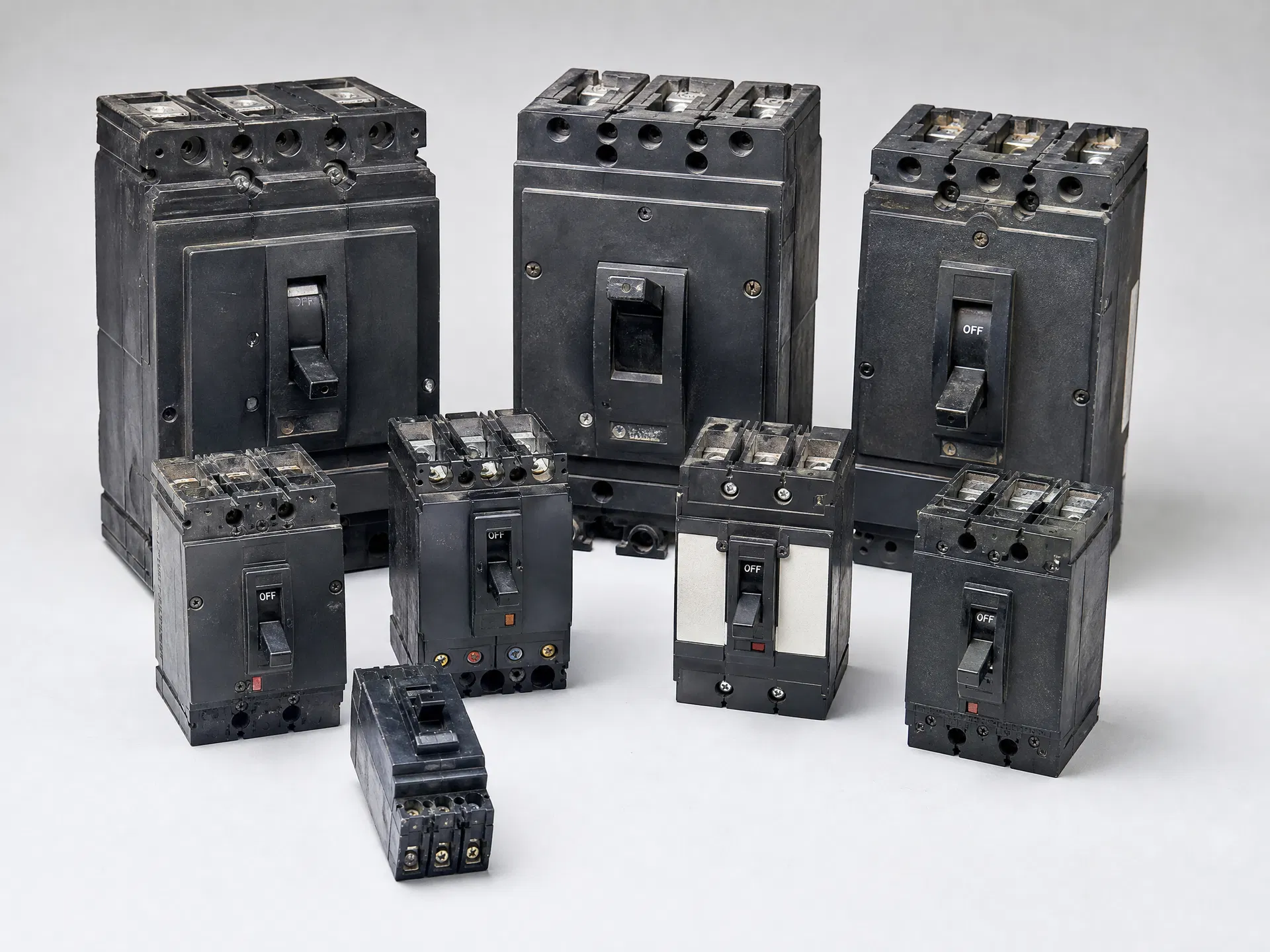
Westinghouse — and its successor brand Eaton — produced some of the most durable and widely distributed electrical equipment in American history. Breakers like the BA, BJ, and HFD series remain in active demand because replacement parts for legacy switchgear are increasingly difficult to source through standard distribution channels. A single Westinghouse Type HFD 3-pole 400A breaker can fetch anywhere from $180 to over $600 depending on condition and buyer, while older molded case units from the 1970s and 80s sometimes command even more from specialty buyers who supply the MRO and industrial maintenance markets.
The challenge isn't finding a buyer — it's finding the right buyer who understands what you have, prices it fairly, and moves quickly. Circuit Breaker Buyer USA works with sellers across the entire country, from industrial facilities in our Houston circuit breaker buying program to commercial properties right here in the Philadelphia metro area. We've built our reputation on transparent offers, fast logistics, and a genuine understanding of the secondary market for surplus electrical equipment.
This guide breaks down everything you need to know before you sell — from identifying what you have, to getting the best price, to avoiding the common mistakes that cost sellers hundreds or even thousands of dollars.\n\n## The Legacy of Westinghouse Circuit Breakers in Philadelphia's Industrial Hub
Philadelphia's industrial backbone was built on heavy manufacturing, shipbuilding, chemical processing, and rail infrastructure — and for much of the 20th century, Westinghouse Electric was the name powering it all. From the refineries along the Delaware River to the textile mills in Kensington and the naval facilities at the Philadelphia Naval Shipyard, Westinghouse switchgear and circuit breakers were standard equipment. That's not hyperbole — it's a reflection of how deeply embedded Westinghouse became in the region's electrical infrastructure over several decades.
Westinghouse's influence in the Philadelphia metro area traces back to large-scale industrial expansion in the post-World War II era, when factories and utilities were upgrading aging electrical systems to handle increased production loads. Westinghouse responded with a lineup of breakers that became synonymous with durability and high-interrupting capacity. The Systems Pow-R Breaker series, commonly known as the SPB line, was a workhorse in medium-voltage switchgear applications across industrial facilities throughout Delaware Valley. These molded-case and low-voltage power breakers were installed in everything from SEPTA substation equipment to paper mills in the surrounding counties.
The Seltronic series represented a more sophisticated chapter in Westinghouse's product evolution — electronically trip-equipped breakers designed for facilities that needed tighter protection coordination. Chemical plants along the Schuylkill and heavy manufacturing operations in Camden, just across the river, adopted Seltronic-equipped switchgear extensively during the 1970s and 1980s. These breakers were notable for their solid-state trip units, which gave plant engineers far more flexibility in setting long-time, short-time, and instantaneous protection parameters compared to earlier thermal-magnetic designs.
Then there's the Mark 75 — arguably one of the most recognized Westinghouse breaker series among electricians and industrial maintenance crews in the region. Designed for 600V applications with interrupting ratings that matched the demands of heavy motor loads and distribution panels, the Mark 75 showed up in pharmaceutical facilities, food processing plants, and warehouse distribution centers throughout the Philadelphia suburbs. Many of those installations are still in place today, which is precisely why demand for replacement Mark 75 units and compatible parts remains active in this market.
The transition away from the Westinghouse brand began in earnest after Eaton Corporation acquired the Westinghouse Distribution and Control Business Unit in 1994. Rather than retiring the product lines, Eaton continued manufacturing many of the same breaker designs, rebranding them under the Cutler-Hammer name initially, and eventually consolidating everything under the Eaton brand identity. For facilities managers and MRO buyers in Philadelphia, this means that a significant portion of Westinghouse breakers in active service today have direct Eaton-manufactured replacements or are supported through Eaton's extensive aftermarket catalog. Understanding that lineage is critical when you're sourcing replacement breakers for older switchgear — the form, fit, and function compatibility between legacy Westinghouse units and their Eaton counterparts isn't always straightforward without knowing the specific series and vintage.
If you're working with newer Eaton equipment or need to cross-reference a legacy Westinghouse breaker to a current Eaton equivalent, our Eaton brand page covers the full scope of what we carry and how those product lines connect historically.
For Philadelphia-area facilities still running original Westinghouse switchgear, the practical question isn't whether these breakers can still be sourced — it's knowing where to find tested, verified units at prices that make replacement economically viable.\n\n## Identifying Your Westinghouse and Eaton Breakers for Maximum Value
Before you can accurately assess what your surplus inventory is worth — or get a meaningful quote from a buyer — you need to know precisely what you're holding. Westinghouse and Eaton breakers span decades of manufacturing history, multiple product families, and a wide range of frame sizes and trip unit configurations. Getting this identification right is the difference between leaving money on the table and walking away with a fair market return.
Start with the nameplate. Every breaker carries a nameplate or label on the front face of the device, typically molded into the housing or printed on an adhesive label beneath the handle. This nameplate contains the catalog number, ampere rating, voltage rating, interrupting capacity (in kA), and the number of poles. On older Westinghouse units manufactured before the Eaton acquisition, you'll often see the Westinghouse "W" logo alongside a catalog number formatted like HFD3150 or LA3400. These aren't arbitrary strings — each character tells you something. In the HFD3150, for instance, "H" denotes the HFD frame, "3" indicates three-pole, and "150" is the 150-amp continuous rating.
Frame size is critical to value. Westinghouse organized its molded case breakers into distinct frame families — the Series C lineup being among the most commercially significant. The HMCP (Heinemann Motor Circuit Protector) series, the LA, LB, MA, and NB frames, and the Series G all carry different demand levels in the secondary market. A Westinghouse LA3400 — a 400-amp, 600VAC, 3-pole unit with a 42kA interrupting rating — consistently draws strong buyer interest because of its broad compatibility with older industrial switchgear that hasn't been upgraded. Similarly, the Westinghouse DB breakers (drawout type) used in DS-style switchgear are highly sought after, with 800A through 4000A ratings commanding premium pricing when found in resalable condition.
Trip units separate commodity stock from premium inventory. A bare thermal-magnetic breaker is worth something, but a breaker equipped with an OPTIM 550 or OPTIM 1050 solid-state trip unit — Westinghouse's electronic trip platform — is worth considerably more. These trip units offer adjustable long-time delay, short-time pickup, instantaneous override, and ground fault protection, and they're notoriously difficult to source as standalone replacements. If your breaker has an external trip unit module with adjustment dials or a digital display on the front face, photograph it carefully and note the trip unit model number separately.
Eaton-branded units from the post-acquisition era follow a slightly different catalog structure. The Eaton Series C breakers — such as the HKD3250 or EHD3100 — are direct descendants of Westinghouse designs and share the same mounting footprint and interchangeability profiles. Eaton's IZMX and IZM series air circuit breakers, along with the Magnum DS lineup, represent the high end of the valuation spectrum. A Magnum DS 1600A drawout unit with a full RMS-9 trip unit can fetch $2,500 to $6,000 or more depending on condition and configuration.
When cataloging what you have, photograph both the front face and the side label, note whether the breaker has been operated or shows signs of arc damage, and record whether accessories like auxiliary contacts, shunt trips, or undervoltage releases are still attached — these add real value.
If you're comparing frame equivalencies across manufacturers — for example, determining whether your Westinghouse NB frame aligns with a Square D equivalent in terms of bolt pattern and application — that cross-reference work matters both for pricing and for finding the right buyer pool.\n\n## Current Market Demand and Pricing for Westinghouse Breakers in PA
Pennsylvania's industrial corridor — running from Philadelphia through Allentown and into Pittsburgh — maintains one of the more active secondary markets for legacy electrical equipment in the Northeast. Westinghouse breakers, despite the brand's absorption into Eaton's product line decades ago, continue to see strong demand from facilities managers, electrical contractors, and MRO buyers who are either maintaining aging switchgear or sourcing replacements for systems that simply cannot accommodate modern form-factor alternatives.
The demand is particularly concentrated around older commercial buildings, municipal infrastructure, and manufacturing plants that were wired between the 1960s and early 1990s — precisely the era when Westinghouse dominated the industrial breaker market. In Philadelphia specifically, the combination of aging building stock, active industrial facilities along the Delaware River waterfront, and ongoing commercial renovation projects keeps steady pressure on the supply side of the market.
What Buyers Are Paying — and What Sellers Are Leaving on the Table
Pricing in the secondary Westinghouse breaker market varies significantly based on condition, amperage, frame type, and whether original documentation or packaging is present. Here's a realistic breakdown of what these units are trading for:
New in Box (NIB): A Westinghouse Series C or HFD-frame molded case breaker in the 100–225A range, still sealed in original packaging with documentation, can command anywhere from $180 to $600+ depending on the specific model. Higher-interrupt-capacity units like the Westinghouse HKD3250 (250A, 600V, 3-pole) in NIB condition regularly fetch $450–$700 from industrial buyers and electrical distributors. The original box isn't just aesthetic — it signals proper storage and eliminates questions about handling or moisture exposure.
New No Box (NNB): The same HKD3250 without packaging typically trades at a 15–25% discount, landing in the $340–$550 range. Buyers accept this condition readily when the breaker shows no signs of use, but the lack of packaging introduces minor uncertainty that the market prices accordingly.
Used/Tested: This is where condition grading becomes critical. A properly tested and certified used breaker — one that's been trip-tested, inspected for arc damage, and verified against manufacturer specs — still holds meaningful value. A Westinghouse FDB3100 (100A, 3-pole) in tested used condition might sell for $65–$130, while a larger frame unit like the Westinghouse HMCP150T4C motor circuit protector in similar condition can bring $200–$350. Untested units with visible wear, burned contacts, or missing hardware drop considerably further — sometimes 50% or more below tested value.
Why Condition Documentation Matters More Than Most Sellers Realize
Many sellers in the Philadelphia area underestimate what a credible test record or a clean storage history does for resale value. Buyers — particularly industrial procurement teams and licensed electrical contractors — are not just purchasing a breaker; they're purchasing confidence that the device will perform to spec under load. A unit that comes with a test report or can be verified against a known service history commands a premium that untested inventory simply cannot justify.
If you're unsure where your inventory falls in this pricing landscape, reviewing our recent purchases gives you a concrete sense of what we've been actively acquiring and at what value tiers — which is a far more reliable benchmark than outdated price guides or general auction data.
The Philadelphia market rewards sellers who present their inventory accurately and completely. Overstating condition is one of the fastest ways to lose a deal; understanding true market value is what gets transactions closed efficiently.\n\n## Why Sell Your Surplus Breakers Instead of Scrapping?
When a facility upgrade, demolition, or electrical system overhaul leaves you with a stack of Westinghouse breakers, the path of least resistance is often calling a scrap metal hauler. It's fast, it's simple, and it clears the floor. But that convenience comes at a significant cost — both to your bottom line and to the broader environment.
Scrap yards price electrical equipment by weight, treating a fully functional Westinghouse Series C 225-amp molded case breaker the same as a bent piece of structural steel. You might walk away with $8 to $15 worth of copper and steel from a breaker that still has years of service life and legitimate resale value in the $150 to $400 range depending on condition and configuration. That gap between scrap value and actual market value is money left on the table every single time.
The Financial Reality of Surplus vs. Scrap
Surplus electrical equipment — particularly legacy Westinghouse breakers like the DB, LA, and HLA series — remains in active demand across industrial maintenance operations, municipal facilities, and smaller contractors who maintain aging infrastructure. These buyers need exact replacement units to match existing panelboards and switchgear without triggering a full system redesign. A tested, functional breaker from your surplus inventory is genuinely valuable to them, and that value doesn't disappear just because it's no longer part of your system.
For a contractor or plant manager clearing 20 to 50 breakers at once, the difference between scrapping and selling through a proper surplus channel can realistically mean several thousand dollars recovered rather than a nominal scrap check. That's capital that can offset the cost of new equipment, fund disposal logistics, or simply return to the project budget.
Environmental Impact You Can Actually Measure
Manufacturing a new circuit breaker isn't a clean process. It requires mining raw copper and zinc, smelting, precision machining, and shipping components across global supply chains. Every functional breaker that gets melted down for scrap weight forces that entire manufacturing cycle to repeat somewhere else. When you sell surplus Westinghouse breakers in Philadelphia or anywhere else in the Mid-Atlantic region, you're directly reducing the demand for newly manufactured units.
This is the core principle of the circular economy as it applies to electrical infrastructure — keeping functional equipment in service longer, routing it to where it's actually needed, and deferring the energy-intensive manufacturing process for as long as the equipment remains reliable and code-compliant. It's not a theoretical concept. It's a measurable reduction in carbon output when you calculate the embodied energy in a 400-amp breaker versus the energy required to produce a replacement from raw materials.
Responsible surplus buying also means equipment gets tested and certified before re-entering service, which addresses the safety concerns that often push facilities toward scrapping in the first place. Properly vetted surplus isn't a safety compromise — it's a smart allocation of existing resources.
The Better Alternative Is Straightforward
If you're sitting on surplus Westinghouse breakers, Federal Pacific units, or other legacy equipment after a system upgrade or facility closure, scrapping should be the last option you consider, not the first. The surplus buying process is designed to be just as fast and logistically simple as calling a scrap hauler — but with returns that actually reflect what your equipment is worth.
The circular economy in electrical infrastructure depends on connecting surplus supply with active demand. Scrapping short-circuits that entire system for the sake of a check that rarely justifies the decision.\n\n## The Demolition and Facility Upgrade Process
Plant tear-downs and facility upgrades in Philadelphia move fast. Once the decision is made to decommission a building or retool an industrial space, the pressure to clear equipment quickly can lead to decisions that cost facility managers and contractors thousands of dollars in recoverable asset value. Westinghouse breakers — particularly older Series C, DS, and DSII switchgear components — are in consistent demand on the secondary market, and the way they're handled during removal determines whether you walk away with a check or a disposal bill.
The first thing to understand is that condition at the time of removal is everything. A 1600-amp Westinghouse DS breaker that's been carefully racked out, wrapped, and palletized can fetch $800 to $2,500 or more depending on configuration and vintage. That same breaker, dropped from a panel during a rushed demo or left exposed to water intrusion during a multi-week teardown, may be worth a fraction of that — or nothing at all.
Proper Removal Starts Before the First Bolt Comes Loose
Before any Westinghouse breaker is touched, the arc chutes, trip units, and auxiliary contacts should be visually inspected and documented. Photograph the nameplate data — amperage rating, frame size, catalog number, and interrupting capacity. For molded case breakers like the Westinghouse Series C or the older HFD and KD frames, this information directly affects buyback pricing. For larger draw-out breakers in switchgear lineups, you'll want to confirm the breaker racking mechanism operates freely and that the secondary disconnect fingers are intact.
When physically removing draw-out units from switchgear cubicles, use the original racking handle if it's still present. Forcing a breaker out of a cubicle without the proper racking tool almost always damages the primary stabs and secondary disconnects — damage that significantly reduces or eliminates resale value. If the racking handle is missing, that's a conversation to have with a buyback specialist before proceeding, not after.
Storage and Staging During Multi-Phase Projects
Facility upgrades in Philadelphia's industrial corridor — particularly in areas like the Navy Yard, Bridesburg, or along the I-95 industrial stretch — often involve phased shutdowns where equipment sits staged for weeks before final removal. Westinghouse breakers stored improperly during this window are vulnerable to moisture, forklift damage, and parts pilferage. Store breakers vertically, in their original operating orientation, on pallets elevated off concrete floors. Cover them with plastic sheeting but allow airflow to prevent condensation buildup inside the mechanism.
Avoid stacking molded case breakers more than two units high without proper blocking. The cases on older Westinghouse frames are durable, but the internal calibration of bimetal trip elements can be affected by sustained mechanical stress.
Coordinating Removal with a Buyback Assessment
The most efficient approach for contractors managing large-scale Philadelphia demolitions is to schedule a buyback assessment concurrent with the demolition planning phase — not after equipment is already on the floor. Circuit Breaker Buyer USA's demolition buyback program is specifically structured to accommodate active job sites, allowing for inventory assessment, removal guidance, and pricing to happen in parallel with your project timeline.
This matters because it allows your crew to prioritize high-value equipment during removal sequencing. A 4000-amp Westinghouse DSII breaker deserves different handling than a bank of 20-amp branch circuit breakers, and knowing which assets carry real buyback value before demo begins changes how labor and time are allocated on the job.
The goal is to treat recoverable electrical equipment as a project asset, not a disposal problem.\n\n## How Our Buying Process Works for Philadelphia Sellers
Getting a fair return on surplus electrical inventory shouldn't be complicated, and for contractors, electricians, and facility managers looking to sell Westinghouse breakers in Philadelphia, we've built a process that moves quickly and pays competitively. Here's exactly how it works from first contact to final payment.
Step 1: Compile Your Inventory List
Start by putting together a basic list of what you have — model numbers, amperage ratings, voltage specifications, and quantities. For Westinghouse and Cutler-Hammer equipment, that means noting the series (Type HFB, FDB, LA, LB, KA, etc.), the frame size, and the pole configuration. If you have a mix of breakers, panelboards, switchgear components, or bus duct, list everything. Don't assume something is too old or too obscure to be worth selling. We regularly purchase discontinued Westinghouse Series C and Series D equipment that still carries strong market value.
Alongside your list, send clear photos. You don't need professional shots — phone photos work fine as long as they capture the nameplate data, the physical condition of the housing, and any visible wear or damage. Honest documentation at this stage speeds up the evaluation considerably.
Step 2: Evaluation
Once we receive your inventory details, our team reviews the equipment against current market demand, replacement availability, and resale viability. This isn't a generic algorithm — it's a hands-on assessment by people who know the difference between a Westinghouse HMCP motor circuit protector and a standard molded case breaker, and price accordingly. We typically complete evaluations within one business day for straightforward lots. Larger or more complex inventories, such as complete switchgear lineups or mixed manufacturer lots, may take slightly longer.
Step 3: The Offer
We provide a clear, itemized offer. You'll know exactly what we're paying per unit or per lot, with no buried deductions or surprise fees. For reference, functional Westinghouse Type LA 400A breakers in good condition regularly fetch $150–$400 depending on configuration, while larger frame equipment like the 800A–1200A Series C units can command significantly more. If you're sitting on a substantial quantity, volume pricing works in your favor.
Step 4: Logistics and Shipping from Philadelphia
If you accept the offer, we coordinate the logistics. For sellers in the Philadelphia metro — whether you're in Center City, the Northeast, Delaware County, or across the river in South Jersey — we can arrange freight pickup directly from your location. You don't need to figure out LTL freight carriers or palletizing requirements on your own. We walk you through packaging expectations and handle carrier scheduling. For larger lots, we can often arrange same-week pickup.
Step 5: Payment
Payment is issued promptly upon receipt and verification of the equipment. We process payments via ACH transfer or check, depending on your preference. There's no extended waiting period or payment-on-resale arrangements — you get paid when the equipment arrives and checks out against what was quoted.
It's worth noting that while we have deep familiarity with the Philadelphia market and the electrical contractors and industrial facilities that operate throughout the region, we buy nationwide. If you have colleagues or branch operations in other cities sitting on surplus inventory, we're equally active in markets like Chicago — handled through our Chicago circuit breaker buying operation — and throughout Texas, including our Dallas-area purchasing program. The same straightforward process applies regardless of where the equipment is located.\n\n## Other Brands We Purchase in the Pennsylvania Region
While Westinghouse and Eaton equipment consistently drives the bulk of our Philadelphia-area transactions — particularly legacy switchgear, panelboards, and molded case breakers from older industrial facilities — our purchasing program extends well beyond a single manufacturer. Pennsylvania's industrial corridor, stretching from Philadelphia through Allentown and into the western part of the state, contains an enormous concentration of aging electrical infrastructure representing dozens of manufacturers. We actively buy surplus, decommissioned, and new-in-box equipment across a wide spectrum of brands, and in many cases we can make competitive offers on mixed lots that include multiple manufacturers from a single facility cleandown or plant closure.
Siemens remains one of the most actively traded brands in our inventory. We purchase Siemens equipment ranging from residential QP-series breakers all the way up to heavy commercial and industrial ITE-branded units — a line that Siemens absorbed decades ago and that still shows up regularly in Pennsylvania facilities built between the 1960s and 1990s. The Siemens SB2-100 and similar 100-amp double-pole units move quickly, as do larger frame sizes like the ED63B100 and the BLD3B400 in the 400-amp class. If you're sitting on Siemens SENTRON series equipment or have surplus 3VA or 3VL molded case breakers from a controls upgrade, those are particularly attractive to us right now. Visit our Siemens brand page for a full breakdown of what we're actively purchasing and current pricing benchmarks.
General Electric equipment is another area where we see consistent volume from Philadelphia-area sellers. GE's THQL and THQP residential series are always in demand, but the real value tends to sit in commercial-grade equipment — the GE TEB, TED, and TEY series breakers, along with older AKR and AK-25 air circuit breakers that were standard in large commercial buildings and manufacturing plants throughout the mid-Atlantic region. The GE Spectra series loadcenters and their associated breaker components also come up frequently in facility decommissioning projects, and we're equipped to evaluate and purchase those as complete assemblies or as individual components. Our GE brand purchasing page outlines the specific frame sizes and configurations we prioritize.
ABB equipment has grown significantly as a purchase category for us, particularly as more Pennsylvania facilities that installed ABB switchgear in the 1990s and 2000s are now cycling through upgrades or closures. The ABB SACE Tmax series — specifically the T4, T5, and T6 frame breakers — commands strong resale value, and we're actively looking for those units in both new and lightly used condition. The older ABB S-series and the K-series industrial breakers also have a solid secondary market. If your facility ran ABB motor control centers or has surplus SACE breakers sitting in a storage room, it's worth getting a quote. Full details on what we buy and current demand levels are available on our ABB brand page.
Beyond these three, we also purchase Square D, Cutler-Hammer, Federal Pacific (in select configurations), Challenger, and Murray equipment from Philadelphia-area facilities. Our goal is straightforward: when a Pennsylvania plant manager, electrical contractor, or facilities director needs to liquidate electrical equipment, we want to be the first call — not the last resort. Mixed lots are welcome, partial skids are fine, and we're comfortable working through large inventories that other buyers might pass on due to complexity or volume.\n\n## Frequently Asked Questions About Selling Westinghouse Breakers
Do you buy Westinghouse breakers that are damaged or non-functional?
This is one of the most common questions we receive, and the honest answer is: it depends on the specific unit and the nature of the damage. We do purchase certain breakers that are not in working condition, particularly older industrial units like the Westinghouse DS and DSL series, or larger frame sizes in the Type LA, LB, and LF lines, where the demand for parts and reconditioning makes the purchase worthwhile. A breaker with a cracked housing, a tripped mechanism that won't reset, or missing arc chutes is evaluated differently than one with burned bus connections or catastrophic internal damage. If you have breakers you believe are non-functional, send us photos and the nameplate data — amperage rating, voltage, catalog number — and we'll give you a straight answer. We won't waste your time with a lowball offer on something we can't move, but we also won't turn away inventory that has legitimate recovery value just because it isn't in perfect condition.
Who covers shipping costs when I sell Westinghouse breakers from Philadelphia?
For orders that meet a minimum threshold — typically $300 or more in estimated value — we arrange and pay for freight pickup directly from your Philadelphia location. This applies whether you're in Kensington, South Philly, the Northeast, or out in the surrounding counties. We coordinate with freight carriers and provide you with a prepaid label or schedule a pickup at no cost to you. For smaller lots that fall below that threshold, we'll work with you on a case-by-case basis. In many situations, even on smaller quantities, the math still favors shipping when you consider what local scrap yards would pay versus our buyback rates. A single Westinghouse Type HKA 100-amp breaker in good condition, for example, can fetch meaningfully more through us than its copper weight at a recycler.
How quickly will I receive payment after shipping my breakers?
Once your shipment arrives and our team completes inspection — which typically takes one business day — payment is issued the same day or the following morning. We pay via ACH bank transfer, check, or PayPal depending on your preference. ACH transfers are generally the fastest, with funds landing within one business day of issuance. We don't hold payment pending resale of your inventory. You get paid based on the agreed buyback price at the time of inspection, full stop. If there's any discrepancy between what was quoted and what arrived — a missing breaker, unexpected damage — we contact you before adjusting anything. Transparency at the payment stage is non-negotiable for us.
Do you purchase motor control centers and switchgear assemblies, not just individual breakers?
Absolutely. Westinghouse Pow-R-Line motor control centers, Freedom Series MCCs, and Type W and Type WL switchgear are all categories we actively buy. These assemblies often contain multiple valuable components — starters, bus sections, individual breaker buckets — and we assess the entire unit rather than just the breakers inside it. If you have a full MCC lineup sitting in a decommissioned facility in the Philadelphia area, that's a conversation worth having. We can arrange on-site evaluation for larger assemblies where disassembly or transport logistics need to be planned carefully. Westinghouse Freedom Series size 1 through size 5 starters, in particular, carry strong secondary market demand.
What information do I need to provide to get an accurate quote?
The more detail you can give us upfront, the faster and more accurate the quote. At minimum, we need the catalog number or type designation from the nameplate, the amperage and voltage rating, the number of poles, and the interrupt rating if it's visible. Photos of the front face, the nameplate, and the back or terminals are extremely helpful. For larger lots — say, a pallet of mixed Westinghouse breakers pulled from a panel upgrade — a simple spreadsheet listing each unit's specs gets you a faster and more competitive offer than a general description. We understand that contractors and electricians don't always have time to catalog everything meticulously, so we work with what you can provide and refine from there.
Are there specific Westinghouse breaker models that are worth significantly more than others?
Yes, and knowing this before you sell can make a real difference. Older Westinghouse industrial breakers in the 400-amp to 1200-amp range — particularly DS, DSL, and SPB series units — tend to command the highest buyback prices due to limited availability and ongoing industrial demand. Certain obsolete molded case breakers like the Type HFB, HLA, and EHB in specific configurations are also highly sought after because replacement parts are no longer manufactured. On the residential and light commercial side, Westinghouse BR and QP series breakers have moderate value, but the real money is in the industrial and commercial inventory. A Westinghouse DS-206 800-amp breaker in serviceable condition, for instance, is worth substantially more than a box of 20-amp single-pole residential units.
Can I sell Westinghouse breakers in Philadelphia if I'm a contractor rather than a facility owner?
Contractors are actually among our most consistent sellers. If you're pulling panels on renovation projects, upgrading commercial services, or clearing out job-site surplus across Philadelphia and the surrounding region, we want to hear from you. There's no requirement that you own the building the equipment came from — we work with licensed electricians, electrical contractors, demolition companies, and industrial equipment resellers regularly. The process is the same regardless of your role: provide specs, get a quote, ship or schedule pickup, and get paid. Many contractors set up ongoing relationships with us so that surplus inventory from multiple jobs gets consolidated and sold in regular batches rather than sitting in a warehouse.\n\n## Ready to Sell Your Westinghouse Breakers in Philadelphia?
If you're sitting on surplus Westinghouse inventory — whether it's a handful of Type EHB breakers or a full warehouse of obsolete switchgear — there's no reason to let that equipment depreciate further. The market for quality Westinghouse breakers remains strong, and buyers are actively looking for exactly what you may have on hand.
Getting started is straightforward. Call us directly at (951) 903-9804 to speak with a knowledgeable buyer who understands Westinghouse equipment inside and out. No automated menus, no runaround — just a direct conversation about what you have and what it's worth. We can often provide a preliminary offer within minutes of reviewing your inventory details.
Prefer to submit your list online? Head over to our Get a Quote page and send us your part numbers, quantities, and condition notes. The more detail you provide, the faster we can put a competitive number in front of you.
Circuit Breaker Buyer USA operates out of our established Los Angeles headquarters, but our buying network reaches across the country — Philadelphia included. We've built relationships with electrical contractors, industrial facilities, and surplus dealers from coast to coast, which means we have the infrastructure to handle your sale efficiently, regardless of volume.
Don't leave money on the table by defaulting to local scrap rates or slow-moving auction platforms. Westinghouse breakers in good condition have real, recoverable value, and we're prepared to pay it.
Call (951) 903-9804 today or request your quote online — and let's turn that surplus inventory into cash.
Ready for a quote?
Call Circuit Breaker Buyer USA for a fast, no-obligation offer on your equipment.