Selling ABB Circuit Breakers in New York City
New York City runs on power — and keeping that power flowing safely, reliably, and within code requires equipment that simply cannot afford to fail. For facility managers overseeing Class A office towers in Midtown, commercial properties in the outer boroughs, or industrial facilities along the Brooklyn waterfront, the quality of your electrical distribution equipment isn't a line item to cut corners on. The same holds true for the electrical contractors who stake their reputation on every installation, upgrade, and emergency service call across the five boroughs.
That's why ABB circuit breakers have long been a trusted name in New York's demanding electrical infrastructure landscape. ABB's SACE, Tmax, and Formula series breakers represent some of the most sophisticated and reliable overcurrent protection technology available on the market today — engineered for the kind of high-density, high-stakes electrical environments that define this city's commercial and industrial sectors.
But here's the reality that every seasoned contractor and facilities professional in this market already knows: sourcing the right breaker at the right time, at a price that makes sense for your project budget, is rarely straightforward. Lead times on new equipment can stretch for weeks. Replacement parts for legacy systems can feel nearly impossible to track down through standard distribution channels. And when a critical piece of switchgear goes down in a building that never sleeps, you don't have the luxury of waiting.
That's precisely where the market for surplus, used, and reconditioned ABB breakers becomes not just relevant, but essential. Whether you're maintaining aging switchgear, completing a fast-track retrofit, or simply looking to stretch a capital improvement budget further without sacrificing performance, understanding your options in the secondary equipment market is a genuine competitive advantage in this city.
This post is written for the professionals who know that smart procurement is just as important as smart installation — and who want to make informed decisions when buying or selling ABB SACE, Tmax, and Formula circuit breakers in the New York City market.
The Thriving Market for Surplus ABB Circuit Breakers in New York City
New York City's built environment is in a state of perpetual transformation. From the gut renovation of pre-war office towers in Midtown Manhattan to the wave of mixed-use developments reshaping the Brooklyn waterfront, and the industrial-to-residential conversions sweeping through Long Island City in Queens — the city's construction and demolition activity operates at a scale that few markets in the world can match. This relentless cycle of building, upgrading, and tearing down generates an enormous volume of surplus electrical equipment, and ABB circuit breakers represent one of the most consistently available and commercially valuable categories in that stream.
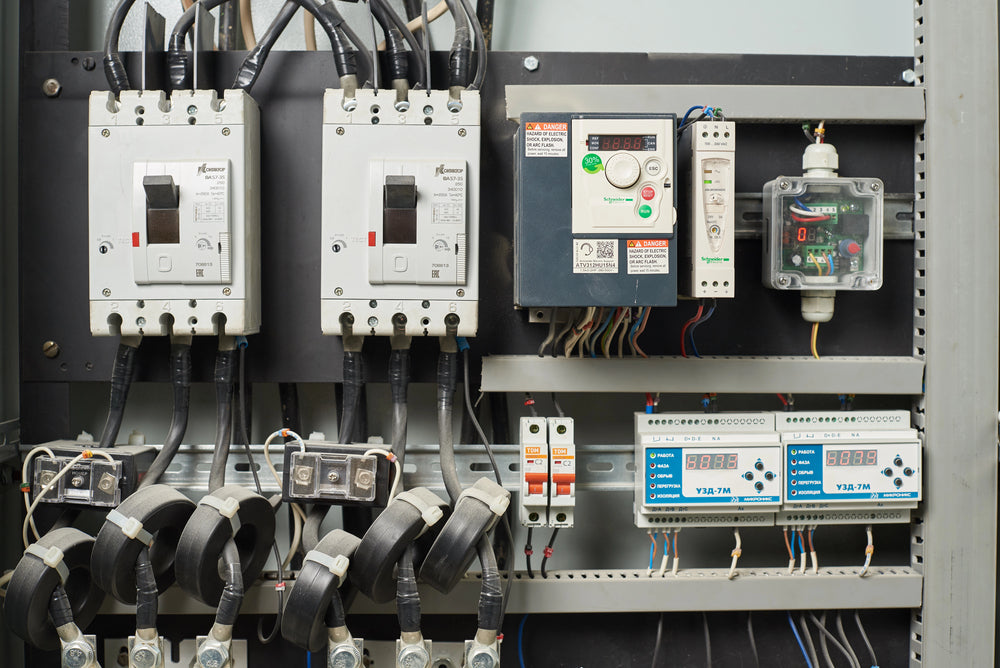
ABB's dominance in New York's commercial and industrial electrical infrastructure isn't accidental. For decades, ABB's SACE Tmax and Emax series molded case and air circuit breakers were the specification of choice for large-scale commercial builds — the kind of Class A office towers that define the Midtown and Lower Manhattan skylines, the healthcare campuses in the Bronx, and the manufacturing and logistics facilities that once anchored the industrial corridors of Staten Island and South Brooklyn. ABB breakers earned that specification trust through their robust interrupting capacity ratings, often ranging from 65kA to 150kA, their compatibility with building automation systems, and their compliance with ANSI/IEEE standards that New York's electrical inspectors and consulting engineers demanded. When a building constructed in the 1990s or early 2000s undergoes a full electrical infrastructure overhaul today — which is happening constantly as owners upgrade to meet modern energy codes and tenant power demands — the ABB switchgear coming out of those panels is frequently in excellent working condition with decades of service life remaining.
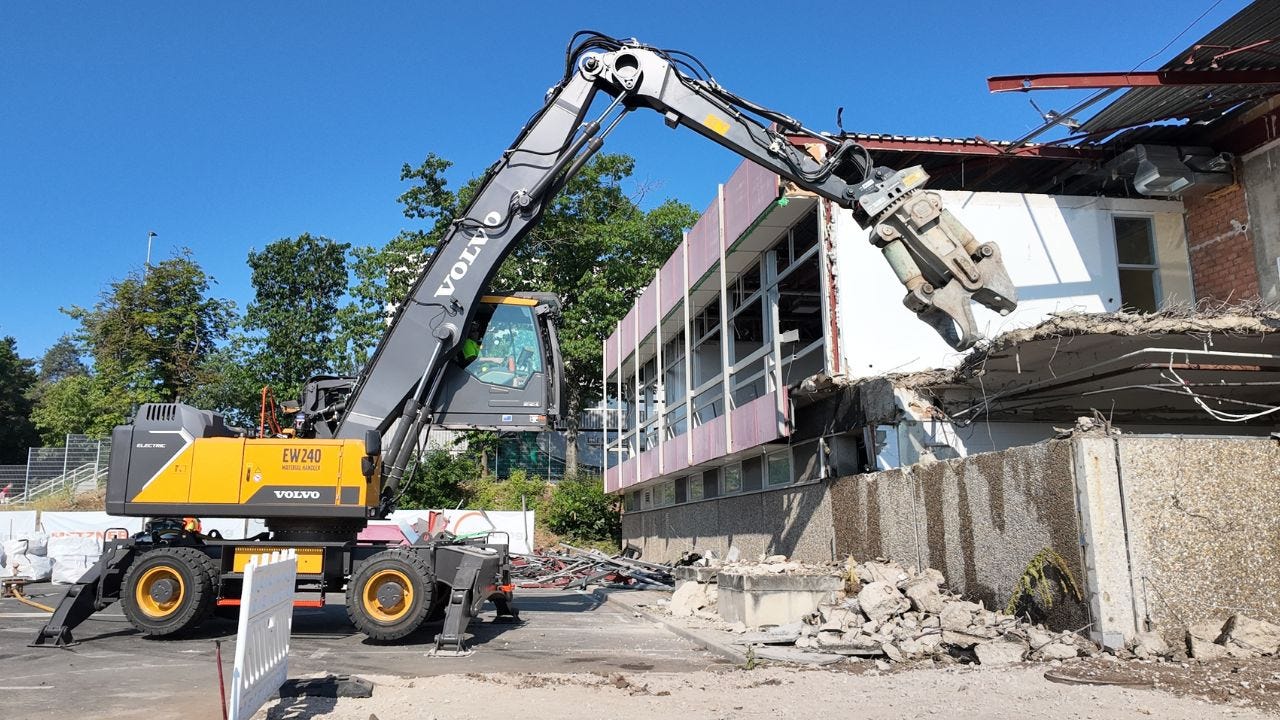
The demolition and renovation pipeline feeding this surplus market is substantial. In Manhattan alone, the conversion of aging commercial office stock to residential use — accelerated by post-pandemic vacancy rates — has triggered dozens of full electrical strip-outs. In Brooklyn, neighborhoods like Sunset Park, Bushwick, and the Navy Yard district are seeing industrial buildings completely re-purposed, with their original heavy-duty electrical infrastructure becoming available. Queens continues to generate surplus equipment through the ongoing redevelopment of former manufacturing zones near Jamaica and Flushing. For contractors, building owners, and project managers navigating these projects, our demolition buyback services provide a straightforward path to recovering real value from electrical equipment that would otherwise be written off or scrapped at commodity metal prices.
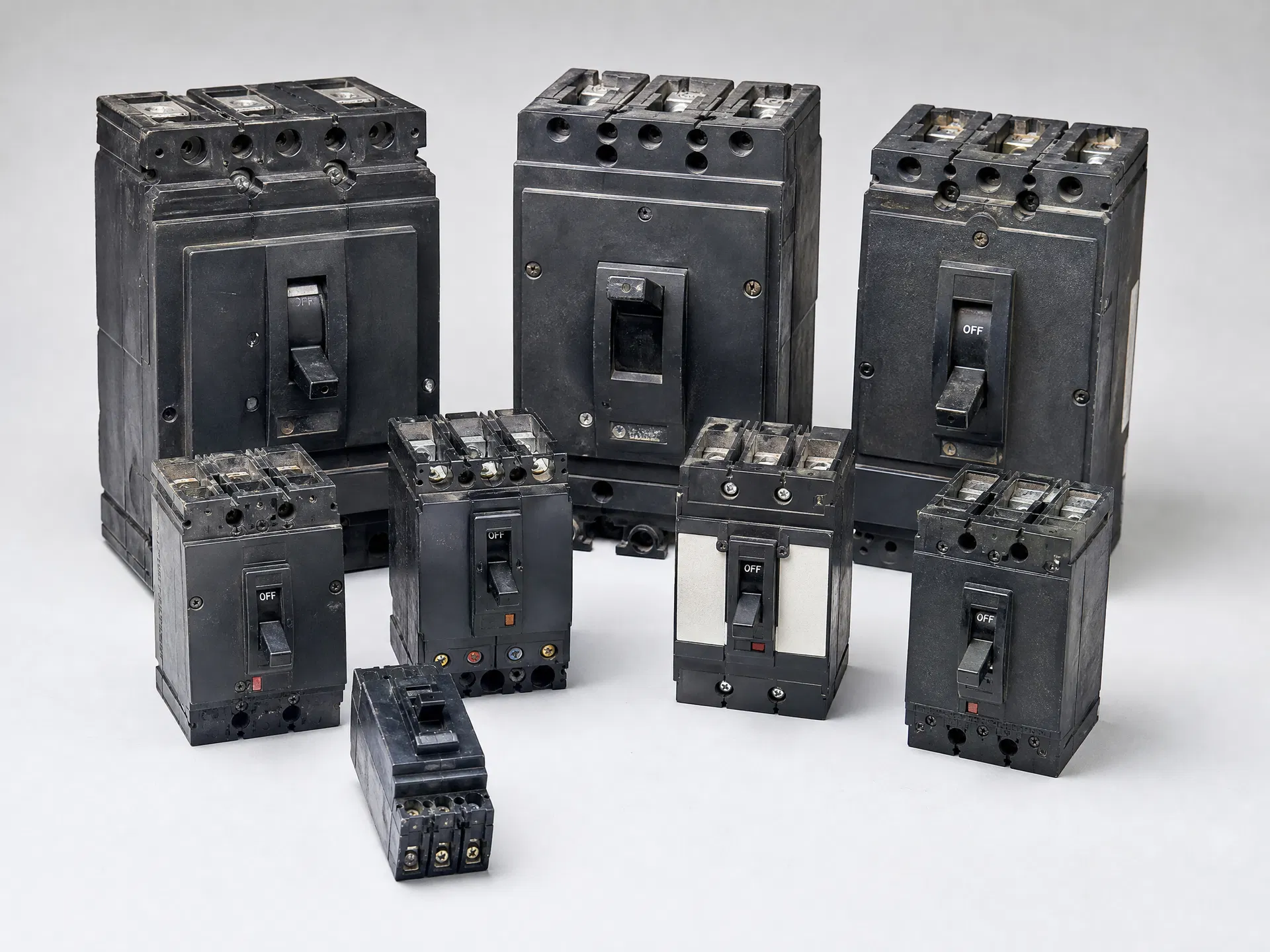
What makes ABB breakers particularly attractive in the secondary market is their repairability and the availability of replacement parts. Unlike some proprietary systems, ABB's product architecture allows for professional testing, reconditioning, and certification — meaning a 400-amp or 800-amp SACE breaker removed from a Queens distribution panel can be verified to full factory specifications and redeployed in another facility with complete confidence. Buyers ranging from smaller commercial contractors working in the outer boroughs to facilities managers at institutional properties actively seek out tested surplus ABB equipment as a cost-effective alternative to new gear, particularly given current supply chain lead times on new switchgear that can stretch to 40 weeks or longer.
New York's electrical surplus market is one of the most active in North America, and ABB circuit breakers sit at the center of it.
Understanding the Value of ABB SACE, Tmax, and Formula Series
ABB's circuit breaker portfolio represents some of the most sophisticated overcurrent protection technology available in the industrial and commercial electrical market. Among their most recognized product lines, the SACE, Tmax, and Formula series have earned a reputation for exceptional build quality, precise engineering tolerances, and long operational lifespans — all factors that translate directly into strong resale and surplus value long after original installation.
SACE and Emax 2: High-Performance Air Circuit Breakers
The ABB SACE Emax 2 series sits at the top tier of ABB's air circuit breaker lineup, designed for main distribution and power management applications in large industrial facilities, data centers, and utility substations. Available in frame sizes from 400A to 6300A, the Emax 2 features integrated power monitoring, zone-selective interlocking, and advanced communication capabilities through EKIP control units. A new Emax 2 E2.2 unit can carry a list price exceeding $8,000–$15,000 depending on configuration, and well-maintained surplus units regularly retain 40–60% of that original value in the secondary market — a testament to how seriously buyers regard ABB's manufacturing standards.
Tmax and Tmax XT: The Industrial Workhorse
The Tmax series — and its successor, the Tmax XT — is arguably ABB's most widely deployed molded case circuit breaker (MCCB) platform globally. The Tmax XT line spans the XT1 through XT7 frame range, covering applications from 16A to 1600A with Icu ratings up to 200kA. These breakers are found throughout motor control centers, switchgear assemblies, and feeder distribution panels across manufacturing plants, commercial buildings, and infrastructure projects.
The Tmax T4 and T5 remain among the most commonly encountered units in the surplus market, originally priced between $400 and $2,500 new depending on amperage rating and trip unit type. Quality surplus examples of these models frequently trade at 25–45% of new cost, offering procurement teams significant savings without sacrificing reliability. The Tmax XT platform's backward-compatible footprint with legacy Tmax installations makes these units especially attractive for facility upgrades and MCC retrofits.
Formula Series: Compact, Cost-Effective Protection
The ABB Formula series — specifically the Formula A1 and Formula A2 — represents ABB's compact MCCB offering, targeting lighter commercial and residential distribution applications up to 250A. While these units carry lower original price points (typically $150–$600 new), they are frequently found in large quantities within surplus electrical inventories from commercial construction projects, tenant buildouts, and equipment decommissioning.
The Formula A1 and A2 units hold their value well in bulk transactions, particularly when breakers are in original packaging or have documented low service hours. Buyers seeking to outfit light commercial panels or maintain inventory for service work find these units highly cost-effective through surplus channels.
Why Surplus ABB Breakers Hold Their Value
ABB's global installed base is enormous, and the demand for compatible replacement and expansion breakers remains consistent across industries. The combination of rigorous quality control, long product lifecycle support, and widespread specification in engineering standards keeps secondary market demand strong for all three product lines.
If your facility is decommissioning switchgear or retiring electrical equipment that includes ABB SACE, Tmax, or Formula series breakers, our surplus buying program offers competitive assessments based on current market conditions, model specifications, and unit condition — ensuring you recover meaningful value from assets that still have significant life remaining.
How to Identify and Evaluate Your ABB Circuit Breakers
Before you sell or repurpose your ABB circuit breakers, a thorough assessment is essential — both to establish accurate value and to ensure you're representing the equipment honestly to buyers. Follow these steps to properly identify and evaluate what you have on hand.
Step 1: Locate the Nameplate and Part Number
Every ABB circuit breaker carries a nameplate or label affixed directly to the casing. This is your primary source of identification. Look for the model number, catalog number, and series designation printed on the front face or side of the breaker body. Common ABB series include the SACE Tmax, Formula, S200, and Emax lines. Record this information precisely — even a single character difference in a catalog number can indicate a completely different product specification.
Step 2: Confirm Amperage and Voltage Ratings
The nameplate will also display the breaker's rated amperage (In), voltage rating, and interrupting capacity (kA). These figures are non-negotiable for buyers who need exact replacements or system-compatible components. A breaker rated at 400A/600V, for example, serves a very different application than a 100A/240V unit. If the label is worn or partially obscured, cross-reference the model number against ABB's published product documentation or technical catalogs, which are widely available online.
Step 3: Inspect for Physical Wear and Damage
Conduct a careful visual inspection before listing or selling anything. Look for:
- Burn marks or discoloration around terminals or the casing, which may indicate overload events or arcing
- Cracked or chipped housing that could compromise insulation integrity
- Corrosion on terminals — surface oxidation is common in older units but heavy pitting reduces conductivity and value
- Worn or stiff toggle mechanisms — the breaker should trip and reset with clean, deliberate action
- Missing or damaged arc chutes, particularly on larger frame molded case breakers
Document everything with clear photographs. Buyers expect transparency, and well-documented condition reports build trust and speed up transactions.
Step 4: Test Functionality Where Possible
If you have access to the appropriate test equipment, a basic operational check adds significant credibility to your listing. Confirming that the breaker trips and resets correctly under controlled conditions — and that contact resistance falls within acceptable ranges — can meaningfully increase what a buyer is willing to pay.
Step 5: Understand Why Age Doesn't Mean Worthless
One of the most common misconceptions contractors have is that older ABB breakers have no resale value. In reality, discontinued and legacy models are often in high demand precisely because they're no longer in production. Facilities running older switchgear rely on the secondary market to source exact replacements without costly panel upgrades. A 20-year-old SACE breaker in solid working condition can command a strong price from the right buyer.
The same evaluation logic applies when you're sorting through mixed panels containing equipment from other manufacturers. If you're working with Square D molded case breakers or Siemens industrial units alongside your ABB inventory, apply this same systematic approach to each brand — accurate identification and honest condition grading are the foundation of any successful sale, regardless of the nameplate on the equipment.
The Circuit Breaker Buyer USA Advantage for NYC Contractors
New York City moves fast, and the electrical contractors, facility managers, and surplus dealers who operate here don't have time for buyers who drag their feet, lowball offers, or disappear after the first conversation. That's precisely why Circuit Breaker Buyer USA has become the go-to resource for NYC professionals looking to convert surplus electrical inventory into immediate working capital.
What Actually Sets Us Apart
The New York market is unlike anywhere else in the country. Projects get cancelled overnight. Building retrofits leave warehouses full of breakers that no longer fit the job. Utility upgrades create surplus stock faster than most contractors can manage it. We understand this reality because we've been operating inside it for years — and we've built our entire process around making the selling experience as frictionless as possible for busy professionals.
Competitive pricing isn't a talking point for us — it's a business commitment. We stay current with market conditions across all major brands including Square D, Siemens, Eaton, GE, and ABB, which means we consistently offer payouts that reflect what your inventory is actually worth. You won't find yourself accepting pennies on the dollar because we genuinely understand the value of what you're selling.
Fast payment is another cornerstone of how we operate. Once we assess your inventory and agree on a price, payment moves quickly — no waiting 30, 60, or 90 days for a check to materialize. For contractors managing tight cash flow between projects, that speed is everything. Capital tied up in surplus breakers sitting on a shelf is capital that can't fund your next job, cover payroll, or keep your operation running efficiently.
Logistics are completely handled on our end. This is where many sellers run into unexpected headaches with other buyers — arranging pickups, coordinating freight, dealing with packaging requirements. We eliminate all of that. Our team manages the logistics process from start to finish, so you're not spending valuable hours coordinating shipments when you should be focused on your work.
A Track Record You Can Verify
We don't ask you to take our word for it. Browse our Recent Purchases to see an active, transparent record of the types of inventory we buy and the scale at which we operate. That page speaks louder than any sales pitch because it demonstrates consistent, ongoing activity across a wide range of breaker types and quantities.
A National Network, Rooted in Your Market
While our presence in New York City is deep and well-established, Circuit Breaker Buyer USA operates across the country at the same high standard. Contractors and suppliers in the Midwest can work with our dedicated team as a Chicago circuit breaker buyer, and West Coast operations are equally well-served through our Los Angeles circuit breaker buyer network. This national reach means we have the infrastructure, capital, and expertise to handle large-scale purchases regardless of where the inventory originates.
For NYC contractors specifically, the bottom line is simple: we offer fair prices, we pay fast, and we handle everything so you don't have to. When surplus inventory is costing you space and tying up cash, there's no better call to make.
Our Streamlined Process: From Demolition to Cash in Hand
Selling surplus or decommissioned electrical equipment doesn't have to be complicated. At Circuit Breaker Buyer USA, we've spent years refining a buying process that eliminates the friction, guesswork, and wasted time that typically comes with liquidating industrial electrical assets. Whether you're clearing out a warehouse full of switchgear or offloading a handful of breakers pulled from a recent retrofit, here's exactly what to expect when you work with us.
Step 1: Inventory Your Equipment
Start by pulling together what you have. Walk your facility, check your storage racks, and document the equipment you're looking to move. You don't need to be an electrical engineer to do this — we just need basic information like manufacturer names, part numbers, model numbers, and approximate quantities. Take photos if you can; clear images of nameplates and overall condition go a long way toward accelerating the process. We purchase a wide range of brands and product lines, so don't assume something is too old, too obscure, or too common to be worth selling. From legacy Eaton molded case breakers to industrial-grade GE switchgear components, chances are we want what you have.
Step 2: Request Your Quote
Once you've got your inventory together, it's time to Get a Quote. Submit your list through our contact page and one of our experienced buyers will review your equipment promptly. We know your time is valuable, which is why we prioritize fast turnarounds on quote requests. Our team has deep market knowledge across dozens of manufacturers and product categories, so we can provide accurate, competitive offers without the back-and-forth that slows other buyers down. There are no lowball tactics, no hidden conditions, and no pressure — just a straightforward cash offer based on real market demand.
Step 3: Arrange Shipping or Schedule a Pickup
Once you accept our offer, we make the logistics as painless as possible. For smaller lots, we'll provide prepaid shipping labels so you can box up your equipment and drop it off at your nearest carrier location — no out-of-pocket shipping costs on your end. For larger quantities, palletized loads, or full facility cleanouts, we can coordinate freight pickup directly from your location. Our team handles the heavy lifting of logistics coordination, so you can stay focused on your operations rather than playing phone tag with freight brokers.
Step 4: Get Paid
After your equipment arrives and passes our receiving inspection, payment is issued quickly and reliably. We offer multiple payment methods to suit your preference, and we don't drag our feet. Fast payment isn't just a courtesy — it's a commitment we stand behind with every transaction. Many of our clients return to us repeatedly because they know exactly what to expect: a fair offer, a smooth process, and money in hand without unnecessary delays.
From the first breaker you pull off the shelf to the moment payment clears, Circuit Breaker Buyer USA is built to make surplus electrical liquidation simple, transparent, and profitable for you. We've helped contractors, facility managers, electrical distributors, and plant operators turn idle inventory into real capital — and we're ready to do the same for you.
Maximizing Returns on Commercial and Industrial Electrical Upgrades
Large-scale electrical upgrades represent a significant capital investment for any facility, but experienced managers know that the equipment coming out of service doesn't have to be a sunk cost. ABB's legacy switchgear, molded case breakers, and low-voltage power circuit breakers hold genuine resale value in secondary markets — and with the right approach, selling decommissioned equipment can meaningfully offset what you're spending on the new installation.
Start with the sale in mind before the project begins. The single biggest mistake facility managers make is treating equipment removal as an afterthought. By the time the new gear is energized and the old breakers are sitting in a corner of the maintenance room, opportunities have already been lost. Instead, build the disposition strategy into your project planning from the outset. Identify every ABB asset scheduled for removal — frame sizes, amp ratings, voltage ratings, and condition — and get preliminary valuations before the project breaks ground. This gives you real numbers to factor into your capital budget and prevents the rushed, low-value sales that happen when equipment is treated as clutter rather than inventory.
Timing the sale strategically matters more than most people expect. The secondary market for ABB breakers fluctuates based on supply chain conditions, new equipment lead times, and regional construction demand. When lead times on new ABB gear stretch out — as they have periodically in recent years — demand for refurbished and surplus units spikes, and prices follow. If your project timeline has flexibility, monitoring market conditions before listing your equipment can translate directly into higher offers. That said, don't let the pursuit of perfect timing result in improper storage that degrades the equipment's value. A breaker that's been sitting in a damp warehouse for six months waiting for better market conditions is worth considerably less than one sold promptly in excellent condition.
Proper storage is non-negotiable if you're holding inventory. Once breakers are removed from service, they need to be stored in a clean, dry, climate-controlled environment. Humidity is the primary enemy — it accelerates corrosion on contacts and terminal hardware, and buyers will discount heavily for any visible oxidation or moisture damage. Keep breakers in their original enclosures or wrap them securely to prevent dust infiltration. Label everything clearly with the model number, frame, and any known service history. Well-documented, properly stored equipment consistently commands premium pricing from reputable buyers.
This strategy works at scale across major industrial markets. Facility managers in cities with active commercial construction and industrial expansion have the most to gain because buyer competition is strongest in those areas. Markets like Dallas and Houston have seen sustained demand for surplus ABB equipment driven by ongoing infrastructure projects, data center buildouts, and manufacturing expansions — and sellers who come prepared with clean, documented inventory routinely receive competitive offers.
The bottom line is straightforward: your decommissioned ABB equipment has real market value, but that value is perishable. Integrating a thoughtful resale plan into your upgrade project from day one — covering inventory documentation, proper handling, storage conditions, and market timing — transforms what most facilities treat as disposal logistics into a legitimate financial return. For large facilities cycling out significant quantities of breakers and switchgear, this approach can recover tens of thousands of dollars that would otherwise simply walk out the door with the scrap hauler.
Common Challenges When Selling Electrical Equipment in NYC (and How We Solve Them)
Anyone who has worked a job site in New York City knows that the rules are different here. The logistics alone can turn a straightforward equipment transaction into a full-day ordeal, and that's before you factor in the relentless pace of commercial and industrial projects across the five boroughs. Contractors and electrical professionals face a unique set of obstacles when it comes to offloading surplus breakers, panels, and switchgear — and most equipment buyers simply aren't equipped to handle the realities of working in this city. Here's where those friction points tend to hit hardest, and how Circuit Breaker Buyer USA is built to handle every one of them.
Storage Space Is a Premium You Can't Afford
Manhattan job sites don't come with sprawling warehouses. Neither do most Brooklyn basements, Queens commercial builds, or Bronx renovation projects. When a project wraps up or specifications change mid-job, surplus electrical equipment has nowhere to go. Holding onto excess breakers and panels means paying for storage you don't have or crowding a workspace that needs to stay operational. Circuit Breaker Buyer USA moves quickly precisely because we understand that sitting on equipment isn't an option. Our streamlined quote-to-pickup process is designed to get surplus inventory out of your hands fast, eliminating the need to find temporary storage solutions or haul materials back to a facility across town.
NYC Traffic and Logistics Can Kill a Deal
Getting equipment from a high-rise job site in Midtown to a buyer's location across the metro area isn't a simple task. Between delivery windows, loading dock restrictions, elevator scheduling, and the unpredictability of city traffic, coordinating transportation for heavy electrical equipment can become a logistical nightmare. Many buyers place that burden entirely on the seller — expecting you to handle freight, packaging, and delivery on your own timeline. We take a different approach. Circuit Breaker Buyer USA coordinates the pickup logistics directly, working around the specific constraints of your location whether that's a tight loading dock in Lower Manhattan or a multi-floor commercial site in Long Island City. You shouldn't need to become a freight coordinator just to sell equipment you no longer need.
Tight Project Deadlines Leave No Room for Slow Buyers
In New York City construction, time is not a courtesy — it's a contract obligation. When a project pivots, a change order comes through, or a phase wraps ahead of schedule, you need to move surplus equipment immediately. Waiting weeks for an offer, chasing down appraisals, or dealing with buyers who go quiet after the initial inquiry isn't something any contractor can afford. Circuit Breaker Buyer USA operates with the same urgency that NYC projects demand. We provide fast, transparent offers and work on your schedule — not ours. From the initial inquiry to the final transaction, our process is built for speed without sacrificing fair value for your equipment.
The bottom line is that selling electrical equipment in New York City requires a buyer who actually understands the environment. The space constraints, the traffic realities, and the deadline pressure aren't abstract inconveniences — they're the daily reality of doing business here. Circuit Breaker Buyer USA was built with those realities in mind, giving NYC contractors a reliable, responsive outlet for surplus equipment that works as hard as they do.
Frequently Asked Questions About Selling ABB Breakers in NYC
Do You Buy ABB Breakers That Are Damaged or No Longer Working?
In many cases, yes. While fully functional ABB breakers in original condition command the highest prices, we evaluate damaged, tripped, or non-operational units on a case-by-case basis. ABB equipment is engineered to such precise tolerances that even breakers with cosmetic damage or minor faults often retain significant recoverable value — either for parts, professional refurbishment, or core material. That said, breakers that have sustained severe arc flash damage, physical crushing, or complete housing failure may have limited resale potential. When you reach out, be upfront about the condition and we'll give you an honest assessment rather than wasting your time.
How Quickly Will I Get Paid After Handing Over My Breakers?
Speed is one of the things we take seriously. For sellers in the NYC metro area who complete an in-person transaction, same-day payment is standard. We don't believe in making contractors or electricians wait a week for a check to clear. Payment is typically issued via check, ACH transfer, or cash depending on transaction size and your preference. Larger lots involving freight shipments from outside the city follow a streamlined inspection-to-payment process, with funds typically released within 24 to 48 hours of the equipment arriving and being verified at our facility.
Do I Need to Pay for Shipping If I'm Selling From New York City?
If you're located in the five boroughs or the surrounding metro area, we offer free pickup for qualifying lots — meaning you pay nothing out of pocket to move your inventory. For larger commercial or industrial quantities, we'll coordinate logistics directly and absorb the transportation cost. Sellers shipping from further out should contact us first, as we frequently arrange prepaid shipping labels for high-value ABB lots regardless of origin. The bottom line: don't let freight costs stop you from reaching out. We work hard to make sure the logistics never eat into your payout.
What If I Have a Mixed Lot of ABB and Other Brands Like Siemens, Square D, or Eaton?
Mixed lots are extremely common and present no problem whatsoever. We purchase breakers from all major manufacturers, so there's no need to sort through your inventory and separate brands before contacting us. Whether you're clearing out a job site, a warehouse, or a contractor's storage unit packed with a decade's worth of surplus from multiple projects, we'll evaluate everything together. ABB equipment will naturally be assessed at its own market rate, and other brands will be priced accordingly. You get one consolidated offer, one transaction, and one payment — clean and straightforward.
How Do You Determine What My ABB Breakers Are Worth?
Pricing is based on several converging factors: the specific ABB product line (SACE Tmax, SACE Emax, S200 series, and others carry different market values), current secondary market demand, amperage rating, voltage class, and overall condition. We cross-reference live market data and our own buyer network to ensure our offers reflect what these units actually trade for today — not outdated price sheets. If you can provide model numbers, quantities, and photos upfront, we can often generate a preliminary quote before we even meet in person, saving everyone time.
Is There a Minimum Quantity Required to Sell?
There's no hard minimum, though transaction economics naturally favor larger lots. A single high-value ABB SACE Emax air circuit breaker is absolutely worth discussing. A box of 20 S200 miniature circuit breakers is equally welcome. If you're unsure whether what you have is worth the conversation, err on the side of reaching out — we'd rather spend two minutes telling you something isn't worth pursuing than have you leave value sitting on a shelf.
How Do I Get Started If I've Never Sold Electrical Surplus Before?
The process is simpler than most people expect. Gather whatever information you have — model numbers, quantities, photos if possible — and contact us directly. We'll review what you have, ask any clarifying questions, and put together a fair offer. There's no obligation, no pressure, and no complex paperwork. Many of our repeat sellers are NYC electricians and contractors who started with a single lot and now call us every time a project wraps up. Getting started takes about five minutes.
Ready to Sell Your ABB Circuit Breakers? Contact Us Today
If you're sitting on surplus ABB circuit breakers, outdated switchgear, or excess electrical inventory, there's no reason to let that equipment collect dust in a storage room. We specialize in purchasing used, surplus, and obsolete ABB circuit breakers at highly competitive prices — and we make the entire process fast, straightforward, and completely hassle-free.
NYC facility managers and electrical contractors trust us to deliver fair market valuations backed by real industry expertise. Whether you're clearing out a warehouse after a large-scale project, upgrading an aging electrical system, or simply liquidating excess inventory, we're ready to put cash back in your hands quickly.
Getting started couldn't be easier. Call us directly at (951) 903-9804 to speak with a knowledgeable specialist who understands the true value of your ABB equipment. We'll assess what you have, answer your questions, and provide a free, no-obligation quote — no pressure, no runaround, just a straightforward conversation about what your inventory is worth.
From SACE Tmax and Emax series breakers to older legacy models, we purchase across the full ABB product line. Condition, quantity, and model details all factor into our pricing, and we work hard to ensure you walk away satisfied with the offer.
Don't leave money on the table. Reach out today and discover how simple it is to convert idle electrical equipment into immediate value. Contact Us online or pick up the phone and call (951) 903-9804 right now — our team is standing by and ready to help you get the most out of your surplus ABB inventory.
Ready for a quote?
Call Circuit Breaker Buyer USA for a fast, no-obligation offer on your equipment.