Selling Breakers After a Plant Shutdown: Step-by-Step Guide
Plant shutdowns are rarely clean. Timelines compress, headcount shrinks, and competing priorities—environmental abatement, asset preservation, contract closeout, and safety—collide in the same week. In the middle of lockout/tagout procedures and demolition schedules, high-value electrical gear often ends up treated like scrap because it’s heavy, complex, and “in the way.” That’s a costly mistake. If you capture the right data and follow a disciplined removal and packaging process, surplus circuit breakers and switchgear from a decommissioned line or an entire facility can recover meaningful capital—often offsetting a significant portion of shutdown expenses.
The challenge is that electrical assets are not commodities in the simple sense. A Square D Masterpact NW12H1 3200A, 65 kA at 480 V with Micrologic 6.0A and a communicating cradle is a different market story than a thermal-magnetic MCCB pulled from a panelboard. Low-voltage power circuit breakers (UL 1066) like Eaton/Cutler-Hammer Magnum DS, GE EntelliGuard G or Power Break II, ABB Emax 2, and Siemens WL frames can command strong demand when complete with their cradles, secondary disconnects, and test reports. The same is true for medium-voltage vacuum breakers—GE Magne-Blast (AM-4.16/AM-13.8 retrofits), Eaton VCP-W 5 kV/15 kV, ABB VD4, Siemens 3AH—especially when the cell hardware, racking mechanisms, and primary disconnect fingers are intact. Even feeder protection relays and accessories—Digitrip 1150/520, Micrologic 5/6 trip units, shunt trips, undervoltage releases, bell alarms, and current transformer sets—have secondary-market value when documented properly.
What complicates resale during a shutdown is the intersection of safety, documentation, and logistics. De-energization and verification per NFPA 70E and site LOTO policies come first. Then, fast but accurate identification matters: frame size (800–4000 A for LVPCBs), voltage class (480/600 V, 5/15 kV), interrupt ratings (for example, 65 kA or 100 kA at 480 V), ANSI/NEMA ratings for medium voltage (e.g., 1200 A, 25/40 kA symmetrical), and the exact catalog number or device code engraved on the nameplate. Buyers and test houses will also want photos of the nameplate, trip unit screen, secondary disconnect blocks, racking interface, cradle latch, and any bus stabs. Switchgear lineups—metal-enclosed or metal-clad, 5 kV or 15 kV, arc-resistant or standard—carry incremental value when you can produce the one-line, gear drawings, and bills of material showing bus ratings, breaker cells, and protective relay schemes (SEL-751/751A, Multilin 350/750, etc.). Missing cradles, cut control wiring, or damaged shutters can turn a five-figure asset into a parts unit.
At the same time, supply-chain realities continue to make used equipment attractive to active plants and contractors. When a facility can’t wait 20–40 weeks for a new 4000A WL frame or needs a matching vintage DS breaker to keep legacy gear serviceable, verified used equipment fills the gap. That demand is your opportunity—if you extract breakers correctly, preserve accessories, capture test data (primary injection on LVPCBs, insulation resistance, contact resistance), and package for freight without bending arc chutes or cracking phenolic components. Skids with blocking for cradles, desiccant in shrink wrap, and separation of trip units in padded cases can be the difference between “ready for NETA reconditioning” and “freight-damaged, reduced offer.”
This step-by-step guide is built for shutdown managers, plant engineers, and asset recovery teams who need a clear, safe, and auditable path from energized equipment to cash in the bank. We’ll cover how to plan extraction around outage windows, create an inventory that speaks the language of serious buyers, triage what to test versus sell as-is, comply with relevant standards and site policies, and avoid the expensive pitfalls—like discarding racking cradles, tossing breaker cell hardware, or mixing bolt-on MCCBs with draw-out LVPCBs on the same pallet. With a methodical approach, you can convert de-energized infrastructure into recovered capital while maintaining safety and protecting the resale value of your circuit breakers and switchgear.
Understanding the Industrial Plant Shutdown Process
Industrial plant shutdowns happen for a handful of predictable reasons—relocation to lower-cost regions or closer to customers, capacity upgrades that make an existing site obsolete, bankruptcy or forced liquidation, and corporate consolidation after mergers. In energy-intensive hubs like Houston and Chicago, we see all four drivers frequently, from petrochemical complexes and metal fabrication shops to large food-and-beverage processors. Regardless of why the decision is made, the process follows a disciplined sequence designed to maintain safety, extract maximum asset value, and minimize schedule risk.
The first phase is the strategic call and notification, where leadership sets the closure date range, appoints a decommissioning manager, and aligns stakeholders—operations, EHS, maintenance, finance, real estate, and outside specialists such as riggers and asset recovery firms. Early in this phase, a draft shutdown critical path is built around utilities and life safety systems. Power is kept online as long as practical to support lighting, ventilation, sump pumps, fire/life safety, cranes, welding outlets, and deconstruction tooling. This early recognition that electrical power is a late-stage dependency is crucial, because it informs sequencing, temporary power plans, and the monetization strategy for electrical equipment.
Next comes asset mapping and valuation. Teams reconcile one-line diagrams, P&IDs, and panel schedules with a physical walkdown. They capture nameplate and settings data for switchgear lineups, motor control centers, panelboards, transformers, bus duct, UPS units, VFDs, transfer switches, protective relays, and generators. For breakers, that means recording frame and trip ratings, trip units, and vintage—for example, Square D Masterpact NW20H1 with Micrologic 6.0A, Eaton/Cutler-Hammer Series NRX RF/RR frames with Digitrip 520/1150, GE EntelliGuard G with LSIG trip, or legacy Westinghouse DS‑416/DS‑632 with Static-Trip III. On the medium-voltage side, common items include Eaton VCP‑W 15 kV vacuum breakers, Siemens 3AF or 3AH3 vacuum breakers, GE Magne-Blast roll-outs, and Square D Masterclad 5 kV cells. Transformers (e.g., 1500–2500 kVA 13.2/13.8 kV primary to 480Y/277 V secondary, dry-type or oil-filled) and busway systems (Square D I-Line II 2000–4000 A, Eaton Pow-R-Way III, Siemens Sentron) are documented for age, condition, and configuration. This inventory underpins both safe de-energization planning and resale value estimation.
The decommissioning plan then breaks into controlled utility and process shutdowns. Mechanical and process equipment is often idled and drained before major electrical isolation begins, but electrical distribution remains energized in segments to keep decommissioning activities productive and safe. Strict lockout/tagout and verification of absence of voltage practices—aligned with NFPA 70E—are followed. Backfeed hazards from generators, UPS systems, PV, or capacitor banks are accounted for, and utility coordination ensures medium-voltage feeders are opened and grounded by the serving utility before any primary work begins. In older facilities, arc flash labels are verified or updated, and temporary lighting and GFCI-protected receptacles are installed to maintain safe work areas as permanent circuits are retired.
Electrical infrastructure is typically the last major system to be fully decommissioned because it underpins every other workstream—rigging cranes need it to lift production lines, negative air machines need it for environmental abatement, and fire/life safety systems depend on it up to the final exit. Yet it also holds disproportionate residual value when managed correctly. High-demand, reusable assets—drawout LV power breakers like Masterpact NW, Eaton DS/NX/Series NRX, GE AKR/EntelliGuard; molded-case breakers such as Square D PowerPact P/R/H frames and Eaton/Cutler-Hammer Series C; MCC buckets for Allen‑Bradley Centerline 2100, Siemens tiastar, and Square D Model 6; VFDs like ABB ACS880 and Allen-Bradley PowerFlex 755; and MV vacuum breakers—command strong aftermarket interest due to long OEM lead times and ongoing service parts needs across North American industry. In 2025–2026, for example, new MV switchgear and large dry-type transformer lead times of 40–70 weeks have kept demand high for compliant, tested used equipment, provided that removal and documentation are well executed.
Removal and packaging is its own phase. After final LOTO and de-energization, breakers are tripped open, racked to the disconnect/test positions, and withdrawn. Trip units are protected, shutters are closed, and cubicles are labeled. For DS- and AKR-style breakers, primary disconnect fingers are inspected and protected with corrosion inhibitors, and cradles are unbolted if the buyer needs the complete cell. Switchgear lineups are disassembled into shippable sections, bus joints are mapped and bagged, and busway is de-coupled with joint packs cataloged by rating and plug-in configuration. Transformers are megger-tested and, if oil-filled, sampled for dielectric strength and PCBs; any PCB concentration at or above regulatory thresholds triggers a hazardous materials workflow. SF6 from MV breakers, if present, is recovered by certified technicians with cylinder tracking per environmental regulations. Sensitive electronics—SEL-751A feeder relays, SEL-487E transformer relays, Micrologic and Digitrip trip units, and PLC hardware—are anti-static bagged and boxed. Proper crating with moisture barriers, desiccant, shock sensors, and palletization prevents transit damage that can erase asset value.
Compliance and records tie the project together. Complete documentation—one-line markups, equipment photos, serial numbers, factory test sheets if available, and site removal test results—supports both buyer confidence and insurance closeout. NETA-compliant test reports (primary injection on LV power breakers, contact resistance, insulation resistance) materially increase resale value by reducing uncertainty. Chain-of-custody logs for hazardous materials, SF6 handling certificates, and bill-of-lading detail keep auditors satisfied and avoid costly rework.
Real-world timing illustrates why power gear is last out yet first in value. A Gulf Coast resin facility near Houston kept a 15 kV lineup energized to run sump pumps and lighting until Week 8 of a 10-week decommissioning; in the final 10 days, the team racked out a set of Eaton VCP‑W 15 kV breakers and Square D Masterclad cells, along with several Masterpact NW12H1 and NW20H1 breakers with Micrologic 6.0P trips. The documented, tested breakers were placed immediately with a regional utility as spares. In the Midwest, a food plant consolidation outside Chicago staged the removal of Allen‑Bradley Centerline 2100 MCC buckets and PowerFlex 755 drives only after conveyors and refrigeration were offline; the buckets and LV power breakers (GE AKR and Eaton NRX) were crated, tested, and redeployed to a sister site facing 30+ week lead times on new gear.
Finally, the closeout phase aligns asset disposition with financial goals. Some equipment is redeployed internally; high-demand items are sold to qualified buyers who can provide test, retrofit, and warranty support; obsolescent gear is harvested for parts; and scrap metal is processed last. Because electrical infrastructure can represent a significant share of recoverable value—often outpacing mechanical equipment in liquidity—the shutdown plan should prioritize its condition, testing, and documentation throughout the project. When the sequencing preserves safe power until the right moment, and the removal is handled by teams who understand both NFPA 70E and the secondary market, the result is a safer shutdown, fewer delays, and stronger returns on everything from a Square D I-Line bus plug to a 2500 kVA padmount transformer.
Types of Electrical Equipment Found in Manufacturing Plants
Manufacturing plants rely on a layered electrical distribution system, from high-capacity service entrances down to final branch circuits feeding production lines, CNC machines, air compressors, and process controls. When a facility is upgraded, consolidated, or closed, much of this infrastructure can be responsibly salvaged and resold—often with strong secondary-market demand if it’s a mainstream brand and in serviceable condition. Key categories include circuit breakers, switchgear, electrical panels, transformers, and bus plugs/busway. Major OEMs commonly encountered are Square D, Siemens, Eaton/Cutler-Hammer, General Electric, ABB, and Westinghouse.
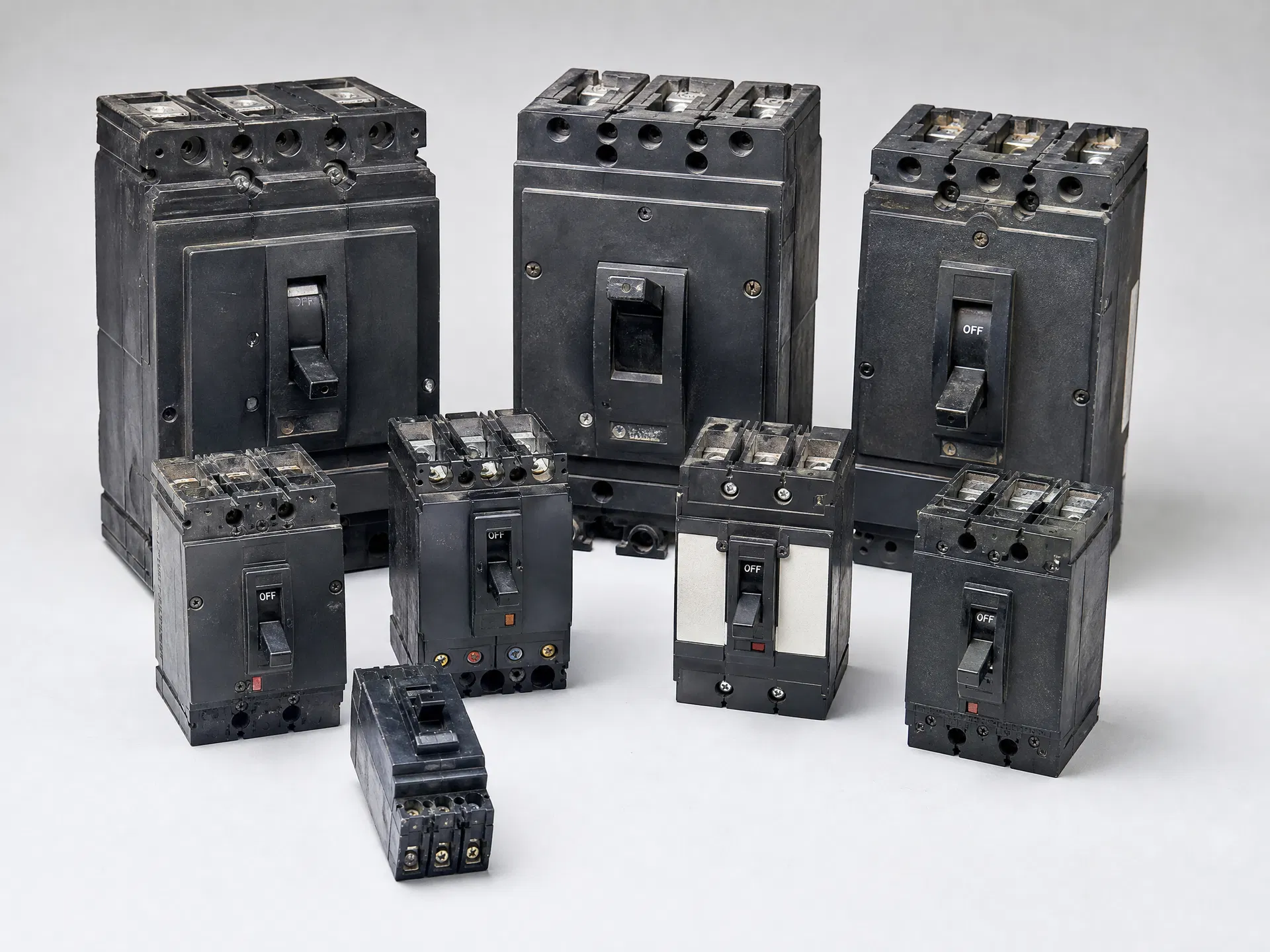
Circuit breakers (MCCB, ICCB, and LVPCB). Circuit breakers are the most frequently salvaged items because they’re modular, testable, and widely interchangeable within their respective families. In 480Y/277V and 208Y/120V plant environments, molded case breakers from 15A up to 1200A are common, with interrupting ratings from 14 kAIC to 65 kAIC and higher. Examples buyers look for include:
- Square D PowerPact H/J/L frames (e.g., HJA, JDL, LGL) and Masterpact NW low-voltage power breakers with Micrologic trip units (e.g., NW20H1 with Micrologic 5.0A). Legacy QO and HOM branch breakers are also common in office/support areas.
- Siemens Sentron series JD/LD/MD frames, VL/VT, and 3VA molded-case lines, plus 3WL/3VL power breakers with ETU trip units.
- Eaton/Cutler-Hammer Series C KD/LD/MD frames, BAB/BR/CH branch breakers, and Magnum DS/NRX drawout breakers with Digitrip trip units (e.g., Digitrip 520, 1150).
- General Electric Spectra SE/SF/SG series, THQD/TEY branch, and EntelliGuard G or legacy AKR drawout breakers.
- ABB Tmax T1–T7 and XT series molded case, plus Emax 2 power breakers with Ekip trip technology.
- Westinghouse legacy frames like FDB/EHB/HFB and DS air breakers, still active in many older plants.
What determines resale value: intact line/load lugs; accessories (shunt trip, undervoltage release, bell alarm, auxiliary contacts); trip unit type (LSIG vs LSI), rating plug presence, and documented testing. For larger frames, primary injection test results and contact wear measurements drive confidence. Buyers also check date codes and UL file numbers to avoid obsolete recall lines.
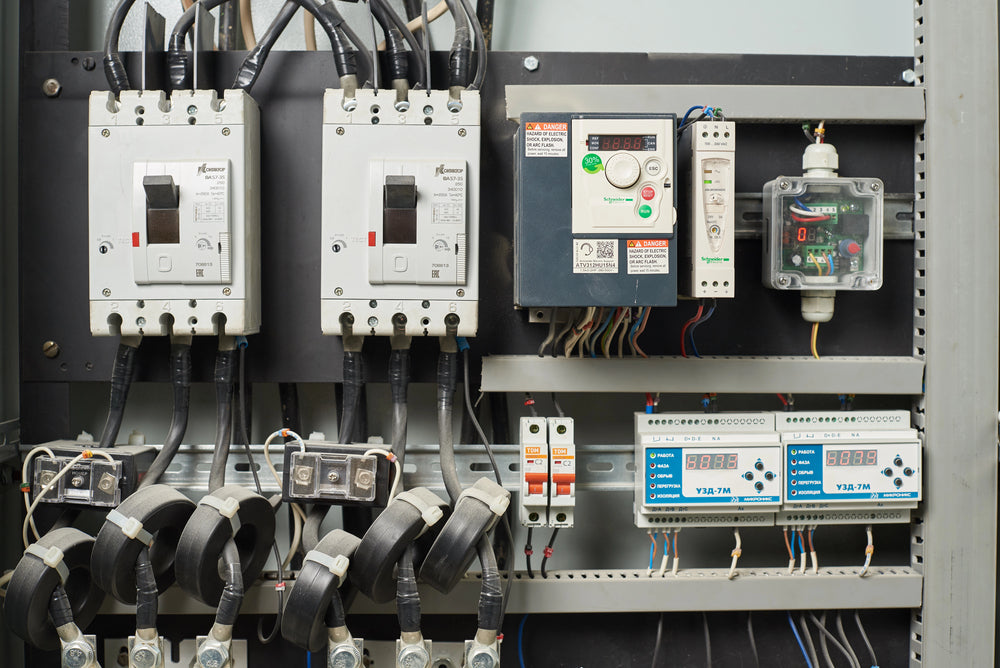
Switchgear and switchboards. Low-voltage switchgear (typically 480V) and switchboards serve as the main distribution hubs for production zones and MCC rooms. Salvageable components include the entire gear lineup, individual drawout breakers, protective relays, metering packages, CTs/VTs, bus bars, and compartment doors. Common scenarios: a 2000A–4000A main with multiple feeder sections serving MCCs and panelboards. Desirable units include:
- Drawout low-voltage power breakers such as Masterpact NW, EntelliGuard G, AKR, Magnum DS, and 3WL in metal-enclosed lineups.
- Switchboards with molded-case mains and feeders—often 1200A–3000A—with high SCCR (65 kA or 100 kA at 480V) and copper bus.
Arc-resistant or seismically qualified gear, and lineups with modern digital relaying (e.g., GE Multilin, Siemens SIPROTEC) command premium interest. When decommissioning, keep nameplates, coordination studies, and maintenance records with the equipment; these documents materially increase resale viability.
Electrical panels. Panelboards distribute power to process loads, lighting, and receptacles. Salvageable items include whole panelboards, interiors, main breakers, and full lots of branch breakers. Typical examples:
- electrical panels such as Square D NQ/NF and I-Line panelboards (e.g., NF interiors with QOB breakers; I-Line with plug-on feed-through capability).
- Siemens P1/P2/P3 panelboards with Sentron breakers (H-frame through L-frame mains).
- Eaton/Cutler-Hammer Pow-R-Line C/E panelboards.
- General Electric Spectra Series panels using Spectra plug-in breakers.
- ABB ProLine panel solutions.
- Legacy Westinghouse PRL panels still found in older sites.
Copper bus, high AIC ratings, and NEMA 3R/4X enclosures add value. Keep deadfronts, keys, and fillers; missing trim or panel doors can reduce resale options. For hazardous locations, NEMA 7/9 enclosures should be clearly identified and kept intact.
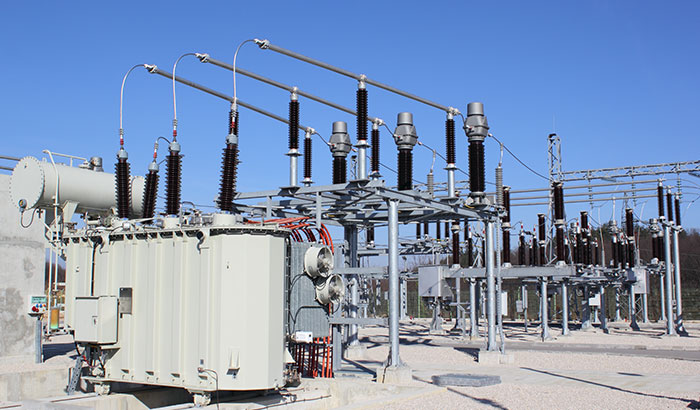
Transformers. Facility power often steps down from 480V to 208/120V via dry-type distribution transformers, generally 15–500 kVA, though larger 750–1500 kVA cast-coil or VPI units are common near heavy process equipment. Salvageable transformer categories include:
- DOE 2016-compliant low-voltage dry types, copper or aluminum windings, ventilated or TP-1 legacy equivalents.
- K-factor (K-13, K-20) units for drives/rectifiers; harmonic-mitigating transformers for CNC/robot lines.
- Medium-voltage dry or oil-filled unit subs feeding 4160V/13.2kV to 480V secondaries in large plants.
See our dedicated guide to transformers. Value drivers include kVA size, impedance, temperature rise (150°C vs 115°C), sound level, primary/secondary voltages (e.g., 480Δ–208Y/120), tap configuration, and test results (TTR, insulation resistance, and for oil-filled units, dielectric and PCB screen—flag any pre-1979 units for PCB considerations). Intact lifting lugs, clear nameplates, and undamaged coil surfaces are essential for remarketing.
Bus plugs and busway. Overhead plug-in busway is ubiquitous above production lines where flexibility is needed for relocating drops to welders, weld robots, and machining centers. Salvageable items include straight lengths, elbows, hangers, end feeds, and plug-in units (bus plugs). Common systems:
- Square D I-Line and I-Line II busway (225A–1200A) with matching fusible and breaker-style bus plugs.
- General Electric Spectra Series (SLB/SLD) plug-in busway and fusible/breaker plug units.
- Siemens Sentron busway with plug-in units rated 225A–800A.
- Eaton/Cutler-Hammer Pow-R-Way III busway with compatible plug-in units.
- ABB busway offerings found in select U.S. facilities.
- Legacy Westinghouse bus duct still operating in many older plants.
When recovering bus plugs/busway, keep joint packs, splice covers, and hardware with each section and label phasing and system voltage. Straight runs with copper bus, high ampacity (600A+), and NEMA 3R components are particularly desirable. Verify plug-in unit ratings (e.g., 60A, 100A, 200A) and whether they are fusible (Class J/R) or breaker-type; intact interlocks and stabs are critical.
Real-world decommissioning notes. In a typical 480V production hall, a 3000A main switchboard might feed two MCC rooms, a ring of busway with twenty 100A–200A bus plugs, and a network of panelboards. On shutdown:
- Power breakers (e.g., Masterpact NW20H1, Magnum DS) should be racked out, megger-tested phase-to-phase and phase-to-ground, and primary-injection tested where feasible.
- Panelboards should be removed with interiors and breakers intact; photograph nameplates and AIC ratings.
- Transformers should be disconnected, tested (TTR/IR), and braced for transport to avoid core/coil damage.
- Busway should be disassembled section by section, protecting stabs and insulating boots; retain joint kits.
Documentation—one-line diagrams, coordination studies, breaker settings (LSIG), PM logs, and any arc-flash labels—substantially increases buyer confidence. Always note voltage systems (208Y/120, 240Δ, 480Y/277, 600V), frequency (60 Hz), enclosure ratings, and short-circuit ratings. With major brands like Square D, Siemens, Eaton/Cutler-Hammer, General Electric, ABB, and Westinghouse, properly handled and tested components from manufacturing plants typically find ready secondary-market demand.
Step-by-Step Guide to Selling Breakers After a Shutdown
1. Comprehensive Inventory and Auditing
Start with a disciplined walkdown of your electrical rooms, MCC lines, and switchgear lineups while the site is still intact. Use the single-line diagram to guide your route and confirm that what’s installed matches the drawings. Create a structured inventory spreadsheet with at least these fields: OEM, model/catalog number, frame size, sensor rating, trip rating, voltage class, interrupting rating at system voltage, poles, mounting type (fixed, plug-in, drawout), accessories (shunt trip, UVR, aux switches, bell alarm, ZSI), year/series, breaker condition notes, enclosure/cradle availability, and location code.
Photograph every nameplate and breaker from multiple angles—front with handle/trip unit powered up (if possible), side label with series and interrupt rating, line/load lug areas, secondary disconnects, and the cradle. For low-voltage power breakers, capture the trip unit screen (e.g., Micrologic 5.0A on a Schneider Electric Masterpact NW, Digitrip 1150 on an Eaton Magnum DS, or Siemens WL ETU). For molded-case breakers, record the exact catalog such as Square D LGL36400U31X, Eaton LGE3400F, or Siemens SJD63B400; small suffix differences can mean big changes in marketability and value.
Key technical identifiers to record:
- Frame and rating: e.g., Eaton Magnum DS 3200 A frame with 2500 A sensor; Square D PowerPact P-frame 1200 A with Micrologic 6.0A.
- Interrupting capability at system voltage: e.g., 65 kAIC at 480 V for MCCBs, 150 kA at 480 V Icw for LVPCBs.
- Mounting and hardware completeness: Whether the drawout cradle, racking mechanism, secondary coupler, and stab sets are included. A GE AKR-75 without its AKD-8 cradle is far less valuable.
- Accessories and communications: ZSI wiring, PM8/Modbus cards, bell alarms, UVR/shunt trips, key interlocks, and ground fault modules.
- Condition indicators: Heat discoloration, arc chutes condition, evidence of moisture ingress, broken handles, or cracked insulators.
If you have medium-voltage gear (5–15 kV), inventory vacuum or SF6 breakers by ANSI type: ABB VD4 15 kV 1200 A 25 kA, Siemens 3AH5 15 kV 2000 A 31.5 kA, or GE Magne-Blast AM-4.16-350. Note cell size, control voltage, mechanism type, and whether test reports (HiPot, contact timing, vacuum integrity) exist. SF6 devices require additional handling and documentation.
Pull historical maintenance and test data. Primary-injection test sheets (LSIG curves, timing), insulation resistance (e.g., >100 MΩ at 1000 V for LV gear), and contact resistance (e.g., <50 µΩ on large LV power breakers) significantly increase buyer confidence. Tag each breaker with a unique inventory ID that matches your spreadsheet and photo folder.
Real-world tip: In a 1980s paper mill shutdown, a team captured a lot of value by separating late-generation Schneider Masterpact NW12H2 with Micrologic 6.0A (still in demand) from obsolete Westinghouse DB-25 units with spares only suitable for parts. Proper identification let them prioritize removal and packaging time.
If you lack internal resources for a structured takedown and documentation, coordinate early with a qualified provider. For comprehensive field support, review options for circuit breaker removal.
2. Professional Appraisal and Valuation
Once your inventory is organized, solicit a professional appraisal to benchmark market value, refurbishment cost, and probable time-to-sale. Valuation hinges on:
- Market demand and current generation: Siemens Sentron WL, Schneider Masterpact NW/NT, ABB Emax 2, Eaton Magnum DS/NRX, and GE EntelliGuard G typically transact faster than older GE AKR or Westinghouse DB units—though the latter can still be valuable for parts and retrofit programs.
- Completeness and configuration: A drawout Square D Masterpact NW25N with cradle, intact secondary disconnect, and Micrologic 6.0A ground fault will price higher than a bare breaker without cradle or with missing UVR/shunt trip. Line/load lugs, spreaders, and terminal kits also add value.
- Interrupting ratings and voltage: 65–100 kAIC MCCBs at 480 V and 150 kA class LVPCBs are sought after; medium-voltage 15 kV, 25–40 kA vacuum frames with common cell interfaces are strong.
- Condition and test evidence: Recent NETA test reports, clean arc chutes, and no heat damage increase value. Water-damaged, heavily arced, or modified breakers are downgraded to parts/scrap.
- Accessories and communication: ZSI capability, Modbus/Ethernet cards, bell alarms, and external trip test ports can be differentiators.
Provide appraisers with:
- The inventory spreadsheet and labeled photo sets.
- Any NETA MTS test results, maintenance logs, or relay coordination studies.
- Dimensions and weights (Eaton Magnum DS 4000 A breakers can exceed 600 lb; a Siemens WL 3200 A is often 350–500 lb).
- Packaging/rigging constraints and pickup conditions.
Expect a tiered valuation format:
- As-is, where-is
- As removed and palletized
- Tested and certified (if you can provide valid recent test data)
For medium-voltage breakers, confirmation of vacuum bottle integrity, mechanism health, and control-circuit compatibility (e.g., 48 VDC vs 125 VDC) substantially affects pricing. SF6-filled equipment requires gas handling compliance and may reduce buyer pool.
To streamline the appraisal process, submit your list via sell circuit breakers for breaker-specific lots or use sell electrical equipment if the package includes switchgear sections, MCC buckets, transformers, or protective relays alongside the breakers.
3. Safe Removal and Decommissioning
A shutdown is not complete until all energy is verified absent and mechanical hazards controlled. Align your plan with OSHA 1910.147 lockout/tagout, NFPA 70E arc flash procedures, and site-specific permits.
Core steps for low-voltage power breakers:
- Verify de-energization: Open upstream sources, apply LOTO, and perform live-dead-live testing with a calibrated meter. Treat control power separately—trip coils and charging motors may be on distinct sources.
- Discharge stored energy: Trip and discharge the closing and opening springs. On Eaton Magnum DS and Siemens WL frames, confirm spring status via indicator and manual discharge if needed.
- Rack to DISCONNECT/TEST: Follow OEM racking procedures (proper racking handle; never power-rack with interlocks bypassed). Close shutters and protect stabs.
- Isolate auxiliaries: Unplug secondary couplers, remove communication leads, and cap conductors. Tag any ZSI wiring and capture photos before removal.
- Rigging and handling: Use lifting eyes and rated slings; do not lift by handles. Typical weights: Masterpact NW25 ~300–400 lb; Magnum DS 3200–4000 A ~450–700 lb; GE AKR-50/75 often similar. Secure breakers to skid bases using bolts and blocking to prevent wheel movement.
For molded-case and insulated-case breakers:
- De-terminate conductors properly; back out torque lugs to avoid thread damage.
- Keep terminal kits attached when possible—detached lugs often get lost and reduce value.
- For I-Line and similar plug-on systems, remove per bus manufacturer’s instructions to avoid bus damage.
For medium-voltage:
- Follow IEEE C37 maintenance guidance; rack vacuum breakers to TEST/DISCONNECT, remove control umbilicals, and verify the mechanism is discharged.
- SF6 equipment: Coordinate certified gas recovery. Do not vent. Document cylinder serials and weights for environmental records.
- Use impact-resistant crating; medium-voltage mechanisms and porcelain/bushings are damage-prone.
Packaging and preservation:
- Bolt breakers through pallet decks; block all sides; add corner protection and top caps. Shrink wrap, then band. Use desiccant packs and VCI film in humid climates.
- Label each pallet with inventory ID, weight, and center-of-gravity if off-center.
- Separate trip units in padded cartons only if the OEM specifies removal for transport; otherwise keep installed to maintain completeness.
If you need an experienced crew to perform turnkey de-energization, racking, rigging, and compliant load-out, review the options under circuit breaker removal. Professional removal protects asset value and minimizes injury and damage risk.
4. Finding the Right Buyer and Finalizing the Sale
Choose a buyer with specialized expertise in industrial electrical gear, not a general scrap outlet. Vet candidates on:
- Technical capability: NETA Accredited (for testing) or equivalent in-house lab with primary injection, contact resistance, insulation resistance, and timing equipment; familiarity with OEMs like Schneider, Eaton, Siemens, ABB, and GE.
- Compliance and quality: ISO 9001 for process control; ISO 14001 for environmental management; documented EHS program; proof of proper handling for SF6 and other regulated materials if applicable.
- Market depth: Evidence of trading in your specific models (e.g., Masterpact NW/NW, Eaton NRX/Magnum DS, Siemens WL, ABB Emax 2; GE AKR/EntelliGuard; medium-voltage ABB VD4, Siemens 3AH5).
- References and insurance: Request references from recent industrial shutdowns, a certificate of insurance naming your entity as additional insured, and a safe-work plan.
Negotiation and documentation:
- Request an itemized purchase offer by line item, with conditions clearly stated (as-is, subject to inspection, test credit/debit policy).
- Define payment terms: wire at pickup, deposit with balance post-inspection, or escrow. Avoid open-ended “consignment” without safeguards.
- Clarify logistics: Who packs? Who loads? Who books freight? Set Incoterms (e.g., EXW your dock, or FCA with buyer-arranged carrier). Require liftgate/air-ride for heavy LV/MV if needed.
- Prepare a clean chain of custody: Bill of sale, serial/ID list, photos of each pallet pre-shipment, and signed BOLs at pickup. Maintain copies for audit.
Shipping considerations:
- LTL works for banded and crated MCCBs and smaller LV power breakers; heavy drawout frames or MV units often require dedicated or crated freight to avoid shock damage.
- Mark freight class appropriately and provide accurate weights/dimensions to avoid rebills.
- Weatherproof where exposure is possible; use moisture indicators for long hauls.
Closeout and records:
- Confirm funds received before releasing high-value pallets.
- Keep test records, single-line excerpts, appraisals, and BOLs for at least five years.
- If future demolition is planned, coordinate breaker removal timeline ahead of building utilities shutdown to preserve lighting/power needed for safe work.
If you already have your inventory list and photos ready, submit them through sell circuit breakers for a focused offer on breakers, or use sell electrical equipment if your lot includes gear beyond breakers (MCCs, switchgear sections, protective relays, transformers). Aligning the right buyer with clean documentation, safe removal, and accurate valuation will compress cycle time and maximize recovery after a shutdown.
Timeline Considerations for Asset Recovery
From the first shutdown decision to cash in the bank for your surplus electrical equipment, a realistic, well-managed asset recovery timeline typically spans 4–10 weeks. Compressed schedules (2–3 weeks) are possible when documentation is complete, rigging is straightforward, and the buyer is pre-vetted for rapid inspection, funding, and logistics. The gating items are almost always documentation quality, access/rigging constraints, and alignment with the decommissioning method of procedure (MOP).
Week 0–1: Decision, scoping, and data capture. As soon as shutdown is greenlit, assemble a current one-line, panel schedules, protective device settings files, and nameplate photos. Prioritize high-value assets such as Schneider Electric Masterpact NW12H2/NW20H1, Eaton Magnum DS (e.g., DS-416), GE EntelliGuard G (e.g., GH25), Siemens WL (e.g., WL9425), ABB Emax 2 (E2.2H 1600A), and medium-voltage vacuum breakers like Eaton VCP-W 15 kV 1200 A, GE Magne-Blast AM-13.8-750, or Siemens 5HK/FD types. Include trip unit details (Micrologic 5.0A/6.0A, Digitrip 1150/520M, EntelliGuard Trip Unit, Emax Ekip Hi-Touch), firmware versions, meter/relay models (SEL-751A, SEL-351, SEL-487E, GE Multilin 869/750), and transformer oil test reports if applicable. Thorough data capture allows qualified buyers to price quickly and set realistic removal plans without multiple site revisits.
Week 1–3: Inspection, valuation, and bid. A technical inspection (often 2–8 hours on-site) verifies serials, mechanical condition, accessories (shutters, racking cradles, neutral CTs), spare cell shutters, and test results (primary injection/secondary relay tests, NETA ATS/PM reports). Expect tighter pricing and faster commitments when gear is clean, complete, and tested within the last 12–24 months. If SF6 gear or oil-filled breakers are present, factor time for gas handling or dielectric oil sampling (<50 ppm PCB confirmation) and proper hazmat declarations.
Week 2–4: Commercial terms and pre-removal planning. Finalize a purchase agreement aligned to the project MOP: payment milestones (deposit vs. pay-on-pickup), responsibility matrix (LOTO authority, rigging, crating, patch/paint), and removal windows. Lock in logistics (flatbeds, air-ride vans, export crating for sensitive trip units), site badging, and union compliance. Lead times to secure rigging crews and equipment can run 5–10 business days during peak outage seasons.
Week 3–6: De-energization, LOTO, and removal. Coordinate breaker racking and cubicle isolation with decommissioning sequences to avoid energization gaps. For example, if a Masterpact NW20H1 main is feeding critical HVAC through a tie, schedule a temporary backfeed or rental switchboard, then remove the tie feeder breakers (e.g., PowerPact H/J/L) first, followed by the main. For MV, plan hold points around cable terminations and vacuum bottle integrity checks (Eaton VCP-W contact wear gauges, timing tests). Typical extraction for a 3,000–5,000 A LV drawout line-up is 1–2 days, MV line-ups 2–4 days, assuming clear egress, no plinth coring, and crane access if needed.
Week 4–8: Testing, packaging, and outbound logistics. Onsite or near-site testing (primary injection on 1,200–4,000 A frames; relay secondary injection on SEL-351/751A; hipot for MV if agreed) can add 2–5 days, but often increases resale value and speeds final settlement. Crating with moisture barriers, shock indicators, and desiccants protects sensitive trip units and accessories. Schedule pickups with accurate weights/dimensions and lift plans to prevent carrier refusals.
Week 5–10: Receipt, final inspection, and funds settlement. Most buyers release final payment within 24–72 hours after gear is received and condition is confirmed against the inspection report. Delays usually stem from undisclosed damage, missing auxiliaries (spring-charging motors, shutters, rails), or serial mismatches; good pre-removal QC prevents these.
Aligning asset sale with the decommissioning schedule starts at the MOP level. Build a breaker-by-breaker removal matrix that mirrors the electrical cutover plan, with clear hold points for temporary power, ATS/generator tie-ins, and critical load windows. Sequence low-risk feeders (spares, bypassed sections) first to validate rigging routes and packaging, then move to mains and ties once temporary sources are live and commissioned. Require a frozen equipment list at least two weeks before removal and maintain a live variance log if field conditions change. Incorporate utility cutover dates, elevator outages for heavy loads, and building access/badging lead times into the critical path. Where multiple facilities are involved, regional mobilization helps: teams based in Dallas and Atlanta can stage inspections and pickups in parallel to compress multi-site schedules.
Common schedule killers—and how to avoid them:
- Incomplete documentation: mitigate with a 48-hour document sprint (one-lines, settings, photos, test sheets).
- Late temporary power planning: lock rental switchgear/transformers 3–4 weeks out; write the cutover MOP with identified rollback steps.
- Rigging surprises: conduct a pre-rig walk to confirm door clearances, slab capacity, stair turns, and anchorage removal needs.
- Compliance oversights: pre-approve LOTO procedures (NFPA 70E), hazmat for oil/SF6, and waste streams (batteries, CT oil, cable).
With disciplined front-end planning and a sequenced removal plan synchronized to the plant decommissioning MOP, most facilities can move from shutdown decision to monetized assets in 6–8 weeks without impacting the critical path of demolition or tenant fit-out.
Working with Plant Managers and Asset Recovery Firms
In a planned shutdown or decommissioning, the strongest outcomes come from tight coordination between plant managers, facility engineers, and, when engaged, specialized asset recovery firms. Each role brings critical capabilities to the table: plant managers govern schedule, risk, and stakeholder alignment; facility engineers ensure technical accuracy and electrical safety; and asset recovery firms orchestrate multi-trade removal and disposition. When these parties collaborate with a nationwide buyer that understands electrical equipment and can assume logistics end-to-end, you capture more value from reusable breakers and switchgear while keeping the shutdown on time and compliant.
Plant managers own the shutdown window and production continuity right up to cutover. They set the pace, define the safe-work perimeter, and approve LOTO/MOP procedures. They also control staging areas for extraction and loading, coordinate with EH&S on arc-flash boundaries, and ensure permitting for rigging or crane access. For example, on a 480V lineup with Square D Masterpact NW12H1 and NW25H2 frames using Micrologic 5.0A/6.0A trip units, a plant manager will align maintenance, operations, and third-party crews so racking-out and palletization can start the minute the bus is verified de-energized. The same is true for Motor Control Centers: pulling Eaton Freedom Series buckets or Siemens tiastar sections is far smoother when the plant has pre-cleared floor protection routes, dock times, and a clean handoff plan from demolition to reuse.
Facility engineers translate the one-line into a safe, monetizable asset list. They verify nameplates, interrupting ratings, and trip technology; document accessory packs; and confirm available fault current and settings. Detailed inventories—e.g., GE Spectra SRPF with Spectra RMS/SRGF, Square D PowerPact H/J/K frames (e.g., HJA36070, JJA36150, KHL36125), Siemens Sentron ED4/JD6/LD6, ABB Tmax XT4–XT7, or Eaton Series C/Series G—help a buyer price accurately from photos and test data. Engineers also identify higher-value low-voltage power breakers such as Eaton Magnum DS with Digitrip 520/Trip Unit RMS, GE AKR-50/75 with EntelliGuard/Power+ trip, and Square D Masterpact NW32H1/NW40H1 with Micrologic 5.0P, including shunt trips, UVRs, bell alarms, spring-charge motors, and communication modules. On medium voltage, they may prep GE Magne-Blast, Westinghouse/Cutler-Hammer VCP-W 5kV 1200A, Siemens 3AH vacuum, or ABB VD4 drawouts—confirming bottle integrity, racking condition, and secondary control circuits. Good engineering practice includes pre-removal IR scans, insulation resistance (megger) checks, primary injection test curves, and clear photos of catalog numbers (e.g., LA36400, SGLA36AT0250, TEY220), breaker frames, rating plugs, and cradle labels.
Specialized asset recovery firms add speed and compliance across the broader decommission. They execute plant-wide lotting and cataloging, sequence dismantling with demolition, supply rigging and floor protection, and coordinate recycling streams for scrap while carving out resale lots for breakers, MCCs, and bus duct. They can manage environmental considerations (oil-filled equipment handling, SPCC adherence) and deliver certificates of destruction when needed. However, their resale valuation on electrical gear improves when paired with a buyer who understands condition grading, vintage demand, and accessory value—e.g., identifying that a Masterpact NW with a Micrologic 6.0A and zone-selective interlocking harnesses, or an Eaton Series C with a specific Digitrip rating plug, commands materially more than a base unit.
Partnering with a nationwide buyer who can handle logistics reduces risk and maximizes net recovery. A capable partner will provide same-day indicative offers from a verified inventory list, then show up with the right packaging: custom skids for 2000–4000A frames that often weigh 300–550 lb, foam-in-place or bracing to protect racking rails on AKR/Magnum/EntelliGuard cradles, ISPM-15 export crates, moisture barriers, desiccants, and tilt/shock indicators. They will coordinate liftgate trucks for smaller pulls or dock-high LTL/FTL for larger lots; manage insured private-carrier moves; and supply on-site palletization for MCC buckets and bus duct (e.g., 4–6 ft sections with hangers and splice plates bagged and labeled). For medium-voltage drawouts, they’ll block and band the breaker to protect shutters and interlocks, and, where SF6 equipment is involved, engage certified handlers so gas is not vented and regulatory chain-of-custody is maintained. A nationwide footprint means predictable pickup windows whether you are sunsetting a Phoenix food-processing line with Siemens WL3200 gear, a Carolinas textile mill with GE Spectra switchboards, or a Midwest data center with ABB Emax 2 E2.2/E4.2 frames—see our locations for coverage.
Critically, the right buyer streamlines admin: serialized asset manifests, sign-and-go pickup with photo documentation, and prompt ACH on release. That lets plant managers hit their milestones while engineers close out test records and recovery firms keep demolition moving. If you’re evaluating how to turn spare LV/MV breakers, MCC buckets, and switchgear into immediate budget relief during shutdown, review our cash for circuit breakers program to see typical makes, models, and condition criteria we accept.
Typical Values and Pricing for Equipment from Plant Shutdowns
Valuing electrical distribution and control equipment from a plant shutdown starts with fundamentals—age, condition, brand, and current market demand—then adjusts for completeness, documented testing, and removal logistics. Our offers reflect real resale potential minus the costs and risks to properly de-energize, extract, test, and warranty components. For methodology details, see how we price, and for when material only commands metal recovery versus secondary-market value, see scrap vs resale.
Age and supportability. Equipment manufactured in the last 10–15 years generally retains the strongest resale value because OEM support, trip unit firmware, and accessories are available. For example, Square D/Schneider Masterpact NW series (e.g., NW12H1, NW16H1, NW20H1 with Micrologic 5.0/6.0 trip units) and Siemens WL remain in active demand. Eaton/Cutler‑Hammer Magnum DS gear from the mid‑2000s to 2018 also sells well. Older GE AKR (e.g., AKR‑50S, AKR‑75) still moves due to installed base, but pricing is tempered by parts scarcity and retrofit necessity. With molded case breakers, late-model Square D PowerPact (H, J, P, R frames), Eaton Series C/Series NRX, and ABB/GE Spectra (SE/SK) maintain value if interrupting ratings meet today’s fault requirements.
Condition and test status. “As‑is, pulled from service” without a test report will price at a discount due to unknowns—burnishing on contacts, charging motor life on ACBs, or latent trip unit faults. Reconditioned and tested to NETA ATS/MTS standards with primary injection curves, insulation resistance, and contact resistance documented can command a 25–60% premium over as‑is. Drawout ACBs with clean cradles, intact racking hardware, and healthy secondary disconnects price higher. For transformers, verified turns ratio, insulation tests, and thermal scans reduce buyer risk and raise value.
Brand and configuration. Square D/Schneider, Allen‑Bradley/Rockwell, Siemens, and Eaton typically command a premium because end‑users often standardize fleets and require like‑for‑like replacements. Complete kits with accessories—LSIG electronic trip units, zone‑selective interlocking, shunt trip/UVR, or communication modules (Modbus, Profibus, EtherNet/IP)—sell better than stripped units. In MCCs, Allen‑Bradley Centerline 2100 buckets with E1 Plus/E3+/E300 relays, fusible isolation, or integrated VFDs (e.g., PowerFlex 70/700/753) carry strong premiums; generic across‑the‑line starters without comms are more commodity‑like.
Market demand and timing. Lead time spikes for new equipment (e.g., 2021–2023) pushed used values up; by 2026, pricing normalized but remains strong for certain frames and trip ratings: 800–2000 A ACBs with LSIG, 65–100 kAIC MCCBs at 480 V, NEMA size 2–4 MCC buckets, and 150–1000 kVA DOE‑2016 dry‑type transformers. Niche voltages (575 V Canada, 600 V NEMA) and arc‑flash‑mitigating features can further elevate resale potential.
Logistics and compliance. Removal complexity, freight class, rigging, and any environmental steps (e.g., testing oil for PCBs on legacy liquid‑filled units) impact net offers. Large substation transformers price against both secondary-market comparables and their scrap floor. If PCB content, insulation degradation, or corrosion is evident, value can drop rapidly to commodity recovery; see scrap vs resale.
Below are illustrative ranges we see for shutdown recoveries. Ranges assume mainstream brands (Schneider/Square D, Eaton, Siemens, Allen‑Bradley, ABB/GE) and may vary with accessory content, testing, and regional demand.
| Equipment Type | Representative Models | Key Factors Influencing Price | Estimated As‑Is (no test) | Estimated Tested/Reconditioned |
|---|---|---|---|---|
| Air Circuit Breakers (ACB), 800–3200 A, 480 V | Square D Masterpact NW12H1/NW16H1/NW20H1 w/ Micrologic 5.0/6.0; Eaton Magnum DS; Siemens WL; GE AKR‑50/75 | Year (2010+ preferred), LSIG trip, cradle completeness, cycles/maintenance records, ZSI/comms modules | 10–25% of new list; e.g., $3,500–$10,000 for 1600–2000 A | 25–45% of new list; e.g., $8,000–$18,000 for 1600–2000 A with test report |
| Molded Case Circuit Breakers (MCCB), 100–1200 A | Square D PowerPact H/J/P/R; Eaton Series C (HFD/KD/LG); ABB/GE Spectra SK/SE; Siemens Sentron | Frame size, AIC rating (65–100 kAIC), thermal‑magnetic vs electronic, remaining lug kits, factory box | Commodity frames: $50–$900; larger P/R frames: $400–$2,500 | Commodity frames: $100–$1,400; larger P/R frames: $800–$3,500 with calibration |
| Dry‑Type Transformers, 75–1000 kVA, 480–208Y/120 | Square D/Schn TX3, Eaton, ABB/GE, Hammond; DOE‑2016 compliant | kVA, efficiency label (DOE‑2016), noise class, TTR/insulation test, corrosion, enclosure type (NEMA 1/3R) | 10–30% of new; e.g., 150 kVA: $1,500–$4,000 | 20–45% of new; e.g., 150 kVA tested: $3,000–$8,000 |
| Liquid‑Filled Substation Transformers, 1–10 MVA | ABB/GE, Siemens, Delta Star; typical 34.5 kV–4.16 kV or 13.8 kV–480 V | PCB status, test results, impedance match, LTC condition, logistics/rigging | Often near scrap floor to 15% of new; e.g., $5,000–$60,000 | 15–30% of new if clean tests/logbook; freight dominates |
| Motor Control Centers (MCC) — Lineups | Allen‑Bradley Centerline 2100; Siemens tiastar; Eaton Freedom; GE 7700 | Section count, main device (ACB/fusible), bus rating (42–100 kA), footprint, buckets included | 5–20% of new; e.g., 3–5 sections: $8,000–$40,000 | 15–35% of new with tested buckets; e.g., $20,000–$80,000 |
| MCC Buckets (individual), Size 1–4 | AB C2100 buckets w/ E1+/E3+/E300; Siemens TIAstar; Eaton Advantage | Starter size, VFD/integrated overloads, comms (EtherNet/IP, Profibus), plug/stab style | Size 0–1 FVNR: $150–$700; Size 2–3: $600–$1,800; VFD buckets: $1,200–$3,500 | Size 0–1: $300–$1,000; Size 2–3: $900–$2,400; VFD buckets: $2,000–$4,500 |
Real‑world scenarios from recent shutdowns help illustrate the spread:
- A 2016 Square D Masterpact NW20H1 2000 A, drawout with cradle, Micrologic 6.0A LSIG, documented primary injection and insulation resistance, commanded $12,000—about 30% of new—because it included ZSI wiring and both shunt trip and UVR.
- A batch of 65 kAIC 480 V Eaton HFD 150 A breakers in factory cartons fetched $250–$350 each, while identical frames pulled from service without lugs or covers traded at $120–$180.
- An Allen‑Bradley Centerline 2100, three sections with 12 buckets (mix of Size 1–2 FVNR and two PowerFlex 753 VFD buckets), sold as tested at $42,000 owing to EtherNet/IP comm cards and clean stabs.
- A 150 kVA 480–208Y/120 dry‑type transformer manufactured in 2019, DOE‑2016, NEMA 3R, with TTR and IR results, sold at $5,500; a cosmetically similar 2007 unit without tests sold at $2,500.
Remember, these values assume safe removal and intact nameplates. Missing rating labels, cracked insulation, heat discoloration, or moisture ingress reduce value quickly. Conversely, complete documentation—maintenance logs, breaker operation counts, protection settings, and one‑line drawings—can add thousands to a lineup’s resale potential. For how we weigh these inputs into a firm offer, visit how we price. If testing indicates non‑economic repair, we pivot to metal recovery per scrap vs resale so you still capture value while mitigating environmental risk.
Environmental Considerations and Compliance
Properly handling legacy electrical gear is as much an environmental mandate as it is an operational one. Older transformers, switchgear, breakers, and capacitors can contain regulated substances that trigger federal and state requirements for testing, transport, recycling, and disposal. Missteps can expose an operator to cleanup liability and civil penalties, but more importantly, they can put personnel and the surrounding community at risk. Our field teams in Phoenix and Denver routinely plan retirements around these issues so equipment can be removed with a clear chain of custody and verifiable end-of-life outcomes.
PCBs in legacy liquid-filled equipment remain a primary concern. Many transformers and capacitors manufactured before 1979 may contain askarel (PCB-based dielectric fluids such as Aroclor). Under TSCA (40 CFR Part 761), equipment is categorized by PCB concentration: “PCB” (≥500 ppm), “PCB-Contaminated” (50–499 ppm), or “Non-PCB” (<50 ppm). In practice, we start with nameplate clues (e.g., “Askarel,” “No PCBs,” or specific trade names), but final disposition depends on laboratory analysis (e.g., EPA PCB congeners by GC/ECD). For example, a 1968 1,500 kVA pad-mount transformer with ambiguous records would be oil-sampled from the bottom drain valve, analyzed, and labeled per 40 CFR 761.45. If results return at 220 ppm, removal plans shift: drained oil and internal components are managed as PCB-Contaminated, porous materials (gaskets, wood, insulation) are packaged as “PCB bulk remediation waste,” and the steel tank can only head to metal recycling after certified decontamination. Transport uses a Uniform Hazardous Waste Manifest to a permitted TSDF, with profiles and post-treatment certificates retained in the project record. Sites with multiple units and on-site oil storage should also check SPCC thresholds (40 CFR 112) to avoid unplanned violations during staging or draining activities.
Sulfur hexafluoride (SF6) is another critical focus in medium- and high-voltage switchgear. SF6 has a 100-year GWP near 23,500, and while federal bans are not universal, reporting and state-level restrictions are tightening. Certain medium-voltage GIS and breakers—such as Siemens 8DA10 GIS lineups, Schneider Electric SM6 RMUs, and older ABB HPA/HPF live-tank breakers—use SF6 in interrupters and bus compartments. Environmental best practice is closed-loop gas handling with a certified recovery cart to evacuate to deep vacuum, capture, filter, and either reclaim or dispose of the gas per IEC 60480 (used SF6) and procure make-up gas to IEC 60376 (new SF6) specifications. We document cylinder serials, weights (pre/post), and equipment IDs to align with greenhouse-gas reporting requirements and utility accountability programs; California’s CARB SF6 rule is a well-known example, and similar momentum exists in other states. On retirements, we’ll validate compartment pressure, recover SF6 to approved cylinders, leak-check with IR cameras or sniffers, and ship cylinders under hazardous materials regulations to reclaimers rather than venting or mixing with air—actions that also preserve residual asset value in the metal.
Beyond PCBs and SF6, legacy switchgear and breakers can hide other regulated materials. Air-magnetic breakers such as GE AK-2-25 and Westinghouse DB-50/DB-75 often used asbestos-containing arc chutes and liners; cadmium plating and silver-cadmium oxide contacts are not uncommon; and mercury switches show up in older relays and position sensors. These components require specific handling: asbestos under NESHAP-compliant abatement procedures, cadmium-bearing parts as hazardous waste if TCLP exceeds limits, and mercury switches under Universal Waste rules (40 CFR 273) for labeling, storage, and recycling timelines. Surface prep or paint removal can also implicate lead; pre-job hazardous materials surveys help eliminate surprises.
Recycling and disposal should be comprehensive and traceable. Copper windings, steel frames, and non-porous metals can typically be recycled once oils and regulated residues are removed. Contact tips containing silver and other precious metals can be segregated for refined recovery. Dielectric oils that test non-PCB may be reclaimed or sent for fuel blending; contaminated oils follow TSCA pathways. SF6 is returned to reclaimers for purification to specification or destruction in approved facilities, with certificates of reclamation or destruction archived alongside manifests. From an EHS lens, expect lockout/tagout and NFPA 70E arc-flash controls during de-energization, DOT-compliant packaging and placarding during transport, and final documentation that includes lab reports, manifests, bills of lading, and certificates. Local oversight varies—Arizona’s ADEQ and Colorado’s CDPHE may add recordkeeping or transporter requirements—so scheduling, permitting, and staging are often fine-tuned at the regional level. If you are planning a substation or facility decommissioning in Phoenix or Denver, engage early so sampling, gas recovery, container procurement, and TSDF slots are locked in before the first bolt is turned.
Case Study Examples of Successful Plant Decommissioning
Midwest Automotive Assembly Plant — 2.4M sq. ft. body and final assembly A tiered OEM in the Midwest announced a rapid 10-month wind-down of a 1990s-era assembly plant. The facilities team faced a hard stop on utilities and needed capital back from electrical assets to offset closure costs. We were engaged at month two to scope recoverable gear and stage removals without disrupting ongoing salvage and environmental work.
Scope and inventory: The plant had two primary substations feeding 13.8 kV to 480Y/277 V distribution. Each substation included (2) Cooper Power/Eaton 2500 kVA liquid-filled transformers (13.8 kV–480Y/277 V, FR3 fluid, nameplate “NON-PCB”), (1) 5 kV/15 kV metal-clad lineup with Eaton VCP-W 15 kV, 1200 A, 25 kA vacuum circuit breakers protected by SEL-351 relays, and downstream GE AKD-10 low-voltage switchgear with a mix of GE AKR-50S and AKR-75S 2000–4000 A breakers retrofitted with AC-PRO II trip units. Across the body shop and paint, we documented 14 sections of Allen-Bradley Centerline 2100 MCCs (NEMA 12, smart bucket mix) containing 65+ buckets (Size 1–4) and ~30 Allen‑Bradley PowerFlex 755 VFDs (40–250 HP). Final assembly relied on Square D Masterpact NW low-voltage power breakers—(7) NW12H1 1200 A and (3) NW40H1 4000 A with Micrologic 6.0A trip units—and Siemens Sentron busway runs (1200 A, 480 V) serving robotics cells. Metering and protection included Square D PM8000 power meters, SEL-751A feeder relays, and a plant-wide fiber-connected Modbus network. A 300 kVA Liebert NXL UPS with fresh 2021 VRLA strings backed the paint booth controls.
Process and testing: Over three weeks we completed a barcode inventory with nameplate data and photo sets per lineup, pulled maintenance histories from Maximo, and ran condition tests: primary injection on LV power breakers to verify long/short/inst curves; contact resistance with a DLRO micro‑ohmmeter on AKR and Masterpact frames; vacuum integrity checks on VCP‑W bottles; and DGA screening on both 2500 kVA transformers (results within IEEE C57 limits). Arc‑flash labels were preserved for buyer engineering packages. Assets with recent OEM/NETA test reports were flagged for higher value.
Decommissioning and logistics: With the plant’s 10‑ton bridge crane offline, rigging relied on a Versa‑Lift 40/60 and low‑profile skates. LV switchgear sections were braced and skidded with lift eyes added to OEM points; VCI wrap and shock/tilt indicators were applied for over‑the‑road transport. To hit the owner’s timeline, we sequenced removals by downstream redundancy, keeping one Masterpact lineup energized until the final week to support dehumidification in the paint shop.
Market placement and buyers: High‑demand items moved quickly to automotive and logistics facilities on the West Coast; two Masterpact NW40H1 frames and four NW12H1s were allocated to buyers we serve in Los Angeles and Seattle, while the VCP‑W 15 kV breakers and SEL relays went to a Midwest tier‑1 stamping plant expanding a 13.2 kV substation. The Liebert NXL UPS and a bank of PowerFlex 755 VFDs were consolidated for export via a partner consolidator connected through our Miami channel.
Financial outcome: Against a conservative scrap‑only scenario of $210,000, the remarketing program returned $1.62 million net of rigging and freight. Notable line items included $420,000 for the two 2500 kVA transformers (supported by DGA and oil lab certifications), $385,000 for the LV power breakers and complete Masterpact sections, $275,000 for MCC sections and VFDs, and $110,000 for the UPS system with fresh batteries. The owner realized value quickly—70% of proceeds cleared within 45 days—because assets were documented, tested, and matched to active buyers before disconnect.
Key takeaways: Early asset mapping, verifiable test data, and pre-commitments from regional buyers in Los Angeles, Seattle, and Miami maximized recovery and eliminated storage costs. Maintaining one energized lineup until late-stage dehumidification preserved equipment condition and value.
Southern Textile Mill — 900,000 sq. ft. weaving, dyeing, and finishing A fourth‑generation textile mill in the South closed after consolidating weaving operations abroad. The electrical infrastructure spanned 1970s–2000s equipment with humidity‑and‑lint exposure typical of dye houses. The mandate: clear the site in 12 weeks, avoid hazardous waste generation, and return capital from reusable gear.
Scope and condition: Main service at 4.16 kV stepped down through (3) 1500 kVA ventilated dry‑type transformers (4160–480Y/277 V, ABB TLE series, 150°C rise) into a GE AKD‑8 lineup populated with AKR‑30 and AKR‑50 breakers, many retrofitted in 2017 with EntelliGuard TU trip units. Feeder protection included GE Multilin 750 and SEL‑751 relays. The plant floor had (9) Siemens tiastar MCC lineups (NEMA 12) with a high mix of Size 2–3 buckets feeding pumps, dye jets, and air handlers, plus ABB ACS880 and Yaskawa P1000 VFDs (20–150 HP). Overhead distribution featured 800 A and 1200 A Starline Track Bus providing plug‑in drops to weaving machines—clean gear that tends to command a premium in the secondary market. A standby power system comprised a Cummins 600 kW generator with an ASCO 7000 series ATS.
Preparation and remediation: Lint loading demanded meticulous cleaning before testing. We used dry ice blasting on busway joints and MCC sections, then performed insulation resistance and polarization index tests (5 kV Megger) on dry‑type transformers and MCC mains. A DLRO test documented sub‑100 µΩ contact resistance on AKR mains; breaker timing was validated with a circuit breaker analyzer. Oil handling was minimal—only the ATS mechanism and small hydraulic units—avoiding RCRA complications. Where nameplates were ambiguous, we sampled and certified “NON‑PCB” status to preserve resale eligibility.
Disposition strategy and regional channels: We created three market bundles: (1) complete AKD‑8 lineup with tested AKR mains/ties, (2) MCC sections with a high ratio of smart buckets and intact drawings, and (3) Starline Track Bus with tap boxes and plug‑ins. Because several Southeastern manufacturers wanted fast replacements for hurricane‑season resiliency projects, we staged a regional sale through our Nashville network for the AKD‑8 and two MCC lineups. The Starline busway and 34 compatible plug‑in units drew multiple bids from tech and light‑industrial facilities served via Miami, where export consolidation to the Caribbean was active. The Cummins generator/ASCO ATS package was pre‑sold to a hospitality project; we supported load‑bank test reports (80% step, 2‑hour) to de‑risk commissioning.
Execution and packaging: With a 12‑week clock, removals ran in three Saturday outages to protect an on‑site warehouse still shipping finished goods. Sections were braced and lagged to custom skids, moisture‑barrier bagged, and fitted with humidity indicators. MCC buckets were individually boxed, labeled by starter size, and accompanied by wiring diagrams. Busway splices were match‑marked to speed buyer re-installation.
Financial outcome: Net recovery totaled $948,000. The AKD‑8 lineup with tested AKR breakers and updated trip units returned $375,000; MCCs and 62 buckets, $265,000; Starline Track Bus with tap boxes, $182,000; VFDs, $72,000; the Cummins/ASCO set, $54,000. Compared to a dismantle‑and‑scrap approach estimated at $180,000 gross (and higher disposal cost risk), the owner realized a 5.2x uplift and avoided ~$40,000 in temporary storage by aligning buyers before the first outage.
Key takeaways: Cleanliness and documentation matter in textile environments; presenting test records (NETA ATS style), dry‑ice‑cleaned components, and complete tap accessories turned “hard‑to‑value” assets like busway into quick closers. Leveraging regional demand via Nashville for heavy switchgear and Miami for export‑friendly items accelerated cash conversion without discounting.
Frequently Asked Questions About Selling Equipment After a Shutdown
Q: Which electrical items typically hold the most resale value after a plant shutdown? A: Demand is strongest for late-model, UL-listed, industrial-grade gear that’s still supported by the OEM. High-value examples include:
- Low-voltage power circuit breakers (LVPCBs) such as Square D Masterpact NW/NT and Siemens WL, especially 1200–4000A frames with electronic trip units.
- Molded case breakers (MCCBs) from Tier-1 brands in common industrial frames and higher ampacities (e.g., Square D PowerPact H/J/L/P/R; Siemens Sentron/VL series), and popular plug-on/bolt-on panelboard breakers (Square D I-Line, Siemens BQD/QP).
- Complete switchboards (UL 891) and low-voltage switchgear (UL 1558) sections, lineup components (metering, main-tie-main), and busway/bus plugs with intact nameplates and stabs.
- Motor control center (MCC) buckets (e.g., Square D Model 6, Allen-Bradley Centerline 2100, Siemens tiastar), especially Size 2–4 starters with VFDs.
- Specialized accessories: shunt trips, undervoltage releases, auxiliary contacts, ground-fault or metering trip units, and communication modules.
For a step-by-step playbook on what to pull, how to document it, and how to package it, see How to Sell Used Circuit Breakers (/blog/how-to-sell-used-circuit-breakers-for-top-dollar).
Q: What information and documentation should we capture before we remove breakers and gear? A: Accurate data drives better quotes and fewer deductions. Before de-energization, photograph every nameplate and trim label. For each breaker, record:
- Manufacturer, family, and full catalog/part number (e.g., Square D PowerPact L-frame, L-frame ampere rating, interrupt rating; Siemens WL frame rating and ETU model).
- Frame rating, sensor rating, long-time setting, interrupt rating (kAIC) at the system voltage (typically 480V or 600V).
- Trip unit model and firmware, accessories (shunt trip MX and undervoltage MN for Masterpact; shunt/UVR/aux for Siemens), and accessory voltages (e.g., 120 VAC).
- Mounting style (I-Line stab, bolt-on, plug-in), lug kits present, and any mechanical interlocks.
- For gear sections: lineup designation, bus rating, voltage, SCCR, main device catalog numbers, and breaker compartment sizes.
Capture “as-found” condition photos, torque marks, and panel schedules where applicable. If you have test records (primary injection, secondary injection for electronic trips, insulation resistance/Megger, contact resistance), include those. They can materially increase value.
Q: What are the safest and most efficient steps to decommission and remove electrical equipment during a shutdown? A: Start with a written plan aligned to OSHA 1910.147 lockout/tagout and NFPA 70E. Typical high-level sequence:
- Engage a qualified electrical contractor to perform LOTO and verify absence of voltage; document with test instruments and signatures.
- Label conductors before removal; photograph wiring and accessory connections to preserve traceability.
- Remove breakers with terminals and mounting hardware intact; protect I-Line stabs and bus fingers with cardboard edge guards to prevent damage.
- Cap or tape conductors; bag small parts and accessory harnesses per device; keep trip units installed in their original breakers when possible.
- Crate LVPCBs individually with foam blocking; palletize MCCBs upright; stretch-wrap and band; add shock/tilt indicators for crates.
For oil-filled or SF6 devices (often medium voltage), follow environmental and hazmat procedures; test for PCBs on legacy oil equipment. If in doubt, keep these separate from resale lots.
Q: How do brand and model impact value—specifically Square D and Siemens? A: Brand-market fit matters. Square D and Siemens remain among the most liquid brands in U.S. industrial resale channels.
- Square D: Strong demand for PowerPact H/J/L/P/R frames, I-Line distribution breakers and panelboard interiors, and Masterpact NT/NW LVPCBs with Micrologic trip units—especially mains/ties from 1200–3000A and any breakers with ground fault or metering functions. For details on who actively buys these lines, see Who Buys Square D Breakers (/blog/who-buys-square-d-circuit-breakers).
- Siemens (ITE legacy included): WL low-voltage power breakers with ETU trip units, Sentron/VL-series MCCBs across common frames, and panelboard breakers like BQD and QP are consistently requested. Learn more at Who Buys Siemens Breakers (/blog/who-buys-siemens-ite-breakers).
Completeness helps: breakers with original trip units, matched sensor/long-time ratings, verified accessories, and documented test results command stronger offers.
Q: Should we sell whole lineups (switchgear/MCC) or part-out individual components? A: It depends on timeline, condition, and buyer base.
- Sell complete when: the lineup is relatively modern, well-documented (one-lines, coordination studies), and removal can preserve bus and structure without damage. Complete UL 1558 or UL 891 sections with mains/tie and intact compartment doors can trade at a premium to the sum of parts.
- Part-out when: the structure is dated or damaged, freight costs are prohibitive, or specific breakers (e.g., Masterpact NW 2000A with Micrologic 6.x or Siemens WL 3200A) and MCC buckets carry most of the value.
Hybrid strategies are common: harvest high-value mains/feeders and VFD buckets, then bulk-sell the remaining structure and copper/bus to recyclers. An equipment buyer can model both scenarios and show net recovery difference.
Q: How do we verify condition and avoid value deductions after the sale? A: Provide objective evidence and pack it correctly.
- Testing: Primary injection on MCCBs/LVPCBs; secondary injection for electronic trips; insulation resistance; contact resistance (publish micro-ohm results per pole at test current); and functional checks on shunt/UVR/auxiliary contacts. Note any replaced parts.
- Visual: No overheating, pitting, cracked cases, broken I-Line stabs, or missing barriers/covers. Confirm handle mechanisms and charging motors (LVPCBs) operate properly.
- Standards: Reference any reconditioning to PEARL or NETA technician practices; disclose if devices are “as removed,” “tested,” or “reconditioned.”
Packaging prevents shipping damage deductions: double-wall cartons for small MCCBs, foam-lined crates for LVPCBs, and labeled bags for hardware. Include a packing list keyed to your photo log.
Q: What logistics, compliance, and paperwork should we expect when selling after a shutdown? A: Plan for:
- Freight: Classify properly; note any oversize crates, live-load requirements, or lift-gate needs. Palletize uniformly and band securely.
- Chain of custody: Bill of sale with serial/catalog numbers, voltage class statements, and “as-is/where-is” terms; obtain a Certificate of Recycling for scrap streams.
- Environmental: PCB test results for legacy oil-filled components; SF6 handling records for gas-insulated equipment; remove facility asset tags if required by policy.
- Payment terms: Reputable buyers commonly offer rapid payment (ACH/wire) upon inspection or at pickup based on agreed condition grades.
If you’re new to the process, our detailed guide How to Sell Used Circuit Breakers (/blog/how-to-sell-used-circuit-breakers-for-top-dollar) covers documentation templates, photo checklists, and negotiation tips to maximize recovery.
A planned shutdown is the optimal moment to convert idle electrical assets into measurable value without compromising safety or schedule. With a structured asset recovery plan, facilities can catalog, test, and decommission equipment in parallel with outage work, turning surplus into cash while reducing storage, disposal, and compliance burdens. High-demand items—such as Square D Masterpact NW16H1 and NW25H2 breakers with Micrologic 5.0/6.0 trip units, Eaton Magnum DS 3200–5000A frames, GE EntelliGuard G with PM trip units, or ABB Emax 2 E2.2—retain strong secondary-market value when accompanied by clear nameplate photos, test records (primary injection, Megger insulation resistance, DLRO contact resistance), and maintenance history. The same applies to 15 kV metal-clad gear with ABB VD4 or Siemens 3AF vacuum breakers, SEL-351/751 relays, NEMA-rated MCC buckets (Allen-Bradley 2100, Eaton Freedom), and VFDs like PowerFlex 755 or Siemens G120.
During shutdown, controlled removal under LOTO/NFPA 70E enables safe extraction, palletization, and protection: isolating line and load terminations, preserving bus bracing, bagging hardware, and shrink-wrapping on skids prevents transit damage and preserves resale value. Lotting gear by lineup—say, a 480Y/277 V Square D QED-6, 4000A main with (6) NW08 drawouts—or packaging a pair of 150 kVA and 500 kVA dry-type transformers (IEEE C57, 480–208Y/120 V) with documented tap positions streamlines quoting and logistics. Real-world projects show significant returns: data centers decommissioning 3000A Eaton Pow-R-Line switchboards, Liebert UPS modules, and PDU panels; or mining sites retiring 15 kV C37.20.2 lineups with SEL-487 relays. Beyond immediate cash flow, asset recovery supports ESG goals by diverting equipment from scrap, minimizing demolition waste, and ensuring compliant disposition of oil-filled or PCB-legacy units. Partnering with a specialized buyer during the outage window reduces carrying costs, frees floor space, and aligns finance, EHS, and operations around a single, low-friction exit for surplus electrical gear—on time, documented, and monetized.
Ready to Sell? Get Your Free Quote Today
Circuit Breaker Buyer USA purchases electrical equipment from sellers in all 50 states. We pay top dollar, provide free on-site pickup, and issue same-day payment. Call (951) 903-9804 or submit your equipment online for a free, no-obligation quote within 24 hours. See real examples of what we pay on our recent purchases page.
Ready for a quote?
Call Circuit Breaker Buyer USA for a fast, no-obligation offer on your equipment.