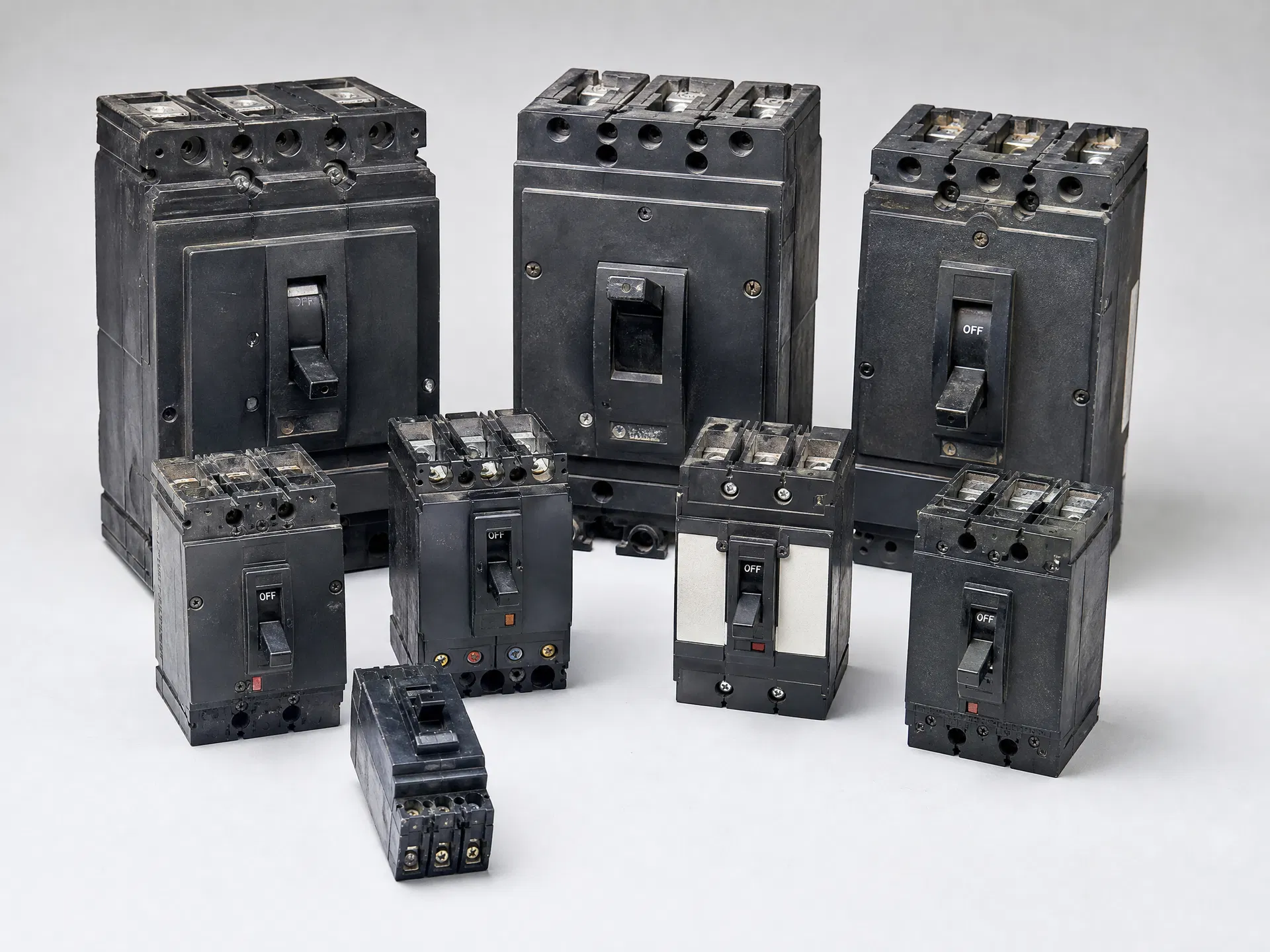
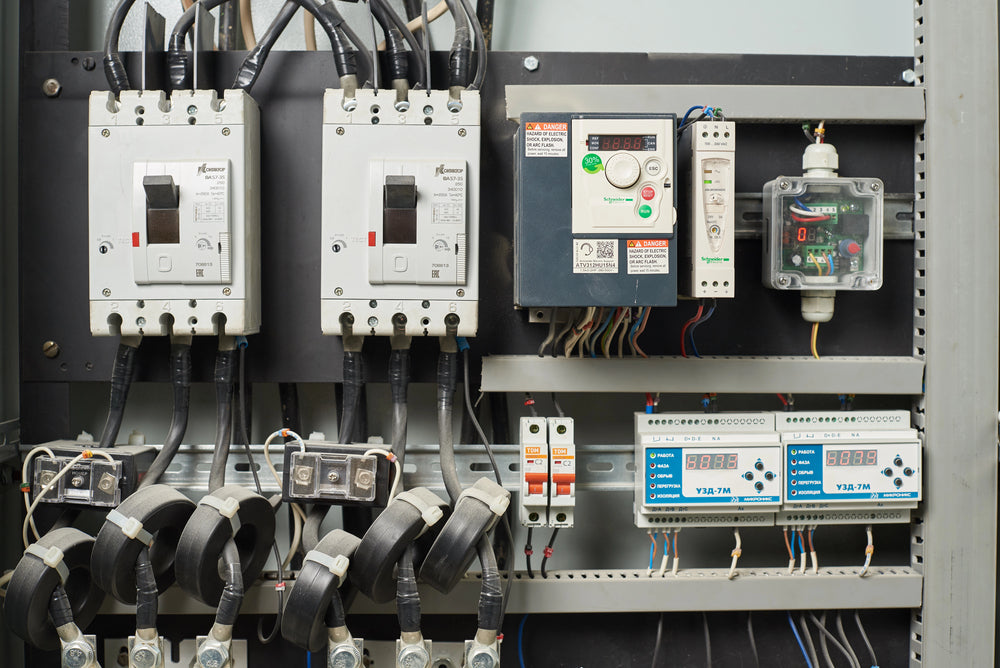
2026 Circuit Breaker Market Update: What's in Demand Right Now
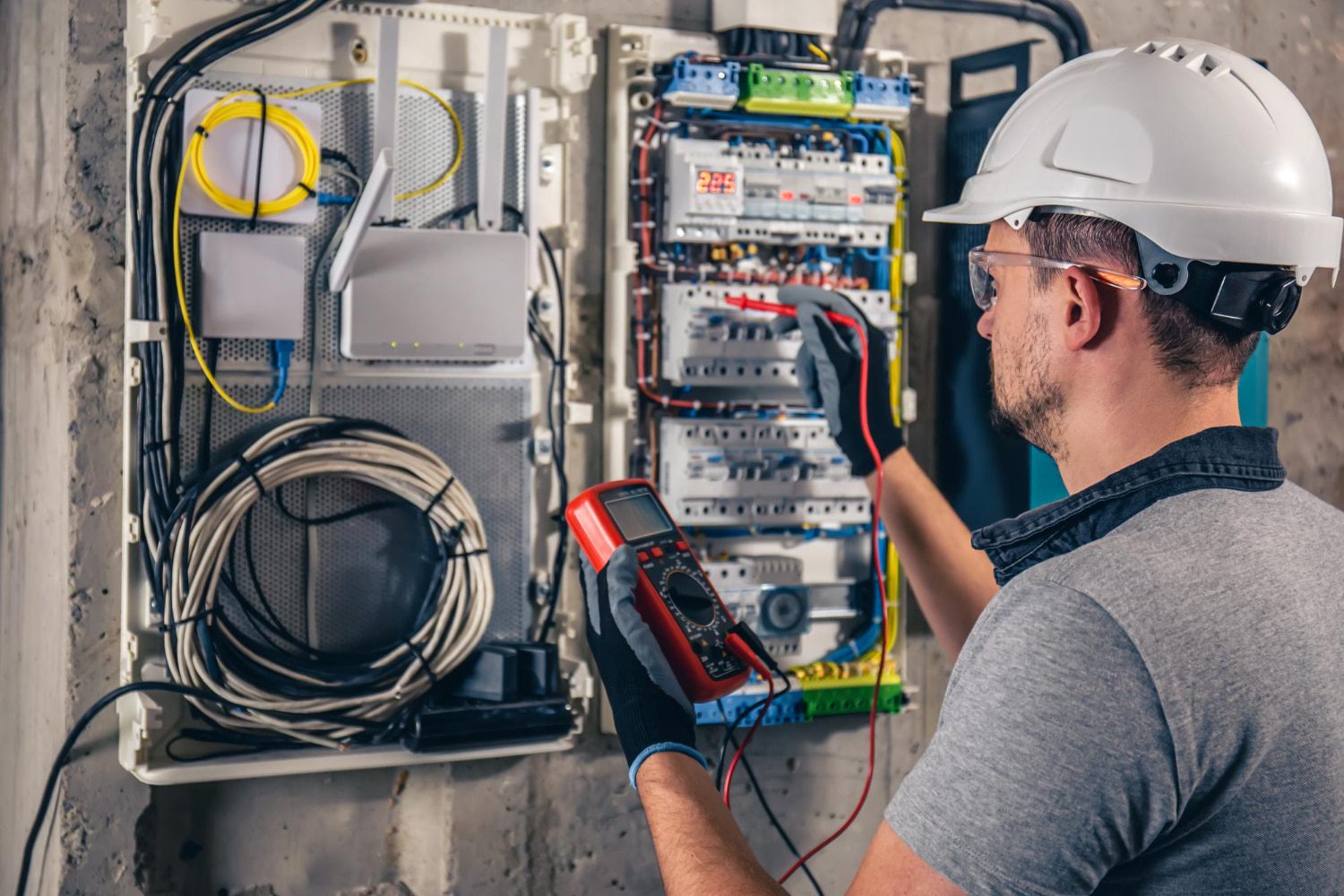
The electrical equipment secondary market has never been more active. Whether you're a facility manager trying to offload legacy switchgear, an electrical contractor sourcing hard-to-find breakers for a retrofit project, or an industrial plant operator navigating supply chain delays that stretch into months, the dynamics of 2026 have created a uniquely pressurized environment where demand for used, reconditioned, and surplus circuit breakers is outpacing nearly every projection made just two years ago. Understanding what's driving that demand — and where the market is heading — is essential for anyone buying or selling electrical equipment right now.
This post breaks down the current state of the circuit breaker market in granular detail: which product categories are moving fastest, which manufacturers are commanding premium resale values, and what regional trends are shaping purchasing decisions across the United States. If you've been sitting on surplus equipment or struggling to source specific breakers through traditional channels, this update will give you the clearest picture available of where the market stands heading into the second half of 2026.
The 2026 Circuit Breaker Market Landscape: A Macro View
Supply Chain Pressures That Refuse to Fully Resolve
The semiconductor shortages and raw material disruptions that began rattling the electrical equipment supply chain in 2021 were supposed to be temporary. Five years later, the downstream effects have proven far more persistent than most analysts anticipated. While primary manufacturers like Eaton, Siemens, ABB, and Schneider Electric have made measurable investments in domestic production capacity, lead times for certain product categories remain stubbornly extended. New medium-voltage breakers — particularly in the 15kV and 38kV classes — are still carrying lead times of 40 to 70 weeks at many distributors, a figure that forces end users to look aggressively at the secondary market for serviceable alternatives.
This isn't a niche problem. Industrial facilities undergoing expansion, data centers racing to meet explosive AI-driven infrastructure demand, and utilities executing grid modernization programs all require electrical equipment on timelines that new production simply cannot accommodate. A manufacturing plant in the Gulf Coast region that needs a replacement GE Magne-Blast or a Westinghouse DHP breaker to keep a production line running cannot wait 14 months for a factory-fresh unit. The secondary market fills that gap — and in 2026, it is filling it at unprecedented volume.
Infrastructure Investment and the Reindustrialization Effect
Federal infrastructure legislation passed in recent years has continued to funnel billions of dollars into grid upgrades, EV charging networks, semiconductor fabrication facilities, and clean energy installations. Each of these project categories is a significant consumer of switchgear and circuit breakers, and each carries its own procurement complexity. Large-scale solar and wind installations require specific types of reclosers and disconnect breakers. Data center builds demand high-density, high-reliability molded case circuit breakers (MCCBs) in large quantities. Semiconductor fabs — several of which are currently under construction or in early operational phases in Texas, Arizona, and Ohio — require extremely precise power distribution infrastructure, much of which relies on medium-voltage equipment that is in critically short supply through new channels.
The reindustrialization of American manufacturing, accelerated by reshoring trends and domestic content requirements embedded in recent federal programs, has created a sustained surge in demand for electrical panels and the breakers that populate them. Greenfield industrial sites don't just need one or two breakers — they need complete distribution systems, and sourcing those systems through the secondary market has become a standard procurement strategy rather than a last resort.
Regional Hotspots Driving Secondary Market Activity
The demand picture is not uniform across the United States. Certain regions are functioning as particularly intense centers of electrical equipment activity, and understanding those regional dynamics helps both buyers and sellers make smarter decisions.
Texas has emerged as arguably the most active secondary market in the country. The combination of continued oil and gas infrastructure investment, a booming technology sector concentrated in Austin and the Dallas-Fort Worth Metroplex, and post-storm grid hardening projects has created relentless demand. In Houston alone, petrochemical plant upgrades and LNG export facility expansions are consuming medium-voltage breakers at a pace that keeps local distributors and secondary market dealers operating at full capacity. Dallas presents a different but equally vigorous demand profile, driven largely by data center proliferation and the commercial construction boom that has defined North Texas for the better part of a decade.
The Southeast and Mid-Atlantic regions are similarly active, driven by utility-scale renewable energy projects and the ongoing electrification of transportation infrastructure. Industrial corridors in the Carolinas, Georgia, and Virginia have seen significant manufacturing investment, each project requiring robust electrical distribution infrastructure sourced through whatever channels can deliver on schedule.
Why the Secondary Market Has Earned Permanent Legitimacy
Perhaps the most significant macro shift in the 2026 circuit breaker landscape is not about supply chains or regional demand — it's about perception. The secondary market for electrical equipment has shed much of the stigma it carried in earlier decades, when "used" was often conflated with "unreliable." Today, sophisticated buyers understand that a properly reconditioned Cutler-Hammer DS or Square D Masterpact breaker, tested to ANSI/NEMA standards and backed by a credible warranty, is a legitimate and often superior alternative to waiting a year for new stock. This shift in buyer psychology has expanded the addressable market for secondary equipment dealers considerably, and it has driven investment in reconditioning infrastructure, quality documentation, and testing capabilities across the industry.
The result is a secondary market that is more professional, more transparent, and more capable than at any previous point in its history — and one that is positioned to remain an essential component of electrical equipment procurement for the foreseeable future.
Supply Chain Status: Have We Recovered from the Shortages?
The short answer is: partially. The electrical equipment supply chain in 2026 presents a more nuanced picture than either the crisis-level disruptions of 2021–2023 or the fully normalized conditions that many buyers had hoped to see by now. Recovery has been uneven across product categories, manufacturers, and voltage classes — and understanding exactly where the bottlenecks remain is critical for any procurement professional making sourcing decisions today.
Where Lead Times Have Improved
The most visible improvements have occurred in the low-voltage panelboard and residential breaker segments. Manufacturers including Eaton, Schneider Electric, and Siemens have expanded domestic production capacity over the past two years, driven in part by federal incentives tied to the Infrastructure Investment and Jobs Act and subsequent manufacturing reshoring initiatives. Standard 100A and 200A residential load centers, which were seeing lead times of 20 to 30 weeks at the peak of the shortage, are now generally available within normal distribution windows of two to four weeks for most SKUs.
Similarly, molded case circuit breakers (MCCBs) in the 100A to 400A range have seen meaningful lead time compression. The Square D QO and Homeline product lines, along with Eaton's BR and CH series, are broadly available through electrical distributors. For buyers managing routine commercial tenant improvements or light industrial work, the supply picture in this segment is close to pre-pandemic normal.
Where Shortages Persist — and Why
The story changes dramatically when you move up the voltage and amperage scale. Low-voltage power circuit breakers (LVPCBs) — the Cutler-Hammer DS and DSL series, Square D Masterpact, GE AKR and AK series, and comparable frames — continue to carry extended lead times that regularly exceed 40 to 60 weeks for new production units. These are the breakers that populate the main and tie positions of switchgear assemblies in hospitals, data centers, manufacturing plants, and utility substations. Their complexity, the precision manufacturing tolerances involved, and the relatively concentrated global production base mean that capacity cannot be rapidly scaled to meet demand spikes.
Medium-voltage switchgear presents an even more challenging landscape. Equipment in the 5kV to 38kV range — including vacuum circuit breakers, SF6 interrupters, and associated metal-clad switchgear assemblies — is routinely quoted at 18 to 36 months for new manufacture. Projects requiring this equipment that did not place orders well in advance are facing hard choices: delay commissioning, redesign around available equipment, or turn to the secondary market.
The transformers category tells a similar story. Liquid-filled distribution transformers in the 500 kVA to 5 MVA range have been among the most persistently constrained components in the electrical supply chain. Transformer core steel supply, winding labor, and tank fabrication capacity have all contributed to a situation where lead times for new units from major manufacturers like ABB, Eaton, and Prolec remain stretched well beyond what project timelines can comfortably absorb. This has been one of the most powerful drivers pushing project engineers and contractors toward the secondary market for transformer procurement — a trend that shows no sign of reversing in the near term.
The Role of Tariffs and Geopolitical Factors
Supply chain conditions in 2026 cannot be analyzed in isolation from the broader trade policy environment. New and expanded tariffs on electrical components manufactured in China have materially affected pricing and availability for certain product categories, including circuit breaker components, bus bar assemblies, and low-voltage switchgear. While domestic manufacturing has benefited from these policies over a multi-year horizon, the short-term effect has been to constrain supply and elevate prices for products that previously relied on Asian manufacturing capacity.
Bus plugs and busway systems — essential for power distribution in data centers, manufacturing facilities, and large commercial buildings — have been particularly affected. Several major busway manufacturers source components internationally, and tariff-driven cost increases have translated into both price escalation and extended delivery windows. Buyers in markets like Chicago and Atlanta, where large-scale commercial and industrial construction activity is intense, have found that sourcing surplus busway through secondary channels can represent not just a cost savings but a genuine schedule advantage of three to six months compared to new production lead times.
The Secondary Market as a Supply Chain Solution
It is within this context of persistent, category-specific supply constraints that the secondary market for electrical equipment has solidified its role as a genuine supply chain tool rather than a fallback option. Procurement professionals at EPC firms, electrical contractors, and facilities management organizations are now routinely including secondary market sourcing in their initial procurement strategy — not as a last resort, but as a parallel track that is evaluated against new equipment options on the basis of lead time, price, condition, and warranty coverage.
For buyers who have surplus equipment to move — whether from a facility upgrade, a decommissioned plant, or a project cancellation — current market conditions represent a strong selling environment. The combination of high demand and constrained new production means that quality used equipment commands premium prices. Those looking to sell electrical equipment in 2026 will find a buyer's market that is both active and competitive, with reputable secondary dealers offering aggressive pricing for equipment in good condition.
The Impact of New Construction and Industrial Upgrades
New construction and large-scale industrial investment are reshaping electrical equipment demand patterns in ways that have profound implications for both the primary and secondary markets. Understanding these trends is not merely an academic exercise — for buyers, sellers, and distributors of electrical equipment, these shifts determine where demand is concentrated, what product categories are under the most pressure, and where the best sourcing opportunities exist.
Data Center Construction: The Dominant Force in Electrical Demand
No single sector has done more to reshape electrical equipment demand in 2025 and 2026 than data center construction. The explosive growth of AI infrastructure, cloud computing capacity, and edge computing deployment has triggered a capital investment cycle in data centers that is without historical precedent in its speed and scale. Hyperscale facilities being developed by operators including Amazon Web Services, Microsoft Azure, Google Cloud, and a growing roster of colocation providers are consuming electrical equipment at a rate that strains every segment of the supply chain simultaneously.
A single hyperscale data center campus may require dozens of medium-voltage switchgear lineups, hundreds of low-voltage power circuit breakers, thousands of molded case breakers, miles of busway, and multiple large power transformers — all on a compressed construction schedule driven by the enormous commercial pressure to bring capacity online quickly. When new equipment lead times cannot meet these schedules, procurement teams are authorized to source from whatever channel can deliver. This dynamic has been a significant catalyst for secondary market activity, particularly for the switchgear and LVPCB categories where new lead times are longest.
In markets like Atlanta, which has emerged as one of the most active data center construction markets in North America, the volume of electrical equipment flowing through both new and secondary channels is extraordinary. Northern Virginia, Dallas-Fort Worth, Phoenix, and the Chicago metro area have seen comparable activity, with Chicago in particular benefiting from its position as a major Midwest data hub with excellent fiber connectivity and available power infrastructure.
Manufacturing Reshoring and Industrial Facility Investment
Parallel to the data center boom, the ongoing reshoring of manufacturing capacity to the United States has generated substantial demand for industrial electrical equipment. Semiconductor fabrication plants, electric vehicle battery manufacturing facilities, pharmaceutical production sites, and defense industrial base investments have all required the construction or substantial upgrade of electrical distribution infrastructure at a scale that was rare in previous decades.
These facilities share a common characteristic from an electrical equipment perspective: they require large quantities of medium and high-quality low-voltage electrical equipment, often on aggressive schedules, and they have little tolerance for equipment that does not perform reliably in demanding industrial environments. For secondary market dealers, this has meant increased scrutiny of reconditioning standards and testing documentation — buyers for these projects are sophisticated and will not accept equipment that cannot be verified to meet applicable standards.
The practical implication for procurement is that secondary equipment sourced for these applications must be accompanied by robust testing records, clear documentation of reconditioning work performed, and ideally a warranty that provides meaningful coverage. This has accelerated the professionalization of the secondary market, as dealers who can meet these documentation standards win the business that less capable competitors cannot.
Commercial Construction and Renovation Cycles
Beyond the headline-grabbing data center and manufacturing sectors, the broader commercial construction market has been generating steady demand for electrical equipment across a wide range of project types. Office-to-residential conversions, healthcare facility expansions, retail redevelopment, and hospitality sector renovations all require electrical infrastructure upgrades that create both demand for replacement equipment and opportunities to sell electrical equipment removed during renovation work.
Healthcare construction deserves particular mention. Hospital expansions and new medical facility construction are capital-intensive projects with extremely high reliability requirements for electrical systems. The equipment specified for these applications — often including redundant switchgear, automatic transfer switches, and hospital-grade distribution panels — represents significant value both when purchased new and when decommissioned at end of service. Secondary dealers who specialize in healthcare-grade electrical equipment occupy a valuable niche in the market.
Grid Modernization and Utility Infrastructure Investment
Utility-scale grid modernization projects, driven by the need to accommodate distributed renewable generation, improve resilience against extreme weather events, and support the load growth associated with electrification, are adding another layer of demand on the electrical equipment supply chain. Substations are being upgraded, transmission infrastructure is being expanded, and distribution automation equipment is being deployed at scale. Each of these activities consumes electrical equipment and, in many cases, generates surplus equipment as older infrastructure is retired and replaced.
This surplus utility equipment — including older but functional circuit breakers, reclosers, sectionalizers, and associated switchgear — represents an important segment of the secondary market that is often overlooked in discussions focused on commercial and industrial applications. For buyers with the technical capability to evaluate and integrate this equipment, it can represent exceptional value. For utilities and contractors managing decommissioning projects, working with experienced secondary dealers ensures that retired equipment is properly valued and responsibly redirected rather than scrapped.
The Data Center Boom: Driving Unprecedented Demand
Few sectors have reshaped the electrical equipment market as dramatically and as rapidly as the hyperscale data center industry. The explosive growth of artificial intelligence workloads, cloud computing infrastructure, and enterprise colocation facilities has created a demand environment for heavy-duty electrical equipment that is genuinely unprecedented in scale, urgency, and technical specificity. Understanding this demand is essential for any buyer, seller, or market participant operating in the electrical equipment space today.
AI Workloads and the Power Density Problem
The shift from traditional cloud computing to AI-specific infrastructure has fundamentally changed the power requirements of modern data centers. A conventional server rack in a general-purpose data center might consume between 5 and 10 kilowatts. A rack populated with NVIDIA H100 or H200 GPU clusters for AI training and inference workloads can demand 40 to 80 kilowatts or more — a tenfold increase in power density that cascades through every layer of the electrical distribution system.
This power density escalation means that data centers being built or retrofitted for AI workloads require substantially heavier electrical infrastructure than their predecessors. Where a legacy data center might have been served by 2,000-amp main distribution panels and 400-amp branch circuit breakers, an AI-optimized facility may require 4,000-amp or 6,000-amp main breakers, redundant transformer configurations, and branch circuits rated at 800 amps or higher. The equipment required to support these loads — including molded case circuit breakers (MCCBs) in the 800A to 2,500A range, insulated case circuit breakers (ICCBs), and low-voltage power circuit breakers (LVPCBs) — is precisely the equipment that is experiencing the most acute supply chain pressure.
Specific models in high demand include the Square D PowerPact series in the 800A to 1,200A frame range, the Siemens WL-series low-voltage power circuit breakers, and the Eaton Magnum DS series. These are not commodity items available off the shelf at a local electrical supply house. Lead times from manufacturers for new equipment in these frames have stretched to 52 weeks or beyond in some cases, pushing data center developers aggressively into the secondary market to keep construction timelines on schedule.
Geographic Concentration and Regional Market Impacts
The data center construction boom is not uniformly distributed across the United States. It is concentrated in specific corridors where land, power, water, and fiber connectivity intersect favorably. Northern Virginia's "Data Center Alley" remains the world's largest data center market by capacity, but secondary markets are growing rapidly. The Phoenix metropolitan area has emerged as one of the most active data center construction markets in the country, with major hyperscale campuses from Microsoft, Meta, Google, and a growing roster of colocation providers under construction simultaneously. Buyers and sellers of heavy electrical equipment in Phoenix are operating in an environment where demand for 800A to 4,000A breakers and associated switchgear is exceptionally strong.
Similarly, the Los Angeles basin and Southern California more broadly represent a significant data center market, particularly for edge computing facilities serving the entertainment, media, and financial services industries concentrated in the region. The Denver market is also expanding, with Colorado's combination of cooler ambient temperatures, renewable energy availability, and central geographic position making it an increasingly attractive data center destination.
For secondary market dealers operating in these regions, the data center boom has created a seller's market for serviceable heavy-duty electrical equipment. A reconditioned Siemens WL2-series low-voltage power circuit breaker or a tested and certified Square D Masterpact circuit breaker that might have been considered a slow-moving inventory item five years ago can now command premium pricing and move quickly to buyers racing to meet construction milestones.
Critical Power Redundancy and the N+1 Imperative
Data center operators do not simply need electrical equipment — they need it in quantities that reflect the industry's uncompromising approach to redundancy. The N+1 redundancy model, standard across most Tier III and Tier IV facilities, means that every critical electrical path has at least one fully capable backup. A data center with four primary distribution paths must be equipped as if it has five. This redundancy philosophy multiplies equipment requirements significantly and creates a sustained, structural demand that persists throughout the operational life of a facility, not just during initial construction.
Maintenance bypass switches, automatic transfer switches rated at 1,600 amps and above, and redundant main-tie-main switchgear configurations are all components that data center operators purchase, maintain, and eventually replace on a continuous cycle. The secondary market plays a meaningful role in supporting the maintenance and replacement cycle for existing facilities, even as new construction drives demand for fresh equipment. Operators of older data center facilities — those built in the 2005 to 2015 era that are now facing equipment aging and capacity upgrades — represent an important secondary market buyer segment that is often underserved.
Uninterruptible Power Supply Integration and Downstream Equipment Demands
The integration of large-scale uninterruptible power supply (UPS) systems into data center electrical infrastructure creates additional downstream demand for specific circuit breaker types and configurations. Large modular UPS systems from manufacturers such as Eaton, Vertiv, and Schneider Electric require input and output circuit breakers with specific interrupt ratings, harmonic mitigation characteristics, and coordination profiles that are not always available from standard catalog offerings. The secondary market for these specialized breakers — including static transfer switches and associated protective devices — has grown alongside the UPS market itself.
EV Infrastructure and Renewable Energy: The New Frontier
If the data center boom represents the most acute near-term demand driver in the electrical equipment market, the convergence of electric vehicle infrastructure deployment and renewable energy project development represents the most structurally significant long-term transformation. These two sectors are reshaping not just the quantity of electrical equipment demanded, but the types, ratings, and configurations that buyers and sellers must understand to remain relevant in the evolving market.
EV Charging Infrastructure: From Convenience to Critical Infrastructure
The transition from gasoline-powered to electric vehicles is driving a buildout of charging infrastructure at a scale that is only beginning to be fully appreciated by the electrical equipment market. Level 2 commercial charging installations — the type found in parking garages, retail centers, hotels, and workplace facilities — require dedicated 208V or 240V circuits with breakers typically rated between 40 and 100 amps. While individual installations are modest, the aggregate demand created by deploying thousands of charging stations across commercial real estate portfolios is substantial.
More significant from a heavy electrical equipment perspective is the rapid expansion of DC fast charging (DCFC) and ultra-fast charging corridors. A single 350-kilowatt DC fast charger, such as those deployed by Electrify America, EVgo, and major petroleum retailers retrofitting their locations for EV service, requires a dedicated circuit capable of handling sustained loads that translate to 480V three-phase service with breakers rated at 600 amps or higher. A charging plaza with eight to twelve of these units, increasingly common along interstate corridors and at major retail destinations, requires a dedicated service entrance with main breakers rated at 3,000 to 4,000 amps, medium-voltage transformer upgrades, and the full complement of metering, protection, and distribution equipment associated with a small industrial facility.
Fleet electrification is generating some of the most demanding electrical infrastructure requirements in the EV sector. Transit agencies converting bus fleets to battery-electric vehicles, logistics companies electrifying last-mile delivery fleets, and municipalities transitioning municipal vehicle fleets all require depot charging infrastructure that can simultaneously charge dozens or hundreds of vehicles overnight. These depot installations require electrical service upgrades that rival small manufacturing facilities in scope, including 4,000-amp to 6,000-amp service entrances, Square D I-Line or NF panelboards, and medium-voltage switchgear that may require coordination with the serving utility on transformer and primary protection upgrades.
The secondary market implications are significant. As EV infrastructure developers race to deploy charging networks ahead of vehicle adoption curves, they face the same equipment availability challenges that data center developers confront. Serviceable heavy-duty breakers, switchgear, and distribution equipment sourced through secondary channels can compress project timelines meaningfully, particularly for smaller regional developers who lack the procurement leverage of hyperscale operators.
Solar and Renewable Energy: Inverter-Driven Loads and Protective Relaying
Utility-scale and commercial solar photovoltaic installations have created demand for electrical equipment with characteristics that differ meaningfully from traditional motor-load or resistive-load applications. Solar inverters produce output that, while nominally AC at grid frequency, contains harmonic content and fault current characteristics that must be carefully matched to the protective devices and switchgear used in the collection and interconnection system.
Large utility-scale solar projects — those in the 50 megawatt to 500 megawatt range that have become the dominant project type in states like California, Texas, Arizona, and Nevada — require extensive medium-voltage collection systems with vacuum circuit breakers, reclosers, and sectionalizing switches that must coordinate with both the inverter protection systems and the utility interconnection requirements. The Siemens 3AH4 and 3AF series vacuum circuit breakers, the ABB VD4 series, and comparable medium-voltage equipment from Eaton and Cooper Power Systems are all heavily utilized in these applications. Secondary market availability of tested medium-voltage vacuum circuit breakers has become an important resource for solar developers managing construction budgets against the backdrop of commodity equipment price volatility.
Commercial and industrial rooftop solar installations, typically in the 100 kilowatt to 5 megawatt range, create demand for low-voltage protective equipment at the inverter output, including fusible disconnects, molded case circuit breakers with specific interrupting ratings for inverter-source fault currents, and revenue-grade metering equipment. In markets like Los Angeles, where commercial solar adoption has been driven by aggressive state incentive programs and high retail electricity rates, the volume of these smaller installations creates aggregate demand for inverter-rated circuit breakers and disconnects that is commercially significant.
Battery Energy Storage and the Bidirectional Power Challenge
Battery energy storage systems (BESS), increasingly deployed alongside both utility-scale renewable generation and commercial facilities seeking demand charge management and backup power capability, introduce unique electrical equipment requirements that are still being standardized across the industry. Unlike conventional loads that draw power in one direction, BESS installations both charge from and discharge to the grid or facility electrical system, creating bidirectional current flows that challenge conventional circuit breaker coordination and arc flash analysis assumptions.
Large BESS installations in the 10 megawatt to 100 megawatt range — the type being deployed by utilities for grid frequency regulation and renewable energy firming — require medium-voltage switchgear and protective relaying capable of handling bidirectional power flows with fast response times. This is a technically demanding application where equipment selection, testing, and certification are critical, and where the secondary market must be approached with particular care to ensure that equipment has been properly evaluated for bidirectional service. Buyers in markets like Denver, where Colorado's aggressive renewable portfolio standards are driving both utility-scale and commercial BESS deployment, should work with secondary dealers who have specific experience with storage system electrical equipment.
The Intersection of Renewable Energy and Grid Modernization Demand
The confluence of large-scale renewable energy interconnection, EV infrastructure deployment, and grid modernization investment is creating a sustained, multi-decade demand cycle for electrical equipment that will continue to support both the new equipment manufacturing sector and the secondary market. For buyers seeking to optimize capital expenditure on electrical infrastructure projects in these sectors, the secondary market offers genuine opportunities to source quality equipment at meaningful cost savings — provided that technical due diligence is applied rigorously and that sourcing is conducted through dealers with demonstrated expertise in the specific equipment types required.
Which Brands and Models Are Commanding the Highest Prices?
The secondary market for circuit breakers and electrical switchgear is not monolithic — pricing power varies enormously by brand, product line, vintage, and application. In 2026, a handful of manufacturers and specific model families continue to dominate resale value charts, driven by a combination of installed base size, parts obsolescence, ongoing industrial demand, and the sustained infrastructure investment cycle described throughout this post. Understanding which brands and models hold their value — and why — is essential intelligence for both sellers looking to maximize returns and buyers seeking to benchmark fair market pricing.
Square D: The Dominant Resale Performer
Square D, now a brand under Schneider Electric's umbrella, consistently commands some of the strongest resale values in the secondary market. The brand's extraordinary penetration across commercial, industrial, and utility applications in North America means that demand for used Square D equipment is both broad and deep. Two product families stand above all others in terms of secondary market activity and pricing strength.
The Square D I-Line panelboard system and associated I-Line circuit breakers remain among the most actively traded items in the secondary market. The I-Line plug-on bus system, introduced decades ago and continuously refined, is installed in an enormous percentage of commercial and industrial facilities across the United States. Replacement breakers in the I-Line family — including the FA, FH, KA, KH, LA, and LH frame series — command strong premiums when in verified, tested condition. A used Square D KAL36150 (150-amp, 3-pole, 600V I-Line) that traded in the $180–$240 range in 2024 has seen upward pressure in 2026, particularly in markets with heavy commercial renovation activity.
The Square D QO residential and light commercial line represents the highest-volume segment of the secondary market by unit count, though per-unit margins are thinner. QO breakers are notable for their unique "visi-trip" indicator and their continued installation in millions of existing panels. While individual QO breakers are not high-dollar items, bulk lots of tested QO breakers move quickly through secondary channels, particularly in markets experiencing high residential renovation volume. For a deeper look at who actively purchases Square D inventory, see our dedicated resource on Who Buys Square D Breakers.
At the high end of the Square D portfolio, Masterpact and PowerPact molded case circuit breakers in larger frame sizes — particularly the NW and NT series in the 800A–6300A range — command the most significant resale premiums. A used Square D Masterpact NW20H1 (2000A, 3-pole, 600V) in tested, certified condition can represent tens of thousands of dollars in resale value, reflecting both the high new-equipment replacement cost and the long lead times that continue to plague new equipment procurement.
Siemens: Strong Industrial and Utility Demand
Siemens electrical equipment, including legacy ITE products absorbed through decades of acquisition, maintains exceptional secondary market strength, particularly in industrial and utility applications. The Siemens Sentron series — encompassing the 3VA molded case circuit breakers and 3WL air circuit breakers — is increasingly prominent in secondary trading as the installed base of Sentron equipment grows. The Siemens WL (formerly ITE) air circuit breaker series, including the WL250, WL400, WL600, and WL800 frame designations, remains among the most sought-after equipment in secondary channels for industrial power distribution upgrades.
Legacy ITE/Siemens ED, FD, JD, LD, and MD frame molded case breakers continue to see consistent demand from industrial facilities maintaining aging distribution systems. The Siemens RLBF and RLBF series retrofill breakers, designed to replace obsolete ITE equipment in existing switchgear lineups, command particularly strong premiums because they eliminate the need for costly switchgear replacement. For buyers and sellers navigating the Siemens/ITE secondary market, our detailed guide on Who Buys Siemens Breakers provides essential context on demand drivers and valuation factors.
The Siemens NXPLUS C and 8DA/8DB medium-voltage switchgear lines are gaining traction in secondary channels as utility and industrial buyers seek cost-effective solutions for grid modernization projects. These SF₆-insulated and vacuum-interrupter-equipped units carry significant resale value when properly documented and tested.
Eaton/Cutler-Hammer: Broad Market Presence with Strong Niche Premiums
Eaton/Cutler-Hammer occupies a commanding position in the secondary market, with strong demand across residential, commercial, and heavy industrial segments. The Eaton BR series serves the residential market in a manner analogous to Square D QO — high volume, moderate per-unit value, but strong bulk demand. More significant from a value perspective are the Cutler-Hammer Series C and Series G molded case circuit breakers, including the HFD, HJD, HKD, HLD frame families, which are extensively installed in industrial facilities and command solid secondary premiums.
The Eaton Magnum DS and Magnum SB air circuit breakers represent the pinnacle of Eaton's secondary market value proposition. These large-frame (up to 6000A) air circuit breakers, used extensively in industrial power distribution centers, data centers, and utility substations, carry resale values that can represent 30–60% of new equipment cost — a meaningful proposition given that new Magnum DS units in large frame sizes can carry six-figure price tags and lead times measured in months.
The Eaton AMPGARD medium-voltage motor controller line also deserves specific mention. With industrial motor-driven applications proliferating across petrochemical, mining, and water/wastewater sectors, used AMPGARD equipment in verified condition moves quickly through secondary channels at strong price points.
GE: Legacy Strength and Spectra Series Demand
General Electric electrical equipment presents a nuanced secondary market picture. GE exited the circuit breaker manufacturing business (selling its industrial solutions division to ABB in 2018), which has had a complex effect on secondary market dynamics. On one hand, the absence of new GE-branded production means that the installed base of GE equipment can only be served through replacement parts, secondary market equipment, or cross-brand retrofits — a dynamic that supports secondary pricing for verified GE equipment. On the other hand, the lack of ongoing manufacturer support means buyers must exercise greater diligence regarding parts availability and long-term serviceability.
The GE Spectra RMS series molded case circuit breakers — including the SFHA, SKHA, SLHA, SELA and related frame families — remain in active demand from industrial facilities with legacy GE distribution systems. The GE AKR and AKD air circuit breakers, workhorses of mid-20th-century industrial power distribution, still trade actively in secondary channels despite their age, with buyers primarily in heavy industrial and utility applications where the installed switchgear infrastructure was built around these units.
The GE Multilin protective relay line, now part of GE Vernova's Grid Solutions portfolio, commands strong secondary interest for utility and industrial protection applications, with specific models like the GE 489 Generator Management Relay and GE 750/760 Feeder Management Relay trading at significant premiums when firmware and hardware are current.
ABB: Growing Secondary Market Footprint
ABB has built a substantial installed base in North American industrial and utility markets, and secondary market activity in ABB equipment has grown correspondingly. The ABB SACE Emax and Emax 2 air circuit breakers, the Tmax and Tmax XT molded case series, and the ABB REL, REF, RET series protective relays are all increasingly represented in secondary trading. ABB's acquisition of GE Industrial Solutions has also added the former GE product lines to ABB's portfolio, creating some complexity in parts sourcing and secondary market identification that buyers should navigate carefully.
Westinghouse: Vintage Equipment, Enduring Demand
Westinghouse electrical equipment, manufactured prior to the brand's acquisition and eventual discontinuation of electrical equipment production, occupies a unique niche in the secondary market. Westinghouse DS and DSL air circuit breakers, Westinghouse DB switchgear, and the Type DS and SPB series remain in service in thousands of industrial facilities and utilities that were built or expanded during the mid-20th century infrastructure buildout. Because no new Westinghouse equipment is manufactured, the secondary market is the only source for like-for-like replacement, and verified, tested Westinghouse equipment commands premiums that reflect this scarcity. Buyers maintaining legacy Westinghouse installations should expect to pay a significant scarcity premium and should work with dealers who specifically inventory and certify vintage Westinghouse equipment.
Pricing Trends: 2024–2025 vs. 2026
The secondary market for electrical equipment has experienced meaningful price evolution over the 2024–2026 period, shaped by several converging forces: the gradual normalization of supply chains following the acute disruptions of 2021–2023, sustained infrastructure investment driving ongoing demand, selective tightening of supply for specific obsolete product lines, and the growing sophistication of secondary market buyers who are increasingly willing to pay for properly tested and documented equipment. Understanding these trends is essential for both buyers benchmarking purchase decisions and sellers evaluating the optimal timing for liquidating electrical equipment assets. Our detailed explanation of how we price secondary market electrical equipment provides additional context for the valuation methodology underlying these figures.
Key Price Drivers in 2026
Several macro and micro factors are shaping 2026 pricing relative to the 2024–2025 baseline:
Supply chain normalization has reduced the acute scarcity premiums that inflated secondary market prices for commonly available equipment during 2022–2023. For standard, currently-manufactured product lines (Square D QO, Eaton BR, Siemens BQD), secondary prices have moderated as new equipment lead times have returned to more normal ranges. However, this normalization has not extended to obsolete, discontinued, or long-lead specialty equipment, where secondary premiums remain elevated or have continued to increase.
Infrastructure investment acceleration driven by IRA provisions, CHIPS Act manufacturing buildout, and utility grid modernization programs has sustained demand for medium and large-frame switchgear and circuit breakers at levels that continue to support strong secondary pricing in these segments.
Obsolescence-driven demand continues to intensify for vintage product lines — Westinghouse, legacy GE, early ITE/Siemens — as the installed base ages and replacement options narrow. This is a structural trend that will continue to support pricing for verified vintage equipment regardless of broader market conditions.
Testing and certification premiums have grown as buyers have become more sophisticated. Equipment that comes with documented test results, calibration records, and condition certifications commands a meaningful premium over untested, as-removed equipment — a gap that has widened in 2025–2026 as high-profile failures of improperly vetted secondary equipment have raised awareness of the risks.
Pricing Comparison Table: Selected Models, 2024 vs. 2026
The following table presents estimated secondary market resale values for selected circuit breaker and switchgear models, comparing typical 2024 transaction pricing to 2026 estimated values. These figures represent tested, certified equipment in good cosmetic condition sold through reputable secondary dealers; untested or as-removed equipment will typically trade at a 20–40% discount to these figures. New equipment list prices are provided for context.
| Model / Description | Frame / Rating | New List Price (Est.) | 2024 Secondary (Tested) | 2026 Secondary (Tested) | Trend |
|---|---|---|---|---|---|
| Square D KAL36150 (I-Line) | 150A, 3P, 600V | $1,100–$1,400 | $180–$240 | $210–$290 | ↑ +15–20% |
| Square D Masterpact NW20H1 | 2000A, 3P, 600V | $18,000–$24,000 | $4,500–$7,000 | $5,500–$8,500 | ↑ +15–22% |
| Square D Masterpact NW40H1 | 4000A, 3P, 600V | $38,000– |
$52,000 | $9,500–$14,000 | $11,500–$17,000 | ↑ +18–25% | | Eaton Cutler-Hammer DS-632 | 3200A, 3P, 600V | $45,000–$58,000 | $8,000–$12,000 | $9,500–$14,500 | ↑ +18–21% | | GE AKR-7D-50 (Air Circuit Breaker) | 5000A, 3P, 600V | $60,000–$80,000 | $12,000–$18,000 | $14,500–$22,000 | ↑ +20–25% | | Siemens RLX3400 | 400A, 3P, 600V | $3,200–$4,800 | $650–$950 | $780–$1,150 | ↑ +18–22% | | ABB SACE Emax E4 | 4000A, 3P, 690V | $42,000–$55,000 | $8,500–$13,000 | $10,000–$15,500 | ↑ +17–20% | | ITE/Siemens HLA3F400 | 400A, 3P, 600V | $2,800–$3,600 | $420–$680 | $510–$820 | ↑ +18–21% |
What Sellers Should Do Now to Maximize Returns
The secondary market for circuit breakers and switchgear is not a passive one. Prices are rising, buyer demand is intensifying, and the gap between what informed sellers receive versus what uninformed sellers accept is widening every quarter. Whether you are a facility manager overseeing a plant decommission, a demolition contractor clearing a commercial building, or an electrician who has accumulated surplus equipment over years of service work, the actions you take before you list or haul away that equipment will directly determine your return. The following guidance is drawn from real-world transactions and current market intelligence. Follow it carefully.
Step 1: Conduct a Thorough and Systematic Inventory Before Anything Else
The single most common mistake sellers make is moving equipment before documenting it. Once breakers are pulled from panels, mixed in bins, or stacked on pallets without labeling, critical value-determining information is lost. Before a single breaker is removed, walk every panel, switchboard, and motor control center with a clipboard or tablet and record the following for each unit:
- Manufacturer (Square D, Eaton, Siemens, GE, ABB, ITE, Federal Pacific, etc.)
- Model number (found on the face label — e.g., KAL36150, NW20H1, DS-632)
- Frame size and ampere rating
- Voltage rating and number of poles
- Interrupting rating (kAIC or kA)
- Trip unit type (thermal-magnetic, electronic, solid-state)
- Condition notes (arc damage, missing handles, cracked cases, evidence of overheating or tripping under fault)
- Quantity of identical units
Photograph every unit from the front, clearly capturing the nameplate. For larger air circuit breakers and drawout units, also photograph the rear bus connections and the trip unit. This documentation is not bureaucratic overhead — it is the foundation of your negotiation with any buyer. Reputable buyers who purchase equipment for sell circuit breakers purposes will ask for exactly this information, and having it ready signals that you are a professional seller, which often translates to better offers and faster transactions.
For large decommissions — data centers, manufacturing plants, hospitals, wastewater treatment facilities — consider hiring an independent electrical equipment appraiser before approaching buyers. On a project involving $50,000 or more in estimated secondary value, a $500–$800 appraisal fee can easily pay for itself multiple times over by establishing a credible baseline value.
Step 2: Understand What You Have Before You Price It
Not all circuit breakers are created equal, and the difference between a $40 breaker and a $4,000 breaker can be subtle to the untrained eye. Large-frame molded case circuit breakers (MCCBs) with electronic trip units, drawout air circuit breakers (ACBs), and insulated case circuit breakers (ICCBs) represent the highest-value segments of the secondary market. Commodity residential breakers — your standard 15A and 20A single-pole units — are worth very little individually, though volume can still add up.
Pay particular attention to the following high-value categories in your inventory:
Drawout Air Circuit Breakers: Units like the GE AKR series, Westinghouse/Eaton DS series, ITE/Siemens LV series, and Square D Masterpact NW/NT series command the strongest secondary prices. A single tested GE AKR-7D-50 can realistically bring $14,500–$22,000 in today's market. Do not allow these to be scrapped under any circumstances until you have received at least three quotes from reputable secondary dealers.
I-Line and QO Equipment: Square D's I-Line system breakers, particularly in the 100A–400A range, move quickly in the secondary market because they are still widely installed and replacement demand is high. The KAL, KAP, and LAL frame series are especially sought after.
Motor Control Center (MCC) Buckets: Complete MCC buckets with breakers, starters, and control wiring intact are worth significantly more than the individual components stripped out. If you are decommissioning an MCC, consult with a buyer before disassembly.
If you are uncertain whether a piece of equipment is valuable, do not default to scrapping it. The scrap vs resale decision is one of the most consequential choices a seller can make, and the answer is almost always "get a resale quote first." Copper and steel scrap prices will never approach what a functioning, tested breaker can bring on the secondary market.
Step 3: Safe Removal Practices That Protect Value
How equipment is removed from service is just as important as what it is. Improper removal is one of the leading causes of preventable damage that reduces or eliminates secondary market value. The following practices are non-negotiable for maximizing returns:
De-energize completely and verify with a meter. This is basic electrical safety, but it also protects the equipment. A breaker that is pulled live or that experiences an uncontrolled arc during removal may show internal damage that disqualifies it from resale.
Do not force drawout breakers. Drawout units like the Masterpact NW series and the Eaton DS series have specific racking mechanisms. Forcing a drawout unit that is stuck — due to corrosion, misalignment, or mechanical wear — can crack the insulation, damage the primary disconnects, or break the racking gear. All of these defects reduce value and may disqualify the unit from certification. Review the manufacturer's maintenance manual or consult our circuit breaker removal resources before attempting removal of any drawout unit.
Retain all accessories. Trip units, auxiliary contacts, shunt trips, under-voltage releases, key interlocks, and operating handles are all part of the value equation. A Masterpact NW with a Micrologic 6.0A trip unit is worth more than the same frame with a basic trip unit. Missing accessories reduce offers by 15–30% depending on the model.
Package carefully for transport. Large air circuit breakers should be transported in their original cradles or on padded pallets. Stacking breakers without protection, or transporting them in ways that allow them to shift and impact each other, causes cosmetic and structural damage. Buyers assess cosmetic condition carefully — clean, undamaged equipment commands a premium.
Step 4: Approach Multiple Buyers and Understand the Offer Structure
The secondary market for electrical equipment is not a commodity exchange with posted prices. Offers vary significantly between buyers based on their current inventory needs, their customer base, and their testing and certification capabilities. Getting three to five quotes before committing is standard practice for any transaction above $1,000 in estimated value.
When evaluating offers, understand what is included:
- Tested vs. untested pricing: Some buyers quote for as-removed equipment and test in-house before reselling. Others require seller-provided test documentation. Tested, certified equipment consistently brings 20–40% more than as-removed.
- Lot pricing vs. individual pricing: Buyers may offer a higher aggregate price for a complete lot (taking everything) versus cherry-picking only the highest-value items. For sellers who want to move everything quickly, lot pricing may be preferable even if individual items would bring more sold separately.
- Pickup and logistics: Reputable buyers will typically arrange and pay for pickup on larger lots. This logistics value should be factored into your comparison.
If you are located in a major metropolitan area, you have access to more competitive local buyers. Sellers in Nashville, Miami, and Seattle can often command better pricing due to proximity to active industrial and commercial construction markets. For cash for circuit breakers transactions, same-day or next-day payment is reasonable to expect from established buyers on verified equipment.
Step 5: Timing Your Sale in 2026
Given the supply chain dynamics, tariff environment, and rising new equipment lead times discussed earlier in this post, the current market strongly favors sellers. Demand is high, inventory at distributors is constrained, and buyers are actively competing for quality used equipment. Sellers who wait for "the right moment" risk missing the current peak — particularly for legacy equipment where the installed base is gradually shrinking.
That said, if you have equipment that can be tested and certified before sale, taking the time to do so is almost always worth the investment. A $200–$400 testing and certification cost on a $3,000 breaker is a straightforward calculation. Consult with buyers about whether they accept third-party test documentation or prefer to test in-house, as this affects your logistics planning.
For sellers with large lots — full switchgear lineups, complete MCC rooms, or building-wide panel replacements — consider reaching out to buyers in the fourth quarter of 2025 or early 2026 to establish relationships and pricing frameworks before the equipment is even removed. Pre-sale agreements allow buyers to plan their testing capacity and allow sellers to negotiate from a position of knowledge rather than urgency. For more detailed guidance, see our comprehensive resource on How to Sell Used Circuit Breakers.
Frequently Asked Questions (FAQ)
The following questions represent the most common inquiries received from facility managers, contractors, and electricians who are preparing to sell circuit breakers or who want to better understand the current secondary market. Answers are based on current market conditions as of 2025–2026.
FAQ 1: How do I know if my used circuit breakers are worth selling or should just be scrapped?
The general rule is simple: if a breaker is from a major manufacturer (Square D, Eaton, Siemens, GE, ABB, ITE, Westinghouse), is rated 100A or above, and is in physically intact condition without visible arc damage or melted components, it is almost certainly worth getting a resale quote before scrapping. The scrap vs resale calculation almost always favors resale for anything above 100A from a mainstream manufacturer.
As a practical benchmark: a 100-pound air circuit breaker scrapped at current copper and steel prices might yield $40–$80 in scrap value. The same unit sold as tested, working equipment could bring $5,000–$20,000 depending on the model. Even a heavily damaged unit that cannot be certified for resale may have value as a parts donor, which still exceeds scrap pricing in most cases.
The equipment that is genuinely scrap-only includes: breakers with severely damaged cases or burned bus connections, obsolete manufacturer equipment for which there is no remaining market (certain very old Federal Pacific or Zinsco residential equipment), and commodity 15A–30A residential breakers in small quantities where the logistics cost of selling exceeds the return.
FAQ 2: Do buyers purchase circuit breakers that have tripped under fault conditions?
Yes, but with important caveats. A breaker that has tripped under normal overload conditions — doing exactly what it was designed to do — is generally still resalable after proper testing and inspection. The trip event itself does not necessarily damage the breaker if the fault current was within the breaker's interrupting rating.
However, a breaker that has interrupted a fault at or near its maximum interrupting capacity may have experienced internal arc damage, contact erosion, or mechanical stress that affects its reliability. Reputable buyers and testing facilities will disassemble and inspect the contacts, check the trip mechanism calibration, and perform dielectric testing before certifying such a unit. If the unit passes, it can be resold. If it does not pass, it is typically scrapped or parted out.
When disclosing equipment history to buyers, be honest about known fault events. Buyers who discover undisclosed fault history after purchase will lose confidence in the seller, affecting future transactions and potentially creating liability exposure. Transparency is both ethically correct and commercially smart.
FAQ 3: What is the difference between "tested" and "reconditioned" equipment, and does it affect price?
These are distinct designations with different implications for buyers and sellers. Tested equipment has been inspected, electrically tested (typically including insulation resistance testing, contact resistance measurement, and trip unit calibration verification), and certified to be in proper working order. The equipment's original components are intact; nothing has been replaced or rebuilt.
Reconditioned equipment has been more extensively refurbished — contacts may have been replaced, arc chutes cleaned or renewed, mechanisms lubricated and adjusted, and trip units recalibrated or replaced. Reconditioned equipment typically carries a longer warranty from the dealer and may command a 15–30% premium over tested-only equipment of the same model.
For sellers, the relevant question is whether it is worth investing in reconditioning before sale. In most cases, sellers are better off selling tested equipment to a dealer who will recondition it themselves, as dealers have the expertise, parts inventory, and certification infrastructure to do this efficiently. Unless you have an in-house electrical testing capability and access to OEM replacement parts, attempting to recondition equipment before sale is unlikely to increase your net return enough to justify the cost and effort.
FAQ 4: How long does the selling process typically take from initial contact to payment?
Transaction timelines vary based on lot size, equipment type, and buyer logistics, but the following general framework applies to most transactions:
For small lots (1–20 breakers, estimated value under $5,000): Initial quote within 24–48 hours of submitting photos and model information; pickup or shipping within 3–7 business days of agreement; payment within 1–3 business days of receipt and inspection. Total elapsed time: 1–2 weeks.
For medium lots (20–100 breakers, estimated value $5,000–$50,000): Quote within 48–72 hours; on-site inspection by buyer may be requested before final offer; logistics coordination 5–10 business days; payment within 3–5 business days of receipt. Total elapsed time: 2–4 weeks.
For large decommissions (full switchgear rooms, MCC lineups, building-wide replacements, estimated value $50,000+): Pre-sale site visit and detailed inventory review; negotiation of terms including lot pricing, logistics, and payment schedule; removal coordination may span several weeks depending on site access and decommission schedule. Payment may be structured in tranches for very large lots. Total elapsed time: 4–12 weeks from initial contact to final payment.
If you need to move equipment quickly due to project schedule pressure, communicate this clearly to buyers upfront. Established buyers with strong logistics networks can often accelerate timelines for motivated sellers, sometimes at a modest price concession.
FAQ 5: Are there any legal or regulatory issues I need to be aware of when selling used electrical equipment?
Yes, and this is an area where sellers sometimes underestimate their exposure. The key regulatory considerations are:
OSHA and NEC compliance: Used electrical equipment sold for installation in commercial or industrial facilities must be suitable for its intended application. Buyers and end users bear primary responsibility for ensuring compliance, but sellers should not misrepresent equipment condition, ratings, or history.
UL recertification: Original UL listings apply to equipment as manufactured and maintained per the manufacturer's guidelines. Equipment that has been modified, repaired with non-OEM parts, or subjected to conditions outside its design parameters may no longer be considered listed equipment. Reputable secondary dealers address this through their testing and certification processes, but sellers should be aware that representing modified equipment as UL-listed could create liability.
Hazardous materials: Older switchgear (generally pre-1980) may contain PCB-contaminated insulating oil in certain components, or asbestos in arc chutes. If you suspect your equipment may contain hazardous materials, consult with an environmental contractor before handling or selling. Disclosure of known hazardous material content is legally required in most jurisdictions.
Export controls: Certain high-specification electrical equipment may be subject to export control regulations (EAR/ITAR) if it has dual-use potential. This is uncommon for standard commercial switchgear but can apply to equipment originally installed in defense or government facilities. When in doubt, consult with a trade compliance attorney.
For the vast majority of standard commercial and industrial circuit breakers and switchgear, none of these issues will apply, and the transaction is straightforward. But due diligence is always appropriate.
FAQ 6: What happens to the value of my equipment if I wait 12–18 months before selling?
Based on current market trajectory and the supply chain dynamics detailed throughout this post, the general outlook for 2026–2027 remains favorable for sellers of quality used electrical equipment. Demand drivers — infrastructure investment, data center construction, manufacturing reshoring, and grid modernization — are structural rather than cyclical, meaning they are unlikely to reverse quickly.
However, there are risk factors that could soften prices: a significant easing of new equipment lead times (which would reduce the urgency premium buyers are currently paying), a slowdown in construction activity due to interest rate or economic conditions, or an influx of surplus equipment from large decommissions that temporarily oversuppl
y the market.
Our assessment: sellers who act within the next 12–18 months are likely to realize strong prices, particularly for high-demand equipment categories. Those who wait beyond that window face greater uncertainty. If your equipment is sitting idle, the carrying cost — in storage, insurance, and opportunity cost — is real and ongoing.
FAQ 7: Should I scrap my old circuit breakers or try to sell them for resale value?
This is one of the most consequential decisions a facility manager, electrician, or surplus equipment dealer will face — and unfortunately, it's one that's frequently made incorrectly, costing sellers thousands of dollars in recoverable value. The short answer is this: scrap should always be the last resort, not the default option. Understanding why requires a clear-eyed look at what scrap actually pays versus what the resale market will bear.
When you scrap a circuit breaker, you are selling it purely by weight, based on the commodity value of its constituent metals — primarily copper, aluminum, and steel. A large 800-amp Square D I-Line molded case circuit breaker might weigh 15–20 pounds. At current copper and mixed metals scrap rates, you might recover $8 to $18 for that breaker at a scrap yard. The same breaker in working condition, from a recognized manufacturer, in a sought-after frame size, could sell on the resale market for $150 to $600 or more depending on condition, vintage, and current availability of new units. That is a value destruction ratio of 10:1 or worse, and it happens every single day at facilities that don't know better.
The calculus becomes even more dramatic with larger, more complex equipment. Consider a Siemens 3WL air circuit breaker rated at 3200 amps with electronic trip unit and communications capability. Scrapped, this unit might yield $200 to $400 in metals. Sold to a qualified surplus buyer who can test, certify, and resell it into the industrial market, the same breaker could command $4,000 to $12,000 depending on the specific configuration and current new-equipment lead times. The difference between those two outcomes is simply a matter of who you call first.
The key variables that determine resale viability include:
Manufacturer and brand recognition. Equipment from Eaton (Cutler-Hammer), Square D (Schneider Electric), Siemens, ABB, General Electric, and Rockwell (Allen-Bradley) commands strong resale premiums because buyers trust these brands, replacement parts are available, and the electrical contractor community has familiarity with installation and maintenance. Off-brand or obsolete foreign-manufactured breakers with no North American service network are far more likely to end up at scrap value.
Age and obsolescence status. A breaker that is 10 years old but still actively manufactured and supported is a strong resale candidate. A breaker that is 40 years old and from a discontinued product line occupies a more nuanced position — it may actually command a premium as a hard-to-find replacement part for facilities that cannot easily retrofit to a newer frame size, or it may have limited market appeal if the installed base has largely been replaced. This is where working with an experienced buyer matters enormously; they know which obsolete equipment is scarce and valuable versus which is truly at end of life.
Physical and electrical condition. Breakers that have been properly maintained, stored in climate-controlled environments, and never subjected to fault current interruption are the most valuable. Breakers that have "tripped on fault" — meaning they operated to interrupt a short circuit or overload event — require careful evaluation. Molded case circuit breakers, in particular, are not designed for repeated fault interruptions and may have internal damage that is not visible externally. Reputable resale buyers will test and evaluate these units; some can be reconditioned and certified, while others cannot. Be honest about the operational history of your equipment — misrepresenting fault history is both ethically problematic and a liability risk.
Completeness and accessories. A breaker sold with its original mounting hardware, arc chutes, trip unit, and documentation is worth more than a bare frame. For draw-out style circuit breakers — common in medium-voltage switchgear and in low-voltage switchboards — the complete assembly including the cradle, control wiring, and secondary disconnects is significantly more valuable than the breaker alone. Before you allow anyone to strip accessories or separate components for individual scrap, get a resale valuation on the complete assembly.
Quantity and lot composition. A single 100-amp breaker may not justify the administrative overhead of a resale transaction. But ten of them, or a mixed lot from a panel replacement project, absolutely does. Buyers who specialize in surplus electrical equipment are accustomed to evaluating mixed lots and will typically make a single offer that accounts for the varying resale potential of different items within the lot. Some items in the lot will be strong resale candidates; others may indeed go to scrap. But the blended value of a properly evaluated lot almost always exceeds what you'd recover by scrapping everything.
For a detailed breakdown of how to think through this decision for specific equipment types, our dedicated scrap vs resale guide walks through the analysis with real-world examples across multiple equipment categories and manufacturer lines.
One practical scenario worth illustrating: a commercial property management company in the Southeast recently decommissioned a 1990s-era 480V distribution system during a major renovation. The electrical contractor on the project recommended scrapping all the old breakers and switchgear, which was standard practice for their firm. Before proceeding, the property manager reached out to a specialized surplus buyer for a second opinion. The evaluation revealed that a bank of Square D QO and I-Line breakers from the distribution panels had strong resale value totaling approximately $3,200, and two Siemens WL-frame air circuit breakers from the main switchboard were worth an estimated $8,500 to a buyer in the industrial market. Total recoverable resale value: approximately $11,700. Total scrap value of the same equipment: approximately $900. The property manager chose resale, and the transaction closed within two weeks.
If you're unsure which path is right for your specific equipment, the right first step is always to get a resale evaluation before committing anything to scrap. You can start that process through our sell circuit breakers page, where our team can provide a rapid assessment based on photos, model numbers, and condition information you submit online.
FAQ 8: How does the selling process actually work, and how quickly can I get paid?
This is perhaps the most practical question sellers ask, and it deserves a clear, step-by-step answer rather than vague generalities. The process for selling used circuit breakers and surplus electrical equipment to a reputable buyer is designed to be straightforward and fast — but understanding each stage will help you set realistic expectations, prepare your equipment appropriately, and avoid common delays that slow down transactions.
Stage 1: Initial Inquiry and Equipment Identification
The process begins when you contact a buyer and provide basic information about what you have. At minimum, this means the manufacturer name, model or catalog number, amperage rating, voltage rating, number of poles, and an honest assessment of condition. Photos are extremely helpful and, for larger or more complex equipment, essentially required for an accurate valuation. For a large lot or a complete switchgear lineup, a brief written inventory — even a simple spreadsheet — dramatically accelerates the evaluation process.
For standard molded case circuit breakers from major manufacturers, an experienced buyer can often provide a preliminary valuation within hours of receiving this information. For more complex equipment — medium-voltage switchgear, large air circuit breakers, complete switchboard sections — the evaluation may take one to two business days as the buyer researches current market demand, checks inventory levels, and assesses resale potential.
Be prepared to provide the following details for each major item:
- Complete catalog number or nameplate data (photograph the nameplate directly if possible)
- Interrupting rating (kAIC or kA symmetrical)
- Trip unit type (thermal-magnetic, electronic, solid-state) and any adjustable settings
- Any optional accessories (shunt trip, under-voltage release, ground fault module, zone-selective interlocking)
- Physical condition notes (any visible damage, corrosion, missing components)
- Operational history if known (has it ever tripped on fault?)
- Quantity available
Stage 2: Offer and Agreement
Once the buyer has sufficient information, they will present an offer. For straightforward lots of standard equipment, this may be a single lump-sum figure. For mixed lots with items of varying resale potential, the offer may be itemized. A professional buyer will be transparent about their valuation methodology — they should be able to explain why certain items are valued higher than others and what market factors are driving their pricing.
At this stage, you have every right to ask questions, seek clarification, and negotiate. If you have received offers from multiple buyers, this is the appropriate time to compare them. Be cautious of offers that seem dramatically higher than others without clear justification — in rare cases, unscrupulous buyers will make inflated offers to secure equipment and then revise the offer downward after inspection, a practice known in the industry as "low-balling on delivery." Work with buyers who have verifiable references, established business histories, and transparent processes.
Once terms are agreed upon, a simple purchase agreement or letter of intent is typically executed. This document should specify the equipment being purchased, the agreed price, the logistics arrangement (who handles pickup or shipping), and the payment timeline.
Stage 3: Logistics — Pickup, Removal, and Shipping
This is where many sellers have legitimate concerns, particularly regarding large or heavy equipment. The logistics of moving circuit breakers, switchgear sections, and transformers from an active or recently decommissioned facility requires planning, appropriate equipment, and in many cases, coordination with facility management, safety officers, and electricians.
For smaller lots of molded case breakers — say, a few dozen units removed from a panel replacement project — shipping via common carrier is typically straightforward. The seller packages the units securely (original packaging is ideal; heavy-duty cardboard boxes with appropriate cushioning are acceptable), and the buyer arranges freight pickup or provides a prepaid shipping label. The cost of shipping is typically borne by the buyer for lots of meaningful value.
For larger equipment — complete switchgear sections, large air circuit breakers, transformers — the buyer will typically arrange for a specialized freight carrier or a flatbed truck, and in many cases will send a representative or technician to assist with the removal and loading process. If you need assistance with the physical disconnection and removal of equipment, our circuit breaker removal service page details how that process works and what to expect.
Geographic location matters for logistics cost and turnaround time. Sellers in major metropolitan markets — for example, those in the Southeast near our Miami operations, in the Mid-South near our Nashville team, or in the Pacific Northwest near our Seattle office — can typically expect faster pickup scheduling and lower logistics costs than sellers in remote locations. That said, for high-value equipment, buyers will travel significant distances to complete a transaction.
Stage 4: Inspection and Final Valuation
For transactions based on photos and descriptions, the buyer will typically conduct a physical inspection upon receipt of the equipment — or, for very large lots, on-site prior to removal. This inspection confirms that the equipment matches the description provided and allows the buyer to assess condition more precisely.
If the equipment is exactly as described, the transaction proceeds at the agreed price with no adjustments. If there are discrepancies — damage not previously disclosed, missing components, or condition issues that materially affect resale value — the buyer may request a price adjustment. This is why honest, thorough disclosure during the initial inquiry stage is in the seller's best interest: it prevents surprises and keeps the transaction on track.
Stage 5: Payment
Payment terms vary by buyer and transaction size, but the general industry standard for reputable surplus electrical buyers is as follows:
- Small lots (under $1,000): Payment within 3–5 business days of equipment receipt and inspection, typically via check or ACH bank transfer.
- Mid-size transactions ($1,000–$10,000): Payment within 5–10 business days of receipt and inspection. ACH, wire transfer, or check depending on seller preference.
- Large transactions ($10,000 and above): Payment timeline negotiated as part of the purchase agreement. Wire transfer is standard. For very large transactions, partial payment at time of pickup with balance upon delivery and inspection is common.
For sellers who need faster payment — for example, to meet a project budget deadline or to clear equipment from a facility before a lease expiration — many buyers offer expedited payment options. Our cash for circuit breakers page details how same-day or next-day payment can be structured for qualifying transactions.
It is worth noting that the entire process — from initial inquiry to payment in hand — can move remarkably quickly for well-documented, in-demand equipment. Sellers who have their nameplate data ready, photos prepared, and a clear understanding of what they have can realistically complete a transaction in as little as three to five business days from first contact to payment. Transactions involving large or complex equipment, on-site removal logistics, or significant freight distances may take two to four weeks from start to finish.
For sellers who want to understand the full process in greater depth before initiating a transaction, our comprehensive guide How to Sell Used Circuit Breakers covers every stage in detail, including how to photograph equipment effectively, how to read and interpret nameplate data, and how to evaluate competing offers from multiple buyers. It is the most complete resource we have published on the subject and is specifically designed to help first-time sellers navigate the process with confidence.
The bottom line: selling surplus circuit breakers and electrical equipment is not complicated when you work with a professional buyer who has transparent processes, established logistics capabilities, and a track record of fair dealing. The process is designed to be low-friction for the seller — your job is to provide accurate information and make the equipment accessible; the buyer handles the rest.
Conclusion: Positioning Yourself to Capture Maximum Value in the 2026 Surplus Equipment Market
The 2026 electrical equipment market represents one of the most favorable environments for surplus circuit breaker sellers in recent memory. Converging forces — accelerating data center construction, aggressive grid modernization investment, ongoing semiconductor and raw material supply chain constraints, and the relentless pace of industrial electrification — have created sustained, structural demand for quality used electrical equipment that shows no sign of abating in the near term.
Sellers who understand which equipment commands premium pricing, who take the time to document their inventory accurately, and who work with established professional buyers are consistently achieving valuations that would have seemed exceptional just five years ago. Medium-voltage switchgear, large-frame molded case breakers from Eaton, Square D, and Siemens, and legacy equipment supporting aging industrial infrastructure are all trading at strong multiples in the current market.
The window of opportunity is real, but it is not unlimited. Equipment that sits in storage depreciates, degrades, and risks becoming obsolete as replacement parts become scarce and new technology standards shift buyer preferences. The most financially sound decision for owners of surplus electrical equipment is straightforward: get an accurate valuation now, understand what you have, and act while demand remains strong.
The market is working in your favor. Take advantage of it.
Ready to Sell? Get Your Free Quote Today
Circuit Breaker Buyer USA purchases electrical equipment from sellers in all 50 states. We pay top dollar, provide free on-site pickup, and issue same-day payment.
Call (951) 903-9804 or submit your equipment online for a free, no-obligation quote within 24 hours.
See real examples of what we pay on our recent purchases page.
Related Posts
-
How to Sell Used Circuit Breakers for Top Dollar — The complete seller's guide covering documentation, photography, nameplate interpretation, and how to evaluate competing offers from multiple buyers.
-
Who Buys Square D Circuit Breakers? — A detailed breakdown of the Square D secondary market, which product lines carry the highest resale value, and where to find qualified buyers for QO, Homeline, PowerPact, and I-Line equipment.
-
Who Buys Siemens ITE Circuit Breakers? — Everything you need to know about selling surplus Siemens and legacy ITE breakers, including which frame sizes are in highest demand and how the acquisition process works from inquiry to payment.
Ready for a quote?
Call Circuit Breaker Buyer USA for a fast, no-obligation offer on your equipment.