Local Electrical Surplus Store vs. National Buyer: Which Is Better?
Understanding the Electrical Surplus Market
The electrical surplus market exists because industrial facilities, contractors, utilities, data centers, and OEMs regularly end up with equipment they no longer need but that still has significant functional and resale value. This can happen after a plant expansion, an MRO inventory cleanup, a canceled construction project, a switchgear retrofit, or a facility shutdown. In many cases, the equipment is not obsolete in the practical sense—it may simply be excess to the seller’s current requirements.
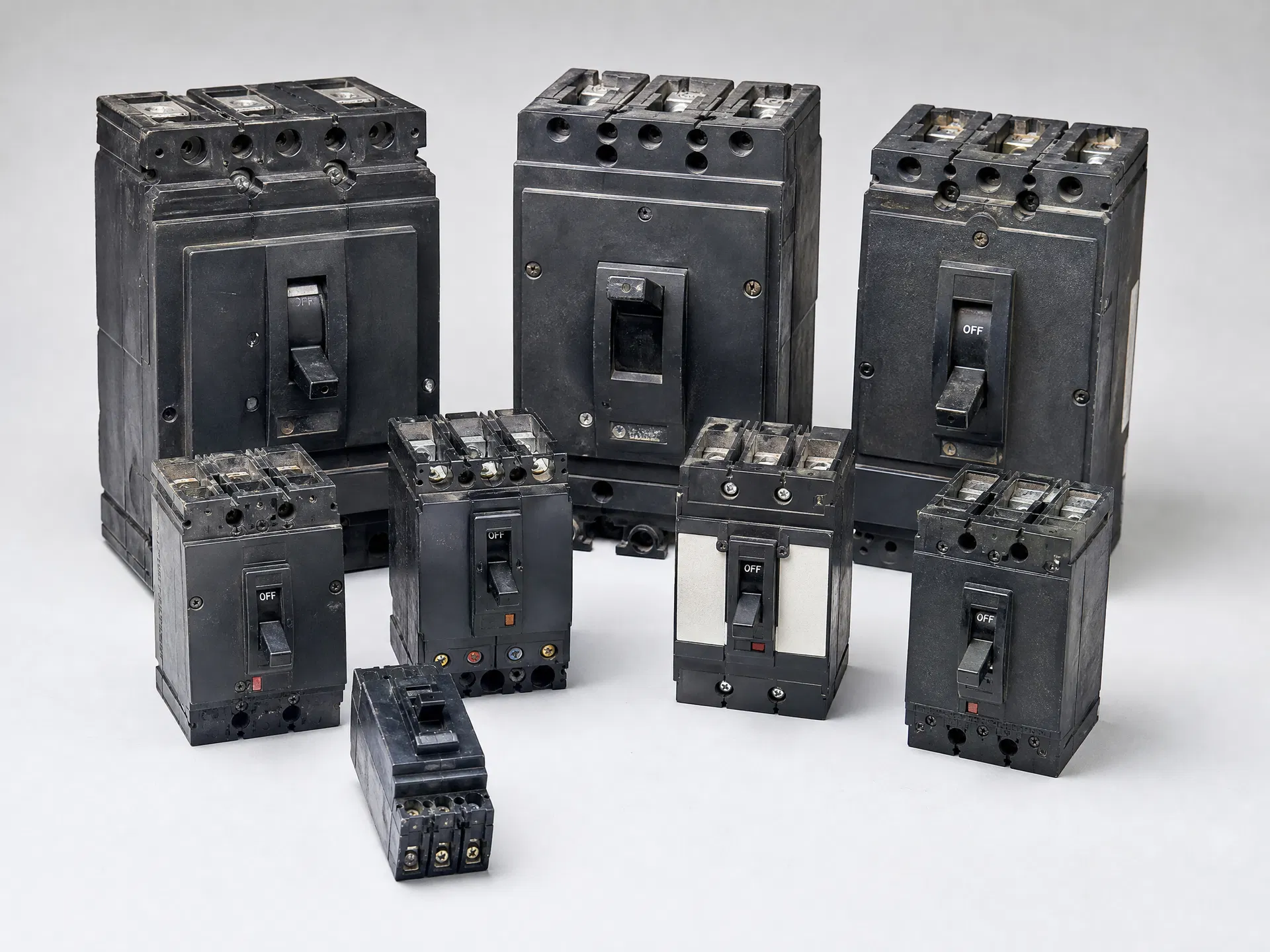
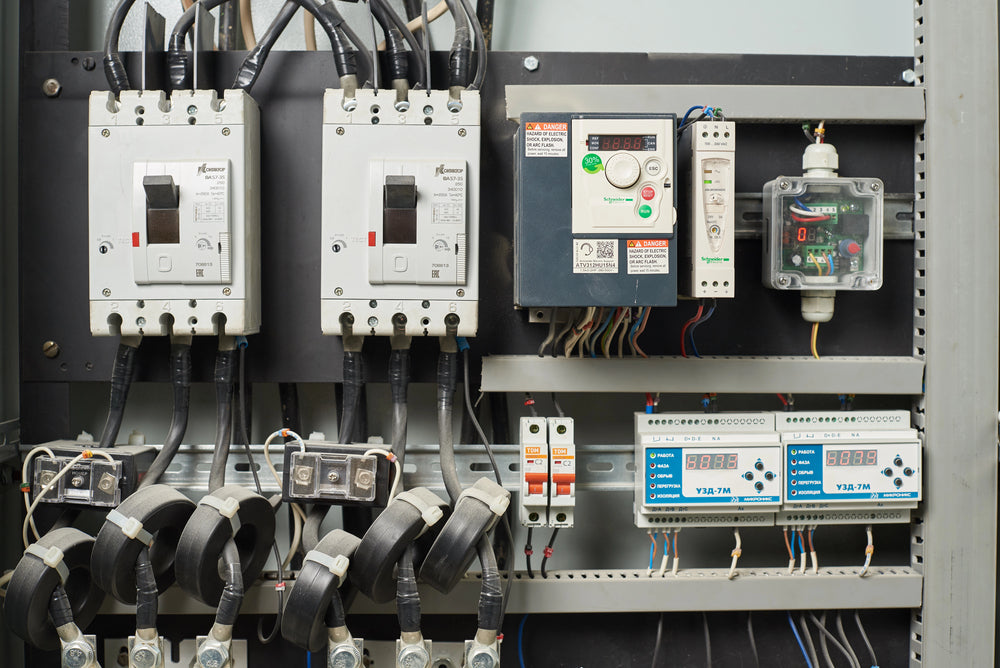
Surplus electrical equipment can include molded case circuit breakers, insulated case breakers, low-voltage power breakers, motor control centers, bus plugs, transformers, safety switches, panelboards, contactors, starters, overload relays, disconnects, and replacement trip units. Common examples include Square D / Schneider Electric PowerPact and Masterpact breakers, Siemens Sentron breakers, Eaton Cutler-Hammer Series C breakers, GE Spectra RMS breakers, Allen-Bradley motor starters, Siemens fusible disconnect switches, and General Electric AKR or EntelliGuard low-voltage air breakers.
The value of this equipment depends on more than brand name alone. Buyers evaluate amperage, voltage class, interrupting rating, frame size, trip unit type, condition, accessories, and whether the part is new surplus, refurbished, tested, or used as-is. For example, a Square D LA36400 molded case breaker rated 400A, 600VAC, 3-pole, with a high AIC rating may have a very different resale profile than a common 20A QO breaker. Likewise, a Siemens VL breaker with an electronic trip unit, an Eaton Magnum DS low-voltage power breaker, or a GE AKR-7D-30 draw-out breaker may be attractive to buyers because facilities still rely on those platforms for replacement and maintenance needs.
For companies trying to sell electrical equipment, the key issue is not simply finding someone willing to take the material. The real challenge is choosing the right type of buyer for the specific equipment, timeline, and transaction size.
Local Electrical Surplus Store vs. National Buyer: The Core Dilemma
A local electrical surplus store can be a practical option for nearby contractors, maintenance teams, or facility managers who need a fast, simple outlet for extra inventory. Local stores often handle walk-in transactions and may be familiar with regional demand. If a contractor has a few surplus safety switches, NEMA starters, or commonly used breakers left over from a job, a local store may provide quick inspection and same-day payment.
However, local stores may have limitations. Their purchasing decisions are often shaped by shelf space, local customer demand, and immediate resale potential. A local shop may be interested in a Square D H364 heavy-duty safety switch or a Siemens BQD molded case breaker because local electricians frequently request those items. But the same store may pass on specialized equipment such as a 3000A low-voltage draw-out breaker, a replacement Digitrip RMS trip unit, or surplus medium-voltage components if they do not have the technical staff, test equipment, or customer base to resell them efficiently.
National buyers typically operate across a wider market. This broader reach can matter when selling industrial-grade equipment that has demand outside your region. For example, surplus circuit breakers such as an Eaton HMCP motor circuit protector, a Square D Masterpact NW32H, a Siemens RL low-voltage power breaker, or a GE Spectra SKHA36AT0800 may be needed urgently by a plant, hospital, water treatment facility, or manufacturing site hundreds of miles away. A national buyer may be better positioned to evaluate those parts based on nationwide demand, technical compatibility, and replacement scarcity.
Why Technical Details Affect the Selling Decision
Industrial electrical equipment is not valued like generic scrap. A breaker’s frame and trip ratings can determine whether it is useful to a facility trying to restore a critical system. For instance, a 3-pole, 600VAC breaker rated for 65kA AIC may be acceptable in an industrial distribution panel where a lower 18kA AIC breaker would not meet the available fault current requirements. Similarly, a breaker equipped with long-time, short-time, instantaneous, and ground-fault protection—often listed as LSIG—may have greater value than a thermal-magnetic version if it fits an existing selective coordination scheme.
Accessories can also affect value. Shunt trips, auxiliary switches, undervoltage releases, bell alarms, motor operators, rating plugs, and communication modules may make a breaker more desirable. A Siemens WL breaker with a configured ETU trip unit, an Eaton Digitrip 520 or 1150 trip unit, or a Schneider Micrologic 6.0A trip system requires more careful review than a simple residential-style breaker. Nameplate information, catalog numbers, date codes, and photos of terminals, lugs, trip units, and labels can all influence whether a buyer can accurately quote the equipment.
Condition is another major factor. New surplus in original packaging typically carries more value than used equipment removed from service. Still, used industrial equipment can remain valuable if it is clean, complete, undamaged, and testable. A breaker removed from a controlled electrical room during a planned switchgear upgrade is very different from one pulled from a wet, corroded enclosure after years of exposure. National buyers may have established inspection and testing processes for larger or more technical equipment, while local stores may focus on visual inspection and fast resale.
The Importance of Choosing the Right Buyer
Making the right choice when selling surplus electrical equipment can affect recovery value, transaction speed, risk, and logistics. A small lot of common components may be easy to sell locally. A mixed inventory of industrial breakers, busway plugs, MCC buckets, panelboard interiors, dry-type transformers, and disconnect switches may require broader technical evaluation.
For example, a facility closing a production line might have dozens of Allen-Bradley 509 starters, Eaton FD and JD frame breakers, Square D I-Line panelboard breakers, and 480V fusible switches. If the seller only receives a bulk offer based on general surplus pricing, high-demand items may be undervalued. On the other hand, if the lot includes obsolete, damaged, or incomplete material, a national buyer may be able to separate resale items from scrap more accurately.
The dilemma is ultimately about fit. Local electrical surplus stores may offer convenience and immediate access. National buyers may offer broader market exposure, technical specialization, and better handling of large or complex inventories. Understanding the equipment’s specifications—and how those specifications affect real-world demand—is essential before deciding where to sell.
Selling to a Local Electrical Surplus Store: Advantages and Disadvantages
Local electrical surplus stores can be a practical option when you need to move a small quantity of electrical equipment quickly, especially if the material is common, easy to inspect, and already located nearby. For contractors, facility managers, electricians, and maintenance teams, these stores often provide a straightforward way to liquidate extra inventory without coordinating freight, waiting for a remote evaluation, or packaging equipment for shipment.
However, local buyers also have important limitations. Their offers are usually shaped by available cash, warehouse space, local demand, and the risk they take when reselling used or obsolete equipment. In many cases, payout rates from a local electrical surplus store fall in the range of 20% to 40% of retail value, particularly for common or slow-moving inventory.
Advantage: Convenient for Small Quantities and Quick Drop-Offs
The biggest advantage of selling to a local electrical surplus store is convenience. If you have a few surplus circuit breakers, safety switches, disconnects, small starters, or panel components, a local store may be able to inspect the material in person and make an offer the same day.
For example, an electrical contractor in Houston may finish a commercial tenant improvement project and have leftover molded case breakers such as:
- Square D QOB230, 2-pole, 30 amp bolt-on breakers
- Siemens BQD320, 3-pole, 20 amp breakers
- Eaton BAB1020, single-pole 20 amp bolt-on breakers
- GE THQB series plug-in breakers from a panel retrofit
If the quantities are small—perhaps 10 to 30 breakers total—a local electrical surplus store may be the simplest option. The contractor can load the material into a truck, bring it to the counter, and receive a quick assessment. For low-value or common breakers, this avoids spending time photographing each item, creating inventory spreadsheets, or arranging shipping.
This same convenience applies to small pieces of facility surplus. A property maintenance team may remove a few fusible disconnect switches, a 100 amp safety switch, or spare panel interiors after a remodel. If the equipment is clean, recognizable, and still has intact labels, a local buyer may be willing to purchase it on the spot.
Advantage: Hands-On Evaluation of Used Equipment
Local surplus stores often prefer to see equipment physically before making an offer. This can be helpful when dealing with used gear where condition is difficult to judge from photos alone. Store staff can inspect nameplates, handle mechanisms, bus condition, lug condition, trip units, and signs of corrosion or heat damage.
This is particularly useful for items like electrical panels. A panelboard or load center may have value if it includes usable interiors, trim, deadfronts, branch breakers, or main breakers. For instance, a Square D NQ panelboard with a 225 amp main breaker and a full set of QOB branch breakers may be easier to evaluate in person than through a short phone conversation.
A local store can check whether:
- The panel label is readable
- The bus is aluminum or copper
- The main breaker is included
- The trim and deadfront are present
- Breaker spaces are damaged or intact
- There are missing lugs, covers, or hardware
- The enclosure has rust, dents, or paint contamination
For sellers who do not know the exact catalog numbers, this in-person evaluation can reduce uncertainty.
Disadvantage: Lower Payout Rates Compared to Broader-Market Buyers
The main drawback of selling to a local surplus store is the payout. Local electrical surplus stores typically need to buy at a steep discount because they are reselling into a limited market and carrying the cost of storage, testing, cleaning, and potential returns. As a result, many local buyers offer approximately 20% to 40% of current retail value, depending on the item’s demand and condition.
For example, if a new replacement breaker has a retail value of $1,000, a local store may offer $200 to $400 if it is used, surplus, or untested. If the item is obsolete, missing accessories, or has uncertain market demand, the offer may be lower.
This pricing structure becomes more noticeable with higher-value electrical equipment. A contractor removing a 600 amp Square D PowerPact breaker, an Eaton Magnum DS breaker, or a Siemens Sentron molded case breaker may expect a strong return because the replacement retail price is high. However, a local surplus store may not have the customer base or capital to pay aggressively for that breaker unless they already have demand for it.
The same issue applies to large transformers. A 75 kVA dry-type transformer, such as a Square D 75T3H or Eaton V48M28T75, may have meaningful resale value if it is clean, recently removed, and has a desirable voltage configuration like 480 primary to 208Y/120 secondary. But a local surplus store must consider floor space, handling requirements, forklift capacity, and whether local contractors are actively buying that transformer size. Because transformers are bulky and slow-moving, the offer may be conservative.
Disadvantage: Limited Capital for Large Lots
Local electrical surplus stores often operate with limited purchasing budgets. They may be comfortable buying a few breakers, small disconnects, or panel parts, but large liquidation lots can be more difficult.
Consider a commercial building decommissioning project in Chicago. The facility may remove:
- Multiple 480V panelboards
- Several dry-type transformers from 15 kVA to 150 kVA
- Switchgear sections with bolted pressure switches
- Bus plugs and bus duct components
- Dozens of molded case and insulated case circuit breakers
- Motor control buckets from an MCC lineup
A local surplus store may want some of the material but not all of it. They may cherry-pick the fastest-moving items—such as Square D I-Line breakers, Siemens panel switches, or Eaton FD/HKD breakers—while declining heavy transformers, damaged enclosures, obsolete panel interiors, or odd-voltage equipment.
Even if the store wants the entire package, it may not have enough cash available to make a competitive bulk offer. This can lead to partial purchases, delayed payment terms, or offers based heavily on scrap value rather than resale value.
Disadvantage: Geographic Limitations and Local Demand
Local surplus stores are strongly influenced by geography. Their buying decisions depend on what contractors, electricians, and industrial customers in that area are likely to purchase. Equipment that is common in one market may be less desirable in another.
For instance, a surplus store in an industrial area of Houston may have regular demand for 480V equipment, NEMA 3R disconnects, explosion-proof controls, and larger frame breakers used in petrochemical, manufacturing, or commercial facilities. That same store may be less interested in residential load centers, older low-amp plug-in breakers, or specialty equipment outside its normal customer base.
In contrast, a buyer serving Chicago may see steady demand for commercial panelboards, switchgear, bus plugs, and replacement breakers for older office buildings, warehouses, and multifamily properties. Still, if the equipment does not match local building stock or contractor preferences, the store may discount it heavily or decline it altogether.
Geography also affects transportation. A local store may only buy within driving distance or may require the seller to deliver the material. This can be inconvenient when equipment is heavy or spread across multiple job sites. A 112.5 kVA transformer, for example, may weigh several hundred pounds and require a pallet jack, liftgate truck, or forklift. If the seller must handle loading and delivery, the time and labor involved can reduce the net value of the sale.
Real-World Scenario: Small Panelboard Surplus After a Renovation
A local electrical surplus store can make sense when the equipment is modest in quantity and easy to transport. Suppose an electrical contractor completes a retail renovation and has two surplus panelboards and a box of breakers left over. The panels may include a 225 amp Square D NQ interior, a 100 amp main breaker load center, and branch breakers such as QOB120, QOB220, and QOB330 units.
In this situation, selling locally may be efficient. The contractor can bring the equipment to the surplus store, where staff can inspect the bus, labels, trim, and breakers. If the items are clean and commonly used in the local market, the store may offer a fair wholesale price. The contractor avoids storing the material indefinitely or sending employees to manage a more formal liquidation process.
The downside is that the store’s offer will still likely reflect local resale economics. Even if the combined retail value appears high, the store must account for uncertain demand, incomplete panel configurations, and the possibility that some breakers are used or outdated. A payout in the 20% to 40% of retail range would be typical.
Real-World Scenario: Large Transformer Removal From an Industrial Facility
Local surplus stores are less ideal when the equipment is large, specialized, or capital-intensive. Imagine a facility removing three dry-type transformers: a 45 kVA 480-208Y/120V unit, a 75 kVA unit, and a 150 kVA unit. All are functional but used, with cosmetic wear and older nameplates.
A local surplus store may be interested in the 45 kVA and 75 kVA transformers because those sizes are relatively common for commercial applications. However, the 150 kVA transformer may be harder to move. It requires more storage space, specialized handling, and a buyer with a specific project need. If the local store does not regularly sell larger transformers, it may offer close to scrap value or decline the larger unit entirely.
In this type of scenario, the seller must weigh convenience against recovery value. A local store may provide a quick, simple transaction, but the payout may be limited by the store’s warehouse space, available capital, and confidence in local resale demand.
Selling to a National Buyer Like Circuit Breaker Buyer USA
Selling surplus electrical equipment to a national buyer can be very different from walking into a local electrical surplus store or calling a regional scrapper. A national buyer such as Circuit Breaker Buyer USA typically evaluates equipment across a broader resale market, which can create advantages for contractors, plant managers, facility owners, demolition companies, and electrical distributors with larger or more specialized inventories.
National buyers are often best suited for situations where the material has meaningful resale value, the quantity is significant, or the equipment includes specialized breakers that may not move quickly in a local market. Examples include molded case circuit breakers such as Square D / Schneider Electric QOB, QO, FA, KA, LA, and MA frame breakers; Eaton Cutler-Hammer FD, FDB, HFD, JD, JDB, KD, and HKD breakers; Siemens ED, FD, JD, and LD frame breakers; GE THQB, THHQB, SFHA, SGHA, and TJK breakers; and obsolete or hard-to-source items such as Federal Pacific, Zinsco, ITE, Westinghouse, and older Square D I-Line components.
Advantage: Higher Payout Potential Across a Larger Market
One of the biggest advantages of working with a national buyer is access to higher payout ranges. Depending on brand, condition, amperage, interrupting rating, demand, and availability, national buyers may pay approximately 40–70% of retail value for qualified circuit breakers and electrical surplus.
That payout range is usually not based on scrap value. It is based on whether the equipment can be inspected, tested, inventoried, and resold into a market where there is active demand. For example, a used Square D LA36400 400 amp, 600 volt, 3-pole molded case breaker in good condition may have a much stronger resale market than a common residential 20 amp plug-in breaker. Likewise, an Eaton HFD or JDB frame breaker with a high AIC rating may be more valuable than lower-demand panelboard components.
This is where national reach matters. A local surplus store may only know what contractors in its immediate area are buying. A national buyer can compare demand across industrial plants, commercial buildings, MRO departments, electrical contractors, and facilities in multiple regions. For sellers with quality equipment, that broader market can support stronger offers than a local buyer who is limited by shelf space or regional demand.
For sellers who want to understand how electrical surplus is commonly converted into payment, the broader process is closely related to cash for circuit breakers, especially when dealing with name-brand breakers, bus plugs, disconnects, motor controls, switchgear components, and panelboard interiors.
Advantage: Ability to Buy in Bulk
National buyers are also better positioned to purchase in bulk. This is especially important for companies dealing with complete electrical room upgrades, plant closures, tenant improvements, or warehouse cleanouts.
A typical bulk lot might include:
- 200–600 amp molded case breakers from Square D, Eaton, Siemens, or GE
- I-Line, Spectra, Sentron, or Pow-R-Line panelboard breakers
- 120/208V, 277/480V, and 600V-rated equipment
- 3-pole industrial breakers with 18kA, 22kA, 35kA, 65kA, or 100kA interrupting ratings
- Fusible and non-fusible disconnect switches
- Bus plugs, panelboards, switchboard sections, and motor control center buckets
- Obsolete but still in-demand breakers used for maintenance and replacement applications
A local store may cherry-pick only a few items from that list. A national buyer may be able to quote the entire package because it has the storage, logistics, technical knowledge, and customer base to handle mixed inventory. This can reduce the seller’s burden of sorting, transporting, and negotiating multiple smaller transactions.
For example, if a demolition contractor removes electrical gear from a 200,000-square-foot manufacturing facility, the breaker inventory may include dozens of Eaton KD3400 breakers, Square D KA36200 units, GE TFK or TJK breakers, and Siemens FD63 series breakers. A local store may not want to purchase the entire lot, especially if some items are slow-moving. A national buyer may evaluate the lot as a whole and arrange removal or freight accordingly.
Advantage: Nationwide Logistics and Coverage in All 50 States
Another major advantage is logistics. Circuit Breaker Buyer USA buys from sellers in all 50 states, which is especially helpful when equipment is located outside major metropolitan areas or when a seller has assets spread across multiple job sites.
Instead of requiring the seller to package and transport everything to a nearby storefront, a national buyer can often coordinate freight, palletized shipping, LTL pickup, or direct on-site service. This is particularly useful for heavy or awkward equipment such as switchboard-mounted breakers, busway plugs, panel tubs, or large-frame molded case breakers.
For sellers comparing regional options, the national footprint can be reviewed through locations. The key benefit is not simply geographic coverage; it is the ability to support projects where electrical surplus is located in different states, warehouses, plants, or contractor yards.
Advantage: Free On-Site Pickup for Qualified Equipment
Free on-site pickup can be a meaningful advantage when the material is bulky, heavy, or difficult to transport safely. Large lots of circuit breakers and electrical gear may require pallets, forklifts, liftgates, or dock-height loading. Without pickup support, the seller may lose time and money arranging labor, packaging, and freight.
In real-world scenarios, free on-site pickup is especially valuable when:
- A hospital is replacing 480V distribution equipment during a scheduled shutdown
- A data center contractor has surplus Square D, Eaton, or Siemens breakers after a phased upgrade
- A manufacturing plant is closing and needs electrical rooms cleared
- A commercial property manager is removing obsolete panelboards from multiple tenant spaces
- An electrical contractor has accumulated surplus breakers from service jobs and remodels
For qualified lots, on-site pickup can streamline the sale while reducing disruption to the project schedule. It can also help ensure the equipment is handled in a way that preserves resale value, such as keeping labels intact, avoiding broken handles, and separating breaker types by frame, amperage, and voltage.
The Role of Circuit Breaker Removal
The removal process is an important part of selling to a national buyer. Proper circuit breaker removal helps protect both worker safety and equipment value. Breakers should only be removed from de-energized equipment by qualified personnel following applicable electrical safety procedures, lockout/tagout requirements, and site-specific protocols.
From a resale standpoint, careful removal matters because damaged breakers lose value quickly. A breaker with a cracked case, missing lug, broken toggle, unreadable label, or damaged mounting hardware may be downgraded or rejected. For example, a Square D QOB bolt-on breaker with intact mounting hardware is easier to resell than one removed hastily with stripped screws or damaged clips. Similarly, an Eaton FD or Siemens JD breaker with a clean label showing amperage, voltage, poles, and AIC rating is easier to evaluate than one with paint overspray or missing identification.
In larger projects, sellers should document the equipment before removal whenever possible. Photos of installed gear, nameplates, panel schedules, and breaker labels can help a buyer identify models and provide more accurate pricing. After removal, organizing breakers by manufacturer and frame type—such as Square D FA/KA/LA, Eaton FD/JD/KD, Siemens ED/FD/JD, or GE THQB/SFHA/SGHA—can speed up inspection and payment.
Disadvantage: Not Every Breaker Qualifies for Premium Pricing
While national buyers may pay more for desirable equipment, not every breaker will qualify for a high payout. Common residential breakers, damaged units, heavily painted equipment, recalled products, incomplete assemblies, or very low-demand models may have limited value.
For example, a large quantity of standard 15 amp or 20 amp residential plug-in breakers may not generate the same interest as industrial 3-pole breakers rated for 480V systems. Likewise, equipment with missing labels can be difficult to verify, especially when amperage, voltage, AIC rating, trip unit, or catalog number cannot be confirmed.
Condition also matters. Breakers exposed to water, corrosion, fire damage, or chemical contamination may not be suitable for resale. A national buyer may still review the material, but the offer will typically reflect risk, testing requirements, and marketability.
Disadvantage: Evaluation May Be More Detailed
Selling to a national buyer can involve a more technical evaluation than selling locally. A local store may make a quick counter offer based on what is visible on the shelf. A national buyer may request photos, catalog numbers, quantities, condition notes, and details about how the equipment was removed.
This can take more preparation from the seller. For large inventories, creating a basic list with manufacturer, catalog number, amperage, pole count, voltage rating, and quantity can improve accuracy. Examples include “Square D KA36225, 225A, 3P, 600V,” “Eaton HFD3100, 100A, 3P,” or “Siemens JD63B400, 400A, 3P.” While this added detail may require time upfront, it often leads to a more informed valuation.
Disadvantage: Small Local Sales May Be Simpler
For a very small quantity of low-value breakers, a local surplus shop may still be the simplest option. If a contractor has only a handful of common breakers and needs immediate same-day payment, a local buyer may be convenient even if the payout is lower.
National buyers are usually strongest when the equipment has enough value or volume to justify logistics, inspection, and processing. Sellers with bulk commercial or industrial inventory, however, often benefit from the broader resale channels, nationwide pickup options, and technical knowledge that a national buyer can provide.
Pricing: Local Electrical Surplus Stores vs. National Buyers
Pricing is often the biggest difference between selling to a local electrical surplus store and working with a national breaker buyer. Both can be legitimate outlets for surplus electrical equipment, but they typically value inventory very differently because their resale channels, customer base, testing capabilities, and inventory turnover are not the same.
A local surplus store usually prices equipment based on what it believes it can sell in its immediate regional market. If the store primarily serves local electricians, small contractors, maintenance teams, or walk-in customers, it may only pay aggressively for items that move quickly in that area. Common molded case breakers, panelboards, disconnects, and replacement parts for locally installed gear may be attractive. However, higher-value low-voltage power circuit breakers, insulated case breakers, and switchgear components may receive conservative offers if the store does not already have a buyer lined up.
A national buyer, by contrast, can often pay more because it is not limited to one city or one customer base. National buyers typically have access to contractors, industrial facilities, data centers, hospitals, OEMs, switchgear shops, and maintenance teams across the country. That larger network creates more opportunities to match the right breaker with the right end user, especially for specialized equipment like Square D Masterpact breakers or Siemens WL power breakers.
Why National Buyers Can Usually Pay More
National buyers can frequently offer a higher percentage of resale value because they have more paths to recover that value. A local store may need to buy low because it expects the equipment to sit on the shelf for months or years. A national buyer may already have demand for the same model from another region, or it may know exactly which industries and facilities still use that frame type.
For example, a Square D Masterpact NW32H1 with a Micrologic 6.0A trip unit, 3200A sensor rating, drawout construction, and compatible cradle may be difficult for a small local shop to move. The store may see it as expensive, heavy, and slow-moving. A national buyer may see the same breaker as a highly marketable replacement unit for a facility with aging Schneider/Square D low-voltage switchgear. If the buyer can place that breaker directly with an end user or switchgear service company, it can justify a stronger upfront offer.
The same applies to a Siemens WL breaker such as a WLL2F332 or WLS3F320 with an ETU745 or ETU776 trip unit. A local store may not have the ability to test, document, warehouse, and market that breaker nationally. A national buyer that routinely handles WL inventory can evaluate frame size, interrupting rating, trip unit configuration, accessories, racking mechanism, and condition more accurately. That technical familiarity reduces risk and can translate into a better payout.
National buyers also benefit from economies of scale. They may process hundreds or thousands of breakers, switchgear parts, bus plugs, motor controls, and panelboard components each month. Because freight, testing, cataloging, and sales operations are spread across a much larger volume of inventory, the buyer may be able to pay more per item while still maintaining margin. Local stores often have higher relative carrying costs for specialized equipment because one large breaker may occupy valuable shelf or warehouse space for an extended period.
For a detailed look at the variables that affect valuation, see how we price.
Typical Payout Comparison by Equipment Type
The following examples are general market ranges and will vary based on condition, testability, accessories, age, completeness, current demand, and whether the equipment is new surplus, reconditionable used, or missing components.
| Equipment Example | Technical Details That Affect Value | Local Surplus Store Typical Offer | National Buyer Typical Offer |
|---|---|---|---|
| Square D Masterpact NW32H1 | 3200A frame, 3-pole, drawout, Micrologic 5.0A/6.0A trip, cradle included, racking handle, shutter/secondary disconnect condition | 20%–35% of resale value; often $1,500–$3,500 depending on completeness | 40%–60% of resale value; often $3,500–$7,500 when tested and complete |
| Square D Masterpact NW20H2 | 2000A frame, high interrupting rating, LSIG trip functions, stored energy mechanism, charging motor, auxiliary switches | 20%–40%; commonly $1,000–$3,000 | 45%–65%; commonly $3,000–$6,500 |
| Siemens WL WLL2F332 | WL low-voltage power breaker, 3200A frame, drawout, ETU745 trip, communications/accessory package if present | 15%–35%; commonly $1,200–$3,200 | 40%–60%; commonly $3,500–$7,000 |
| Siemens WL WLS3F320 | 2000A–3200A class depending configuration, drawout cassette compatibility, ETU trip unit type, pole count, sensors | 15%–35%; commonly $1,000–$3,000 | 40%–60%; commonly $3,000–$6,500 |
| Eaton Magnum DS MDSC32 | 3200A frame, Digitrip trip unit, drawout cassette, charging motor, close/trip coils, secondary disconnects | 20%–35%; commonly $1,500–$3,500 | 40%–60%; commonly $3,500–$7,500 |
| GE EntelliGuard G AKR-75 / AKR-100 | 3000A–4000A class, drawout construction, trip unit type, cell switch condition, racking mechanism | 15%–30%; commonly $800–$2,500 | 35%–55%; commonly $2,500–$6,000 |
| Square D LA36400 / LH36400 Molded Case Breaker | 400A, 3-pole, 600VAC class, interrupting rating, lugs included, handle condition | 25%–45%; commonly $150–$400 | 35%–55%; commonly $300–$650 |
| Siemens HCP / HJD / LXD Molded Case Breakers | 150A–600A range, thermal magnetic or electronic trip, lug kit, mounting style, condition | 20%–40%; commonly $75–$500 | 35%–55%; commonly $200–$900 |
How Sales Channel Affects the Offer
A local store usually has to assume it will resell to a local contractor at a discounted price. That store may also need to leave room for negotiation, warranty risk, storage cost, and the possibility that the item does not match local demand. If a contractor in that area rarely services equipment using Masterpact NW or Siemens WL breakers, the store may treat those units as speculative inventory.
National buyers often work closer to the final demand source. Instead of waiting for a walk-in customer, they may have existing relationships with switchgear rebuilders, electrical service companies, plant maintenance departments, and facility managers searching for exact replacements. This is especially important with low-voltage power circuit breakers where details matter. A customer may need a specific drawout breaker with the correct frame rating, trip unit, plug, cell compatibility, and accessory configuration to avoid switchgear modification.
For instance, a data center with Schneider low-voltage gear may not simply need “a 3200 amp breaker.” It may need a specific Square D Masterpact NW breaker with a compatible Micrologic trip unit, correct sensor rating, proper cradle style, shunt trip voltage, closing coil voltage, and auxiliary contact arrangement. The more exact the requirement, the more valuable a properly identified and tested unit becomes. National buyers are typically better positioned to recognize and monetize that specificity.
Condition, Testing, and Documentation Change the Price
Both local stores and national buyers adjust offers based on condition, but national buyers may be more willing to pay for equipment that can be properly evaluated. A breaker that is clean, complete, and accompanied by nameplate photos will usually receive a stronger offer than one described only as “large 3-pole breaker.”
Important pricing factors include:
- Full catalog number, such as NW32H1, NW20H2, WLL2F332, or WLS3F320
- Amp rating, frame rating, and sensor rating
- Interrupting rating and voltage class
- Trip unit model, such as Micrologic 5.0A, Micrologic 6.0P, Siemens ETU745, or ETU776
- Drawout versus fixed-mounted construction
- Cradle/cassette included or breaker only
- Presence of lugs, racking handle, shutters, secondary disconnects, and cell switches
- Accessory voltages for shunt trip, undervoltage release, close coil, and charging motor
- Test reports, maintenance tags, or known removal history
- Whether the breaker was removed from working service or salvaged after damage
A local store may pay a flat amount because it lacks the staff or equipment to verify these details. A national buyer familiar with Square D and Siemens product families can often separate high-demand configurations from lower-value ones. That distinction can make a major difference in payout, especially when the equipment is complete and technically desirable.
Real-World Pricing Scenario
Consider a contractor removing gear from a commercial facility upgrade. The surplus includes one Square D Masterpact NW32H1, two Siemens WL drawout breakers, several 400A molded case breakers, and a pallet of panelboard interiors. A local surplus store may make a blended offer for the entire lot because it wants the common items but views the large power breakers as slow-moving. The offer might be based heavily on storage risk and local resale uncertainty.
A national buyer may break the lot down by individual value. The Masterpact NW may be priced separately based on its trip unit, cradle, and condition. The Siemens WL breakers may be evaluated by ETU type, amp rating, and accessory package. The molded case breakers may be grouped by brand, frame, and interrupting rating. This itemized approach can produce a higher total offer because valuable equipment is not averaged down with low-demand material.
Logistics, Convenience, and Payment Speed: Local Surplus Stores vs. National Buyers
When selling electrical surplus, the biggest differences between local surplus stores and national buyers often show up after the quote is issued. Logistics, removal support, freight coordination, and payment timing can significantly affect the total value of a sale—especially when the equipment is bulky, mixed-brand, or part of a larger decommissioning project.
Local Surplus Stores: Convenient for Small Loads, Limited for Heavy Equipment
Local electrical surplus stores can be convenient when the material is easy to transport and the transaction is straightforward. For example, if a contractor has a few molded case circuit breakers—such as Square D QOB220, Siemens BQD360, or Eaton/Cutler-Hammer BAB3030 breakers—dropping them off locally may be simple. The seller can load the items into a pickup, drive to the store, receive an in-person evaluation, and potentially leave with payment the same day.
However, that convenience can decrease quickly when the equipment is heavier, specialized, or part of a larger lot. A local shop may not have the warehouse space, lifting equipment, or resale channels to handle a 2,000-amp switchboard, a lineup of 480Y/277V distribution gear, or a palletized batch of 400-amp and 600-amp fusible bus plugs. Even if they are interested, they may ask the seller to arrange delivery, unload the equipment, or accept a lower offer due to limited local demand.
This is especially common with larger items such as switchgear. A facility replacing a 3000A 480V main-tie-main lineup, for instance, may have sections that are 90 inches tall, 36 inches deep, and several feet wide per vertical section. The equipment may include power circuit breakers, insulated case breakers, metering compartments, ground fault protection, or draw-out mechanisms. Local buyers may be willing to cherry-pick smaller components—such as trip units, breaker cubicles, or control transformers—but may not want to handle the entire lineup.
National Buyers: Freight Coordination for Large and Mixed Electrical Lots
National buyers are generally better positioned for complex logistics because they routinely purchase equipment across state lines. Instead of requiring the seller to deliver material, a national buyer may arrange freight pickup, coordinate LTL or full truckload shipping, provide bills of lading, and help determine whether equipment should be palletized, crated, or loaded directly onto a flatbed.
This matters when the surplus includes heavy or awkward material such as bus plugs/busway. For example, a manufacturing plant may remove a run of 800A busway with multiple 100A, 200A, and 400A bus plugs during a production line relocation. Individual bus plugs may be manageable by hand or pallet jack, but 10-foot busway sections, elbows, tap boxes, and end feeds require planning. A national buyer can evaluate the complete package by manufacturer, amperage, voltage, plug type, and condition—whether it includes GE Spectra Series busway, I-Line style hardware, or older plug-in distribution components.
National buyers also tend to be more flexible with mixed inventories. A single lot may include General Electric THED136050 breakers, Eaton FD3100 or HFD3100 breakers, Siemens Sentron breakers, safety switches, panelboards, motor control buckets, and transformer disconnects. A local store may only be interested in fast-moving items, while a national buyer may value the combined resale potential across multiple markets.
Convenience During Decommissioning and Facility Shutdowns
The convenience advantage of a national buyer becomes clearer during decommissioning projects. In a commercial building, data center, hospital expansion, or industrial plant shutdown, electrical equipment is often removed on a tight schedule. The seller may be coordinating electricians, demolition crews, riggers, project managers, and building owners. In that environment, moving surplus electrical equipment is not just a resale issue—it is a project management issue.
Consider a warehouse being converted from manufacturing to cold storage. The electrical contractor removes several 480V motor control centers, 225A panelboards, 600A disconnects, dry-type transformers, and a 1600A service switchboard. A local surplus store may ask for the material to be separated, delivered, and inspected at their location. A national buyer, by contrast, may review photos, nameplate data, breaker catalog numbers, and quantities remotely, then schedule pickup once the equipment is removed and staged.
For large-scale decommissioning, national buyers may also help identify what has value before removal begins. This can include noting whether an Eaton Magnum DS breaker, GE AKR draw-out breaker, or Cutler-Hammer Series C molded case breaker should be protected from damage during removal. Preserving trip units, line/load lugs, racking mechanisms, mounting hardware, and door assemblies can materially affect resale value.
Payment Speed: In-Person Cash vs. Same-Day Electronic Payment
Payment speed depends on the buyer and the complexity of the lot. Local surplus stores may offer immediate payment for small, known items. If a contractor brings in five clean, current-model breakers, the store may inspect them and pay on the spot. This can be useful for small transactions where freight, documentation, and remote evaluation would be unnecessary.
National buyers, however, often provide same-day payment once terms are agreed upon and the material is verified. For larger transactions, payment may be issued by ACH, wire transfer, company check, or another documented method. This is particularly valuable when the seller needs a clear paper trail for accounting, asset recovery, or project closeout.
For example, if a contractor sells a pallet of 60 circuit breakers including Eaton EHD, FD, KD, and L-frame units, along with several GE Spectra RMS breakers such as SGHA36AT0600 frames, a national buyer may issue payment the same day the final inventory and photos are confirmed. If the material is being picked up by freight, payment timing may be tied to pickup, inspection, or agreed documentation. The key advantage is that national buyers are typically structured to handle larger payouts quickly without requiring the seller to wait for local resale.
Practical Trade-Offs Between the Two Options
Local stores are often best for small, simple surplus loads where the seller wants face-to-face interaction and can transport the material easily. They can be convenient for common breakers, disconnects, starters, and fuses that fit in a service van.
National buyers are usually more practical when the material is heavy, high-value, geographically remote, or part of a multi-phase removal. They can reduce the burden of freight coordination, evaluate specialized equipment across multiple brands, and manage transactions involving switchgear, busway, MCC buckets, transformers, and large breaker inventories. For sellers dealing with time-sensitive removals or decommissioned electrical rooms, the logistical support and same-day payment capability can be just as important as the quoted purchase price.
Real-World Scenarios: When Local Electrical Surplus Stores Make Sense vs. When National Buyers Are Better
The right selling channel depends heavily on the quantity, condition, voltage class, brand, and resale demand of the surplus equipment. A handful of common molded-case breakers can often be handled efficiently by a local surplus counter. But a plant-wide upgrade involving low-voltage power breakers, switchgear cells, trip units, and specialty parts usually requires a national buyer with broader demand, technical evaluation capability, and logistics support.
Scenario 1: Small Contractor With a Few Leftover Breakers — When Local Makes Sense
A small electrical contractor finishes a tenant improvement project and has several unused or lightly handled breakers left over from the job. The surplus may include common molded-case circuit breakers such as:
- Square D QOB220, 20A, 2-pole, bolt-on breaker
- Eaton BAB3030H, 30A, 3-pole, 240V bolt-on breaker
- Siemens BQD320, 20A, 3-pole, 240V breaker
- GE THQB1120, 20A, 1-pole plug-in breaker
- ABB SACE Tmax XT1B 125, depending on the project specification
In this situation, the contractor may only have five to twenty pieces, most of which are common branch-circuit or lighting-panel breakers. The total resale value may be modest, especially if the items are current-production or easy to source through distribution. A local electrical surplus store can be a practical option because the transaction is simple: the contractor can bring the breakers to the counter, receive an inspection, and potentially walk out with payment or store credit the same day.
Local buyers tend to make sense when the material is easy to identify and inexpensive to transport. For example, a box of QOB, BAB, THQB, or BQD breakers can fit in the back seat of a service van. There is little need for freight coordination, palletizing, or detailed asset recovery planning. If the contractor is already near the surplus store or supply house, the convenience may outweigh the possibility of a slightly higher resale price elsewhere.
Condition also matters. If the breakers are new surplus in original packaging, the local store may be more willing to buy them because the labeling, amperage, interrupting rating, and catalog numbers are easy to verify. A breaker such as an ABB SACE Tmax XT2N 160 with a factory label showing frame size, trip rating, voltage, and interrupting capacity is more straightforward to evaluate than an unlabeled used breaker removed from an old panel.
However, local surplus stores may be selective. They may decline older, obsolete, or slow-moving items if their customer base does not frequently ask for them. For example, a local shop may not have steady demand for unusual frame sizes, high-interrupting-capacity breakers, or accessories such as shunt trips, undervoltage releases, rating plugs, or electronic trip units. They may also discount heavily if they are unsure whether a breaker can be resold safely or tested economically.
For small contractors, the key question is whether the time spent seeking a higher offer is worth it. If the surplus consists of a few common breakers and the contractor wants fast turnaround, a local surplus store may be the most efficient route. This is especially true when the alternative is leaving the material on a shelf for years, mixing it into job boxes, or sending it out as low-value scrap. Understanding the difference between scrap vs resale is important because even small breakers can have resale value if they are clean, identifiable, and in demand.
Scenario 2: Facility Manager Upgrading a Plant With Multiple Substations — When National Is Better
A very different situation occurs when a facility manager is overseeing a plant modernization project involving multiple substations, aging switchgear, and large-frame breakers. In this case, the surplus may include equipment removed from 480V and 600V switchgear lineups, motor control centers, and distribution substations. The material could include:
- ABB SACE Emax E2N 1600A or E3H 2500A air circuit breakers
- ABB SACE Isomax S7 or S8 molded-case breakers
- Westinghouse DS-416, DS-420, DS-632, or DS-840 low-voltage power circuit breakers
- Westinghouse SPB-65 or SPB-100 insulated-case breakers
- Eaton/Cutler-Hammer Magnum DS breakers
- GE AKR-50 or AKR-75 draw-out breakers
- Siemens RL or WL low-voltage power breakers
- Trip units such as Westinghouse Amptector, Digitrip RMS 510/610, or ABB PR121/P and PR122/P units
This type of surplus is typically beyond the practical scope of a small local surplus store. A single Westinghouse DS-632 draw-out breaker can weigh several hundred pounds, and larger frame breakers may require forklifts, palletizing, blocking, and freight coordination. The facility may also be removing breaker cubicles, racking mechanisms, cell switches, shutters, primary disconnects, secondary disconnect blocks, and spare parts kits. These items often have value, but only if they are identified correctly and matched with buyers who need them.
National buyers are usually better positioned for this scenario because they serve a broader market. Demand for obsolete or legacy equipment is often scattered across the country. A local store may not know who needs a Westinghouse DS-416 with a specific sensor rating, but a national buyer may have customers maintaining older Westinghouse DS switchgear in hospitals, paper mills, refineries, water treatment plants, and manufacturing facilities.
Technical details can significantly affect value. For example, an ABB SACE Emax E2B 2000A breaker with a PR122/P-LSIG trip unit, motor operator, closing coil, shunt trip, and correct racking configuration may be far more valuable than the same frame missing its trip unit or secondary disconnects. Similarly, a Westinghouse DS-420 breaker with intact arc chutes, primary fingers, cell coding, and an Amptector trip package may be suitable for resale or refurbishment, while a damaged unit with cracked insulation or missing pole assemblies may be valued primarily for parts.
A plant upgrade also creates documentation and logistics challenges. The facility manager may need to coordinate removal across several shutdown windows. Breakers may be staged by substation, such as “Substation 1 Main-Tie-Main,” “MCC Room B Feeder Section,” or “480V Boiler House Switchgear.” A national buyer can often evaluate photos of nameplates, switchgear tags, frame sizes, trip settings, and condition before the equipment leaves the site. That helps the facility avoid unnecessary handling and prevents high-value assets from being mistakenly scrapped.
For example, during a 480V switchgear replacement, the demolition contractor may view all removed breakers as scrap metal. But the facility manager may identify several reusable units, including an ABB SACE E3N 3200A main breaker, two ABB SACE E2N 1600A feeder breakers, and four Westinghouse DS-206 draw-out breakers. If these are thrown into scrap bins, the plant may recover only commodity metal value. If they are sorted, photographed, and sold through the resale market, the recovery can be substantially higher. This is exactly where a scrap vs resale review becomes financially important.
National buyers also tend to be more capable when the surplus includes mixed brands and generations. A single plant may have ABB SACE breakers in one building, legacy Westinghouse DS switchgear in another, and later Eaton Magnum DS breakers in a newer expansion. Evaluating that mixture requires familiarity with obsolete platforms, retrofit histories, trip unit compatibility, and replacement demand. Local buyers may offer a flat lot price because they do not want the complexity, while a national buyer may separate high-demand breakers, parts units, accessories, and low-value scrap categories.
In large industrial scenarios, the decision is less about convenience and more about asset recovery, technical accuracy, and logistics. When the surplus includes large-frame air circuit breakers, insulated-case breakers, draw-out switchgear parts, and obsolete trip components, a national buyer is usually the stronger fit.
A Hybrid Selling Strategy: Local Stores for Speed, National Buyers for Value
For many contractors, facility managers, and maintenance teams, the best approach is not choosing between a local electrical surplus store and a national circuit breaker buyer. It is using both strategically. Local surplus stores can be useful when the priority is speed, convenience, or clearing a small number of common items. National buyers are often better suited for larger lots, specialized breakers, obsolete equipment, or high-value inventory where accurate identification and broader resale demand matter.
A hybrid approach works especially well when sellers have mixed inventory. For example, a contractor may remove a small panel’s worth of standard residential breakers from a service upgrade while also recovering molded case breakers, fusible disconnects, or obsolete commercial gear from a plant shutdown. The smaller, low-value items may be reasonable to move locally. The larger or more technical items should usually be evaluated more carefully before accepting a quick local offer.
When Local Surplus Stores Make Sense
Local electrical surplus stores are often most useful for immediate, small-quantity needs. If you have a handful of common breakers and want to avoid shipping, inspection delays, or extended quoting, a nearby buyer may be practical.
Typical examples include:
- A small lot of common Square D QO or Homeline breakers, such as QO120, QO230, HOM115, or HOM220
- Standard Siemens plug-in breakers like Q120, Q220, or QP-style two-pole units
- Eaton BR breakers such as BR120, BR230, or BR240
- General residential takeouts from a panel replacement where the total resale value is modest
In these situations, the convenience of same-day payment may outweigh the possibility of a better offer elsewhere. For example, if an electrician removes 10 used 20-amp single-pole breakers from a residential panel upgrade, the time required to photograph, catalog, package, and ship them may not justify pursuing a national quote.
Local stores may also be helpful when the seller needs to clear space quickly. A maintenance shop with a few bins of common breakers, receptacles, and disconnect parts may use a local outlet for lower-value items while holding back more specialized equipment for separate evaluation.
When National Buyers Are Better for Bulk or High-Value Breakers
National buyers typically make more sense when the inventory includes larger quantities, commercial-grade equipment, obsolete breakers, or expensive molded case and insulated case breakers. These items often require technical knowledge to price correctly.
Examples of inventory that should generally be reviewed beyond a quick local quote include:
- Square D PowerPact breakers such as HJA36030, HGA36100, LAL36400, or LGL36400
- Square D I-Line breakers, including models like FA36100, KA36200, LA36400, and MA36600
- Eaton / Cutler-Hammer molded case breakers such as FD3100, JD3250, KD3400, or LD3600
- Siemens breakers such as ED63B100, FXD63B200, or JXD63B400
- GE / ABB Spectra RMS breakers, including SEHA36AT, SFHA36AT, or SGHA36AT
- Obsolete or hard-to-source breakers from Federal Pacific, Zinsco, ITE, Westinghouse, or older Square D product lines
The difference in value can be significant. A local surplus shop may view an older 400-amp molded case breaker as just another used electrical component, while a national buyer may recognize a specific frame, trip unit, interrupting rating, mounting style, or current sensor configuration that affects resale demand.
For example, a Square D LA36400 3-pole, 400-amp breaker can be materially different in value from a common 20-amp plug-in breaker. Likewise, an MA36600 or an adjustable-trip PowerPact unit may require closer inspection of catalog number, accessories, lug configuration, and condition before a fair offer can be determined.
For sellers with Square D inventory in particular, it is worth reviewing resources like Who Buys Square D Breakers to understand why brand, frame type, and breaker family can heavily influence demand.
How to Evaluate Your Inventory Before Deciding Where to Sell
Before deciding what to take local and what to send to a national buyer for review, sort your inventory by category, condition, and potential value. A simple evaluation process can prevent underpricing valuable equipment or wasting time on items that are better handled locally.
Start by grouping breakers into three broad categories:
-
Common residential breakers
These include standard 1-pole and 2-pole breakers rated 15 to 60 amps, commonly found in residential load centers. Examples include Square D QO115, QO120, HOM120, Siemens Q115, and Eaton BR115. If quantities are small, local resale may be reasonable. -
Commercial molded case breakers
These include 3-pole breakers, higher amp ratings, bolt-on styles, and breakers used in panelboards, switchboards, and motor control centers. Examples include Square D FA36100, Eaton FD3060, Siemens ED43B100, and GE TED136100. These should usually be quoted nationally, especially in quantity. -
Obsolete, specialty, or high-amperage breakers
This group includes 225-amp, 400-amp, 600-amp, 800-amp, and larger breakers, as well as older lines and breakers with electronic trip units. Examples include Square D MA36600, Eaton LD3600, Siemens JXD63B400, and Spectra RMS units. These items often justify a more detailed appraisal.
Technical Details That Affect the Selling Decision
When evaluating your breakers, do not rely only on the amp rating. Several technical details can change value and buyer interest:
- Catalog number: The exact model number is usually the most important identifier.
- Pole count: A 3-pole commercial breaker is typically more desirable than a common 1-pole residential breaker.
- Amp rating: Higher amperage often means higher value, but only when the breaker has resale demand.
- Voltage rating: Common markings include 120/240V, 240V, 480Y/277V, and 600V.
- AIC rating: Interrupting ratings such as 10kAIC, 22kAIC, 42kAIC, 65kAIC, or 100kAIC can significantly affect suitability and demand.
- Mounting style: Plug-in, bolt-on, I-Line, drawout, and panelboard-mounted breakers serve different markets.
- Trip type: Thermal-magnetic, electronic trip, adjustable trip, and ground-fault options influence value.
- Condition: Broken handles, cracked cases, missing lugs, corrosion, paint overspray, or signs of overheating reduce resale potential.
A breaker marked HJA36150 with a 65kA interrupting rating, for example, may be valued differently than a similar-looking breaker with a lower AIC rating. A Square D I-Line breaker with intact mounting jaws and clean labels is also easier to evaluate than one with missing data plates.
Practical Example: Splitting a Mixed Lot
Consider a contractor who completes a renovation at a small manufacturing facility. The removed inventory includes:
- 18 Square D QO breakers: QO120, QO230, and QO240
- 6 Siemens QP breakers from a small load center
- 4 Square D I-Line breakers: FA36100, KA36200, LA36400, and HLA36150
- 2 Eaton molded case breakers: FD3100 and JD3250
- 1 older 600-amp switchboard breaker with worn labeling
A practical hybrid strategy would be to sell the QO and Siemens plug-in breakers locally if the offer is fair and the goal is quick cleanup. The I-Line breakers, Eaton molded case breakers, and the 600-amp switchboard breaker should be photographed, cataloged, and quoted through a national buyer because their value depends heavily on exact specifications and market demand.
For sellers unfamiliar with the preparation process, How to Sell Used Circuit Breakers explains how identification, photos, and condition details can affect offers.
Creating a Simple Decision Threshold
A useful rule is to separate inventory by expected value and complexity. If an item is common, low-amperage, and available in small quantity, local may be sufficient. If it is 3-pole, bolt-on, obsolete, 100 amps or higher, or part of a larger lot, it is usually worth getting a national quote.
Many sellers use a practical threshold like this:
- Local store: Small lots, common residential breakers, urgent cleanup, low total value
- National buyer: Bulk inventory, commercial breakers, obsolete models, high-amperage breakers, Square D I-Line, PowerPact, Eaton molded case, Siemens/GE industrial breakers
- Compare both: Medium-sized lots with a mix of common and commercial breakers
This approach helps sellers move low-value items efficiently without sacrificing the potential value of specialized equipment.
FAQ: Selling Electrical Surplus to Local vs. National Buyers
1. What types of electrical surplus are typically worth selling?
Electrical surplus can include new, used, obsolete, reconditioned, or takeout equipment that still has resale value. Common items include molded case circuit breakers, panelboard interiors, switchgear components, motor starters, safety switches, bus plugs, disconnects, and replacement trip units.
For example, breakers such as Siemens/ITE BQD, ED63B, FXD63B, HFD63F, Square D QO, FA, KA, Eaton/Cutler-Hammer FD, KD, and General Electric THQB or TJK models may have value depending on condition, amperage, voltage, interrupting rating, and market demand. A 3-pole, 480V industrial breaker such as a Siemens HFD63B100 or Eaton FD3100 is usually more attractive to buyers than a small quantity of common residential breakers, although both may be sellable in the right market.
Surplus from plant shutdowns, electrical contractor overstock, data center upgrades, commercial tenant improvements, and switchgear retrofits often has the strongest resale potential. Buyers will usually look for legible labels, intact lugs, no burn marks, no cracked housings, and matching part numbers. New-in-box items typically command the highest price, while used takeouts are evaluated based on testability and resale demand.
2. Is it better to sell electrical surplus to a local store or a national buyer?
The best option depends on quantity, item type, urgency, and how specialized the equipment is. Local electrical surplus stores can be convenient if you have a small lot, need same-day drop-off, or want to avoid shipping. For example, if you have a few common Square D QO120 or Siemens QP220 breakers, a nearby surplus counter may be able to inspect them quickly and make an immediate offer.
National buyers are often stronger for larger, more specialized, or obsolete inventories. If you have a pallet of Siemens/ITE BL, BQD, ED, or FD breakers from a commercial panelboard changeout, a national buyer may have access to more resale channels and broader demand. This can be especially important for discontinued or hard-to-find items where local demand is limited.
A local buyer may price based only on what they can sell in their immediate region. A national buyer may price based on nationwide contractor demand, emergency replacement needs, and inventory shortages. For detailed information on Siemens and ITE equipment specifically, see Who Buys Siemens Breakers.
3. How do buyers determine the price of used or surplus circuit breakers?
Pricing is usually based on a combination of manufacturer, catalog number, amperage, pole count, frame type, condition, age, and current demand. A common residential 1-pole 20A breaker may have modest value because supply is plentiful. In contrast, a 3-pole 225A or 400A molded case breaker with a high interrupting rating may be much more valuable, especially if it fits older switchgear that remains in service.
Important technical details include:
- Catalog number, such as Siemens HFD63B150, Eaton JD3250F, or Square D KAL36225
- Amp rating, such as 100A, 225A, 400A, or 600A
- Voltage rating, commonly 120/240V, 240V, 480V, or 600V
- Pole count, typically 1-pole, 2-pole, or 3-pole
- AIC rating, such as 10kA, 22kA, 42kA, 65kA, or 100kA
- Condition, including new surplus, used takeout, tested, damaged, or incomplete
- Accessories, such as shunt trips, auxiliary switches, undervoltage releases, or electronic trip units
For instance, a used Siemens ED63B100 in clean working condition may be priced differently than a new surplus unit in the original box. A breaker missing load-side lugs or showing heat discoloration around the terminals may be discounted or rejected. Buyers also consider whether the item can be safely tested and resold according to applicable standards.
4. Do national buyers usually pay more than local electrical surplus stores?
National buyers may pay more for certain categories, particularly industrial, obsolete, or high-demand breakers. This is not always guaranteed, but national buyers typically have broader market visibility. A local surplus store may not have an immediate customer for a GE TJK436F000 frame or a Square D LAL36400, so they may offer a conservative price. A national buyer that regularly sells to contractors, maintenance departments, and facilities across multiple states may be more confident in the resale potential.
However, local buyers can be competitive for fast-moving items in their area. If a local market has strong demand for common Siemens BL or Square D QOB bolt-on breakers, a local buyer may make a fair offer without the need for shipping. The main difference is scale and specialization. A national buyer may be more likely to evaluate an entire mixed lot, including slow-moving and obsolete items, instead of cherry-picking only the easiest products.
For sellers comparing offers, it helps to request itemized pricing when possible. If you are selling 200 breakers, the offer should ideally distinguish between premium items, commodity items, and low-value material. This prevents a valuable breaker, such as an Eaton KD3400, from being averaged into a bulk scrap-style price.
5. What information should I provide to get an accurate quote?
The more complete your information, the more accurate the quote will be. At minimum, provide clear photos of the front label, side label, terminals, and overall condition. If the breaker is installed in switchgear or a panelboard, include photos before removal if safe and permitted. Never remove energized equipment unless you are qualified and the system is properly de-energized.
Useful details include:
- Manufacturer name, such as Siemens, ITE, Square D, Eaton, Cutler-Hammer, GE, ABB, or Westinghouse
- Full catalog number, including suffixes
- Quantity of each model
- Amp rating and voltage rating
- New, used, rebuilt, or unknown condition
- Whether lugs, covers, mounting hardware, or accessories are included
- Location of the inventory
- Whether the items are boxed, palletized, or still installed
For example, “12 pieces Siemens BQD320, used takeout, clean labels, with lugs, removed from a 208Y/120V commercial panel upgrade” is much more useful than “box of Siemens breakers.” Accurate descriptions reduce back-and-forth and help buyers determine whether the lot should be quoted individually, as a group, or by pallet.
6. How does shipping or pickup work when selling to a national buyer?
Logistics depend on the size and value of the surplus. Small lots of breakers can often ship by parcel service if packed properly. Larger lots may require palletizing and freight pickup. National buyers may provide shipping labels, arrange freight, or coordinate a carrier pickup depending on the agreement.
For molded case breakers, proper packing is important. A 3-pole breaker such as a Square D LA36400 or Siemens JXD63B400 can be heavy enough to crack if it shifts inside a box. Terminals and handles should be protected, and breakers should not be loosely piled together. For pallet shipments, boxes should be secured, labeled, and wrapped to prevent movement during transit.
Local stores are simpler for logistics because you can often deliver items directly. That said, local drop-off may not be practical if the surplus includes multiple pallets, switchgear sections, or heavy frame breakers. In those cases, a national buyer with freight experience may be better equipped to handle liftgate needs, dock appointments, bill of lading paperwork, and commercial pickup scheduling.
7. Can I sell obsolete or discontinued breakers?
Yes, obsolete and discontinued breakers can often be among the most valuable surplus items, provided they are in usable condition. Many commercial and industrial facilities continue to operate older panelboards and switchgear because replacing an entire electrical distribution system is expensive and disruptive. As a result, replacement breakers for legacy systems may remain in demand long after the manufacturer has discontinued them.
Examples include older Siemens/ITE, Gould, Westinghouse, Federal Pacific industrial equipment, GE Spectra components, and certain Square D molded case frames. A facility may need a specific breaker to match an existing panelboard, such as a Siemens/ITE BQD330, a Square D QOB330, or a GE THED136100, because substitutions are limited by listing, fitment, and code requirements.
National buyers often have an advantage with obsolete equipment because demand may be scattered across the country. A local store may not see frequent requests for an older ITE breaker, but a national buyer may have customers searching for that exact model. Sellers should avoid assuming that older means worthless. The exact catalog number and condition matter more than age alone.
8. Where can I sell circuit breakers if I have a mixed lot from a jobsite or facility shutdown?
Mixed lots are common after commercial renovations, service upgrades, manufacturing plant closures, and maintenance inventory cleanouts. A lot may include residential-style breakers, industrial molded case breakers, bus plugs, fused disconnects, starters, and panel accessories. In this situation, both local and national buyers may be options, but the best fit depends on the composition of the lot.
If the inventory is small and mostly common material, a local surplus store may be convenient. If the lot includes higher-value industrial items, obsolete models, or multiple manufacturers, a national buyer may be more likely to evaluate the full inventory. For example, a shutdown lot with Siemens HFD, Square D KA/LAL, Eaton FD/KD, and GE TQD/TJD breakers should generally be reviewed carefully rather than priced as generic used electrical material.
Before selling, organize items by manufacturer and catalog number if possible. Even a simple spreadsheet with quantities can improve pricing accuracy. If you are researching broader selling options, documentation, and breaker categories, see sell circuit breakers.
Ready to Sell? Get Your Free Quote Today
Circuit Breaker Buyer USA purchases electrical equipment from sellers in all 50 states. We pay top dollar, provide free on-site pickup, and issue same-day payment. Call (951) 903-9804 or submit your equipment online for a free, no-obligation quote within 24 hours. See real examples of what we pay on our recent purchases page.
Ready for a quote?
Call Circuit Breaker Buyer USA for a fast, no-obligation offer on your equipment.