Selling Electrical Equipment from a Hospital Demolition (Complete Guide)
When a healthcare facility reaches the end of its operational lifespan, the demolition process involves far more than simply tearing down walls, removing structural steel, and clearing debris. Hospitals are complex, energy-intensive structures designed with redundancy, reliability, and life safety at their absolute core. As a result, they house some of the most robust, high-capacity, and valuable electrical infrastructure found in any commercial, industrial, or institutional setting. For demolition contractors, facility managers, electrical contractors, and asset recovery specialists, understanding how to properly identify, inventory, and sell this equipment is crucial for maximizing project profitability and minimizing waste. Selling electrical equipment from a hospital demolition can offset significant portions of the teardown costs, provided you know exactly what to look for, how to extract it safely, and who to work with in the secondary market.
Whether you are dealing with the decommissioning of a massive, multi-building medical complex in Houston or the targeted teardown of a regional outpatient clinic in Nashville, the fundamental principles of electrical asset recovery remain the same. This comprehensive, in-depth guide will walk you through the specific types of electrical equipment typically found in hospitals, their potential resale values, strategic inventory methods, environmental and hazardous material considerations, and how to partner with a specialized buyer to ensure a smooth, profitable extraction process. If you are preparing for a hospital demolition, you are sitting on a veritable goldmine of circuit breakers, switchgear, and transformers that retain substantial value in the secondary electrical market.
The secondary market for electrical equipment is driven by the constant need for replacement parts, facility upgrades, and emergency repairs across various industries. Manufacturing plants, data centers, commercial high-rises, and even other healthcare facilities frequently require specific, sometimes obsolete, components to maintain their operations. Because hospitals are required to maintain their equipment to the highest possible standards, the assets recovered from these demolitions are often in pristine condition, making them highly sought after. By choosing to sell electrical equipment rather than scrapping it, you are not only maximizing your financial return but also participating in a sustainable, circular economy that keeps vital industrial components out of landfills and puts them back into service where they are desperately needed.
The Unique Landscape of Hospital Demolitions
Hospitals are not standard commercial buildings; they are classified as critical care facilities. This classification means their electrical systems are engineered to meet incredibly stringent regulatory standards, such as those set by the National Fire Protection Association (NFPA), specifically NFPA 99 (Health Care Facilities Code) and the National Electrical Code (NEC) Article 517. Furthermore, organizations like the Joint Commission require rigorous, documented maintenance and testing of all emergency power systems. These facilities require absolutely uninterrupted power to sustain life-saving equipment, operating rooms, intensive care units (ICUs), and critical data infrastructure. Consequently, the electrical infrastructure is heavily over-engineered, featuring multiple layers of redundancy, massive backup generation capabilities, and highly sophisticated power distribution networks.
To understand the value hidden within a hospital, one must understand the Essential Electrical System (EES). The EES in a hospital is typically divided into three distinct branches:
- The Life Safety Branch: This provides power to systems necessary for the safety of patients and personnel, such as emergency lighting, fire alarms, and exit signs.
- The Critical Branch: This serves areas directly related to patient care, including operating rooms, delivery rooms, and intensive care units.
- The Equipment Branch: This powers major mechanical equipment, such as medical air compressors, vacuum systems, and large HVAC chillers necessary for maintaining the hospital environment.
Each of these branches requires its own dedicated distribution network, meaning a hospital will have significantly more electrical panels, transfer switches, and circuit breakers than a standard building of the same square footage.
When a hospital is slated for demolition, this over-engineered, multi-layered infrastructure presents a unique and highly lucrative opportunity. Unlike standard office buildings that might have a single main distribution panel and a few subpanels on each floor, a hospital will have primary and secondary switchgear, massive backup generators, paralleling gear, uninterruptible power supply (UPS) systems, and dozens of automatic transfer switches (ATS). Furthermore, because hospitals frequently upgrade their systems to accommodate new, power-hungry medical technologies (like advanced MRI machines, CT scanners, and linear accelerators), it is incredibly common to find relatively modern, high-value electrical components even in older, seemingly outdated buildings.
However, the sheer complexity of these systems also introduces significant logistical challenges. The equipment is often bulky, extremely heavy, and located in hard-to-reach areas such as deep sub-basements, reinforced rooftop penthouses, or tightly packed mechanical rooms. Extracting a 5,000-amp Square D switchgear lineup or a massive General Electric oil-filled transformer requires specialized rigging, careful planning, and a deep, uncompromising understanding of electrical safety. This is precisely why partnering with experts who specialize in circuit breaker removal and heavy electrical asset recovery is essential. Attempting to scrap these items for their raw metal weight is a massive financial mistake. As detailed in our comprehensive guide on scrap vs resale, the functional value of these components on the secondary market far exceeds their basic scrap value.
Types of Electrical Equipment Found in Hospitals
The sheer volume, variety, and complexity of electrical equipment in a hospital can be overwhelming for those unfamiliar with industrial power systems. To maximize your return on a demolition project, you must be able to accurately identify the most valuable assets. Here is a detailed, component-by-component breakdown of the primary electrical equipment you will encounter during a hospital demolition.
Switchgear (Low and Medium Voltage)
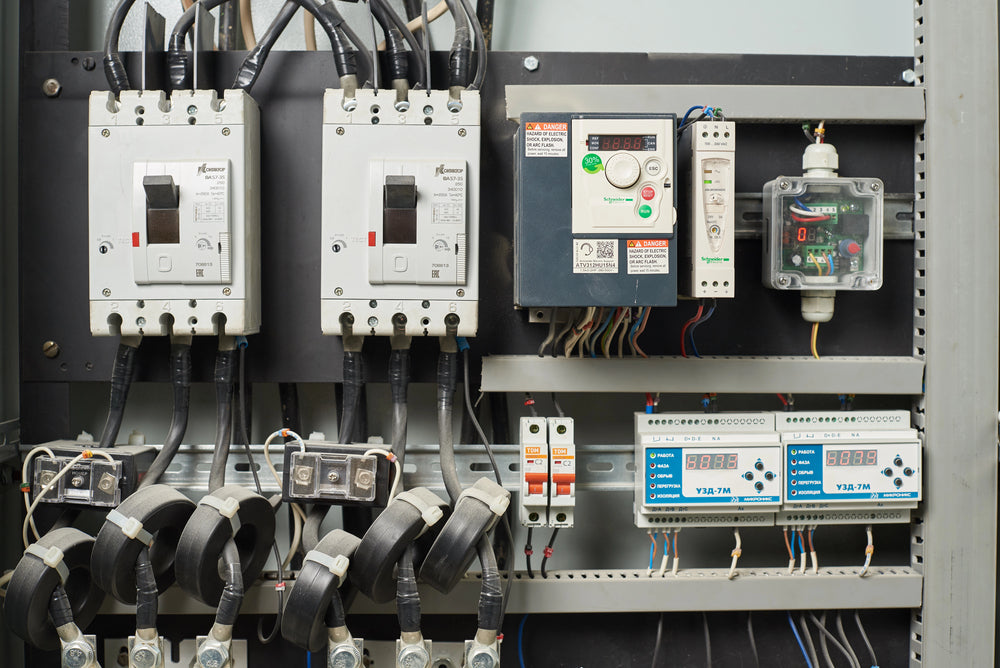
Switchgear is the beating heart of any hospital's electrical distribution system. It directs, controls, and protects the flow of electricity from the incoming utility feed to the rest of the sprawling facility. Hospitals typically utilize both medium-voltage (MV) switchgear for the primary incoming utility feed and low-voltage (LV) switchgear for secondary distribution throughout the campus.
Medium-Voltage Switchgear: Often rated between 4.16 kV and 15 kV (and sometimes up to 35 kV in massive complexes), MV switchgear in hospitals is usually manufactured by industry giants like Siemens, ABB, or Eaton/Cutler-Hammer. You will frequently encounter metal-clad switchgear featuring vacuum circuit breakers, such as the Siemens GM-SG series, the Eaton VCP-W, or the ABB Advance lineup. These units are highly sought after in the secondary market for industrial applications, utility upgrades, and large-scale renewable energy projects. Because they are housed indoors in climate-controlled electrical vaults, hospital MV gear is usually in excellent condition, free from the rust and degradation seen in outdoor industrial settings.
Low-Voltage Switchgear: Rated up to 600V, LV switchgear takes the stepped-down power and distributes it to various wings, departments, and mechanical systems. You will frequently find Square D Power-Zone 4 switchgear featuring the legendary Masterpact NW or NT draw-out breakers. Alternatively, you might find General Electric AKD-10 or AKD-20 switchgear equipped with WavePro or EntelliGuard G breakers, or Westinghouse Magnum DS gear. These draw-out circuit breakers are incredibly valuable. A single 4000-amp draw-out breaker can fetch thousands of dollars depending on its specific trip unit type (e.g., Micrologic, EntelliGuard), frame size, and overall condition. Furthermore, hospital switchgear often features "Main-Tie-Main" configurations, meaning there are multiple massive main breakers in a single lineup, multiplying the potential recovery value.
Transformers (Dry-Type and Oil-Filled)
Hospitals require numerous transformers to step down voltage for different applications, ranging from heavy 480V HVAC chillers to sensitive 120V medical imaging equipment and standard receptacle loads.
Pad-Mounted and Substation Oil-Filled Transformers: Typically located outside the facility on concrete pads or in dedicated subterranean vaults, these massive units step down the primary utility voltage. Brands like Cooper Power Systems, ABB, Howard Industries, and GE are common. While they are incredibly heavy and require careful handling due to the insulating oil, they hold significant resale value, especially if they are relatively new, have copper windings, and are certified PCB-free.
Dry-Type Transformers: Found throughout the hospital in almost every electrical room, dry-type transformers step down power for lighting, receptacles, and specific medical equipment. You will see hundreds of these in a large hospital demolition. Look for Square D Sorgel transformers, Eaton/Cutler-Hammer units, and older Westinghouse models. Hospitals frequently utilize K-rated transformers (e.g., K-4, K-13, K-20). These are specially designed to handle the harmonic loads generated by the massive amount of electronic equipment (computers, monitors, imaging machines) found in modern healthcare. K-rated transformers, particularly those with copper windings, retain excellent resale value and are highly desirable for data center applications.
Electrical Panels and Motor Control Centers (MCCs)
Beyond the main switchgear, power is distributed through hundreds, sometimes thousands, of electrical panels and Motor Control Centers (MCCs) scattered throughout the facility.
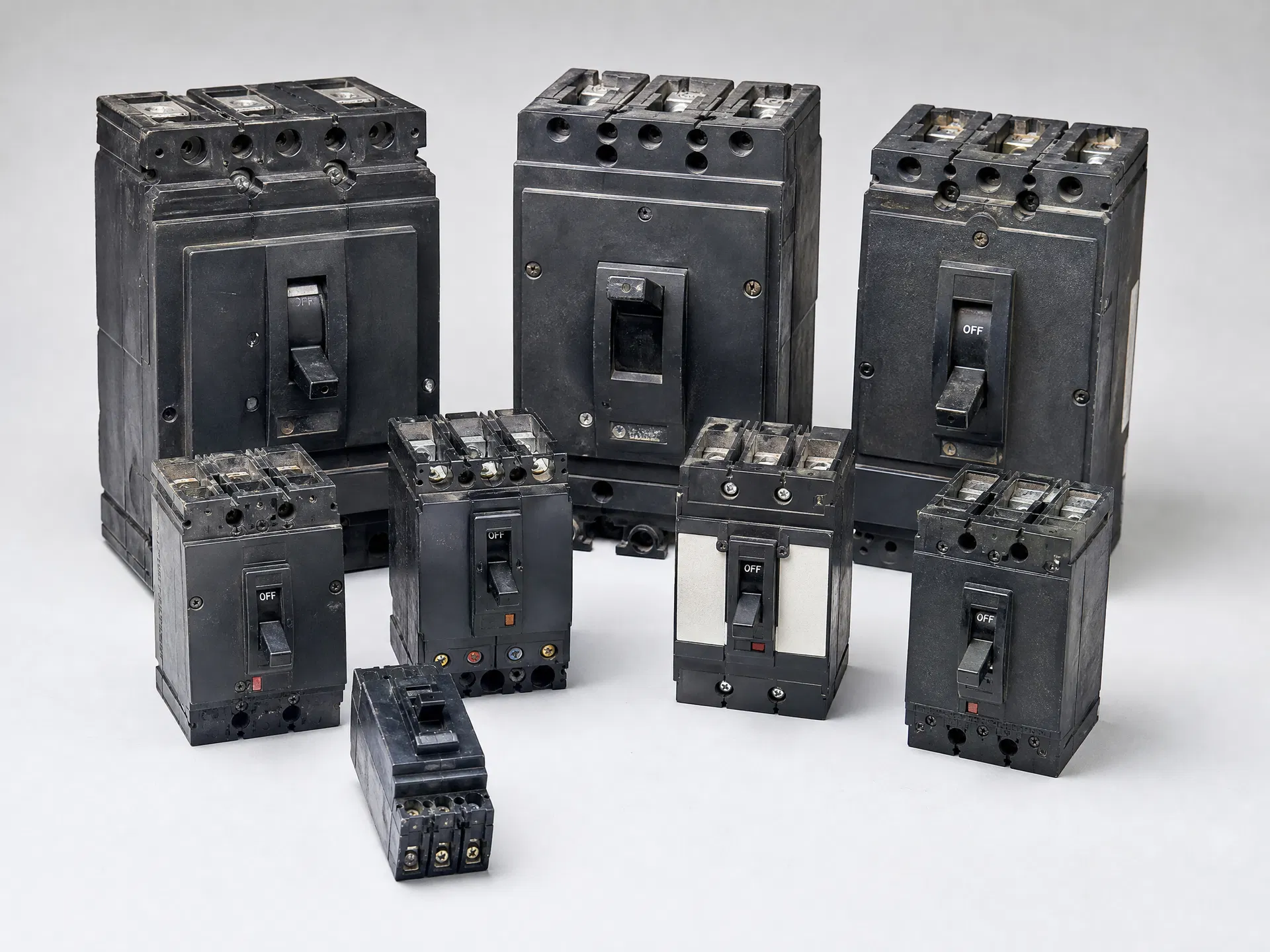
Distribution Panels and Panelboards: Hospitals are filled with heavy-duty distribution panels. You will find I-Line panels, NQOD, and NF panelboards from Square D, as well as Pow-R-Line panels from Eaton/Cutler-Hammer and Spectra Series panels from General Electric. The molded case circuit breakers inside these panels—ranging from 15-amp single-pole breakers for lighting circuits to massive 1200-amp main breakers—add up quickly in value. Even older Westinghouse or Federal Pacific panels can contain valuable obsolete breakers that are in high demand for replacement parts in older industrial facilities.
Isolated Power Panels: Unique to healthcare facilities, isolated power panels are used in wet locations and operating rooms to protect patients and staff from electric shock. These panels contain isolation transformers and Line Isolation Monitors (LIMs). While niche, these specialized panels have a dedicated secondary market.
Motor Control Centers (MCCs): Hospitals have massive mechanical requirements: massive HVAC systems, centrifugal chillers, industrial boilers, cooling towers, and complex pumping stations. All of these require MCCs. You will frequently encounter Square D Model 6, Siemens tiastar, or General Electric 8000-Line MCCs. The individual "buckets" (which contain motor starters, feeder breakers, and Variable Frequency Drives or VFDs) within these MCCs can be easily removed and sold individually, or the entire MCC lineup can be sold intact.
Backup Generators and Paralleling Switchgear
Because hospitals absolutely cannot afford to lose power, they are equipped with massive emergency backup generators. These are typically diesel-powered, ranging from 500 kW to 2.5 MW or more per unit. Brands like Caterpillar, Cummins, MTU, and Kohler dominate this space.
Alongside the generators, you will find highly complex paralleling switchgear. This specialized switchgear synchronizes multiple generators to work together, load-share, and feed the hospital's emergency power network seamlessly. Paralleling gear from specialized manufacturers like ASCO, Russelectric, or Zenith is highly complex, custom-engineered, and extremely valuable. When you sell electrical equipment from a hospital, the generator package and its associated paralleling gear often represent the largest single payout of the entire demolition project.
Uninterruptible Power Supply (UPS) Systems
While backup generators take a few seconds (typically 10 seconds or less, per code) to start and assume the load, hospitals use massive UPS systems to provide instantaneous, zero-transfer-time battery backup to critical areas like operating rooms, intensive care units (ICUs), and hospital data centers. These commercial UPS systems (from brands like Liebert/Vertiv, APC/Schneider Electric, Mitsubishi, or Eaton) are large, multi-cabinet installations.
While the heavy lead-acid (VRLA) batteries are typically sent for specialized lead recycling, the UPS power modules, static bypass cabinets, and associated electrical panels hold substantial resale value. In newer facilities, you may even encounter flywheel UPS systems, which use kinetic energy instead of batteries and are highly prized in the secondary market.
Automatic Transfer Switches (ATS)
Automatic Transfer Switches are the unsung, critical heroes of hospital electrical systems. They constantly monitor utility power; the moment they sense a loss of power or a severe voltage drop, they automatically signal the generators to start and switch the hospital's load to the emergency backup system. A large hospital may have dozens of ATS units ranging from 100 amps for specific critical loads up to 4000 amps for main distribution feeds.
ASCO (Automatic Switch Company), Russelectric, and General Electric Zenith are the most common and respected brands in this space. In hospitals, you will almost exclusively find "Bypass-Isolation" transfer switches. These specialized switches allow facility engineers to bypass the ATS mechanism and isolate it for maintenance or repair without ever interrupting power to the critical load. Bypass-isolation ATS units are incredibly expensive new and are highly sought after by buyers who offer cash for circuit breakers and transfer switches.
Bus Plugs and Busway Systems
To distribute high-amperage power efficiently through long hospital corridors, vertical risers in patient towers, or across massive mechanical rooms, hospitals often use busway (also known as bus duct) systems instead of running dozens of traditional conduits and heavy copper wires.
Attached to these busways are bus plugs/busway switches, which tap into the main power flow to feed specific areas or machines. You will frequently find Square D I-Line busway, Siemens Sentron or XL-U busway, or General Electric Spectra Series bus duct. The plug-in units (bus plugs) contain fusible switches or molded case circuit breakers. They are designed to be easily installed and removed, making them very easy to harvest during a demolition. A single hospital can yield hundreds of valuable bus plugs.
Typical Values and Pricing Guide for Hospital Electrical Equipment
Understanding exactly how we price equipment is vital for demolition contractors looking to accurately forecast their asset recovery revenue. The value of used electrical equipment is not arbitrary; it depends on a complex matrix of factors including brand, age, physical and electrical condition, amperage, voltage, frame size, trip unit sophistication, and current secondary market demand.
Hospital equipment is generally exceptionally well-maintained, kept in clean, climate-controlled environments, and regularly tested by certified technicians (such as NETA-certified testing agencies). This documented history of maintenance makes hospital-sourced equipment highly desirable and commands a premium price.
Below is a general pricing guide for common electrical assets recovered from hospital demolitions. Please note that these are estimated ranges; actual offers will vary based on the specific catalog numbers, market conditions at the exact time of sale, and the logistical costs associated with removal.
| Equipment Category | Typical Manufacturers Found in Hospitals | Amperage / Capacity Range | Estimated Resale Value Range (Per Unit) |
|---|---|---|---|
| Draw-out Air Circuit Breakers | Square D, Siemens, GE, ABB | 800A - 5000A | $500 - $6,000+ |
| Medium Voltage Vacuum Breakers | ABB, Eaton, Siemens | 1200A - 3000A (5kV-15kV) | $1,000 - $8,500+ |
| Molded Case Circuit Breakers | Westinghouse, Square D, GE | 250A - 1200A | $50 - $1,200+ |
| Bypass-Isolation ATS Units | ASCO, Russelectric, Zenith | 400A - 4000A | $1,500 - $15,000+ |
| Dry-Type Transformers (Copper) | Square D, Eaton, Acme | 45kVA - 750kVA | $300 - $3,500+ |
| Motor Control Center (MCC) Buckets | Siemens, GE, Allen-Bradley | Size 1 to Size 5 | $50 - $800+ |
| Bus Plugs (Breaker or Fusible) | Square D, Siemens, GE | 30A - 800A | $50 - $1,500+ |
| Complete LV Switchgear Lineups | All Major Brands | 2000A - 5000A Main | $5,000 - $50,000+ |
| Paralleling Switchgear Lineups | Russelectric, ASCO, Zenith | Custom Configurations | $10,000 - $100,000+ |
For a more detailed, brand-specific breakdown of what buyers are looking for, you can read our specialized guides on Who Buys Square D Breakers and Who Buys Siemens Breakers.
How to Inventory Electrical Equipment Before Demolition
The absolute key to maximizing your financial return on a hospital demolition is conducting a thorough, methodical, and highly accurate inventory long before the wrecking balls, excavators, and scrap crews arrive on site. A haphazard, rushed approach will inevitably result in damaged equipment, missed assets, and lost revenue. Here is a comprehensive, step-by-step guide on how to inventory electrical equipment effectively to ensure you get top dollar.
Step 1: Secure the Single-Line Diagrams and As-Builts
Before ever setting foot on the site for a walkthrough, obtain the hospital's electrical single-line diagrams (also known as one-line diagrams) and the final "as-built" drawings from the facility manager or the hospital's engineering department. These blueprints provide a complete roadmap of the entire electrical distribution system. They show the utility feeds, main switchgear, emergency generators, transformers, and major electrical panels. This documentation will help you locate every piece of valuable equipment, including those hidden in obscure mechanical rooms, interstitial spaces, or locked rooftop penthouses that you might otherwise walk right past.
Step 2: Request Maintenance and Testing Records
Hospitals are required to maintain meticulous records of their electrical testing. Ask the facility manager for the most recent NETA (InterNational Electrical Testing Association) testing reports, thermographic (infrared) scanning results, and general maintenance logs. Having documentation that proves a 4000-amp Siemens main breaker was tested and passed all primary injection criteria just six months ago significantly increases its value to a buyer.
Step 3: Conduct a Systematic, Zoned Walkthrough
Do not attempt to walk a 500,000-square-foot hospital randomly. Divide the facility into logical zones (e.g., Central Utility Plant, East Patient Tower, West Wing, ICU/Surgery, Radiology/Imaging). Walk through each zone systematically, room by room. Bring a high-quality digital camera (or a modern smartphone with a good flash), a powerful LED flashlight, and a notepad or tablet. Hospitals are vast, and it is incredibly easy to miss a locked electrical closet containing highly valuable bus plugs/busway or a secondary MCC feeding the HVAC system.
Step 4: Capture Detailed, Legible Photographs
When you sell used circuit breakers and heavy electrical gear, buyers need to see exactly what you have. Blurry photos taken from twenty feet away are useless. Take clear, well-lit, high-resolution photos of:
- The overall equipment lineup (e.g., the entire row of switchgear to show its size and configuration).
- The manufacturer's main nameplate on the exterior cabinet.
- The individual nameplates on every single circuit breaker, transformer, and transfer switch. The nameplate contains the catalog number, amperage, voltage, frame size, and interrupting capacity—this is the most critical information a buyer needs to formulate an offer.
- The internal components, if it is safe and permissible to open the cabinet doors.
- Any visible damage, rust, missing parts, or signs of previous arcing/overheating.
Step 5: Document the Logistical Challenges
Note the exact location of the equipment and the logistical challenges involved in its eventual removal. Is the General Electric switchgear located in a sub-basement accessible only by a freight elevator with a limited weight capacity? Will it require a specialized gantry crane to lift it out of a subterranean vault? Are the doorways and corridors wide enough to accommodate the removal of a massive Eaton/Cutler-Hammer transformer, or will walls need to be knocked down first? Documenting these logistical details upfront will help your asset recovery partner provide an accurate, firm quote that properly accounts for circuit breaker removal and heavy freight costs.
Step 6: Identify Potential Hazardous Materials
During your walkthrough, keep an eye out for potential environmental hazards. Note the presence of older oil-filled transformers that may require PCB testing, or vintage Westinghouse switchgear that might contain asbestos arc chutes. Documenting these potential issues early allows for proper abatement planning and prevents costly delays later in the project.
Step 7: Create a Comprehensive Digital Spreadsheet
Compile all your photos, notes, and logistical observations into a structured, easy-to-read digital spreadsheet. Include dedicated columns for Location (Building/Floor/Room), Equipment Category, Manufacturer, Exact Catalog/Model Number, Amperage, Voltage, Phase, and General Condition. A well-organized, professional inventory list demonstrates competence and allows buyers to quickly assess the total value of your lot, leading to much faster and significantly higher offers. For more advanced tips on cataloging, check out our guide on How to Sell Used Circuit Breakers.
Timing Considerations in Hospital Demolition Projects
Timing is absolutely everything in a complex demolition project. The extraction of valuable electrical equipment must be carefully coordinated with the overall project schedule to avoid costly delays, ensure worker safety, and protect the assets from damage.
The Pre-Demolition Extraction Window
The ideal, most profitable time to remove electrical equipment is during the soft strip or pre-demolition phase. This occurs after the building has been completely de-energized by the utility company, certified safe, and all lockout/tagout (LOTO) procedures have been strictly verified, but before any heavy structural demolition begins. During this critical window, the building envelope is still intact, providing a safe, dry, and clean environment for electricians and specialized riggers to unbolt, disconnect, and roll out heavy switchgear and delicate circuit breakers.
Phased De-Energization and Active Campuses
In many large hospital complexes, demolition occurs in phases. One older wing may be slated for demolition while the adjacent tower remains fully operational and full of patients. This requires meticulous, high-stakes planning. You may need to extract electrical panels and transformers from the decommissioned wing without causing any disruption or voltage sags to the power supply of the active sections. This often involves working closely with the facility's electrical engineers and the local utility to safely isolate the targeted equipment, sometimes requiring the installation of temporary power feeds.
The Severe Risk of Delay and Theft
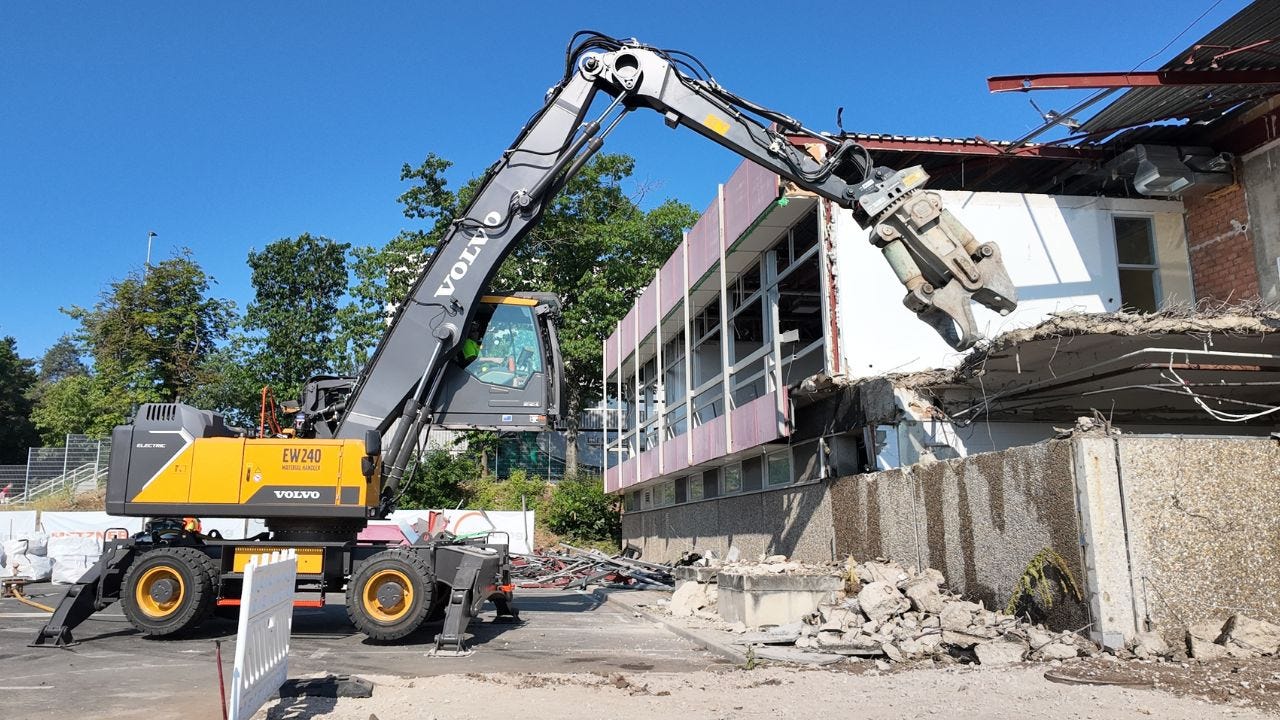
If you wait too long to extract the electrical assets, you risk them being severely damaged by falling concrete, water exposure (if the roof is compromised or fire sprinklers are accidentally triggered), or heavy machinery. Furthermore, copper theft is a massive, pervasive problem in vacant hospitals. Thieves will break into a secure facility and completely destroy a $5,000 Square D Masterpact breaker with a sledgehammer just to extract $50 worth of copper busbar. Securing the site and extracting the high-value electrical assets as early as possible is critical to protecting your ROI.
Environmental and Hazmat Concerns
Hospitals, particularly those built before the late 1980s, often contain hazardous materials that significantly complicate the removal of electrical equipment. Demolition contractors must be acutely aware of these environmental concerns to avoid hefty EPA fines, project shutdowns, and to ensure the absolute safety of their workers.
Polychlorinated Biphenyls (PCBs)
Older oil-filled transformers, large capacitors, and even some older fluorescent light ballasts may contain PCBs, a highly toxic, carcinogenic, and heavily regulated chemical compound. Before selling, moving, or draining any oil-filled equipment, you must definitively verify its PCB status. Most modern transformers have a clear nameplate indicating they are "Non-PCB" (containing less than 50 parts per million). If the equipment lacks this specific designation, or if it predates 1979, you must have the insulating oil tested by a certified environmental laboratory. Equipment containing PCBs requires specialized, highly regulated hazmat disposal and absolutely cannot be sold on the secondary market.
Sulfur Hexafluoride (SF6) Gas
Some medium and high-voltage switchgear and specialized circuit breakers use Sulfur Hexafluoride (SF6) gas as an insulating and arc-quenching medium instead of a vacuum or air. SF6 is an incredibly potent greenhouse gas, with a global warming potential thousands of times greater than carbon dioxide. If you are removing SF6-insulated equipment, the gas cannot simply be vented into the atmosphere. It must be carefully recovered by certified technicians using specialized, closed-loop pumping equipment before the gear can be safely dismantled or transported.
Asbestos and Lead-Based Paint
Older electrical rooms may have asbestos-containing materials (ACM) in the floor tiles, wall insulation, fireproofing spray, or even inside the arc chutes and wire insulation of vintage Westinghouse or General Electric air circuit breakers. Similarly, lead-based paint may be present on the exterior cabinets of older switchgear. Proper, legally compliant abatement procedures must be followed by licensed professionals before the equipment is disturbed or removed.
Battery Disposal
The massive UPS systems found in hospitals rely on hundreds of heavy lead-acid batteries. These batteries contain toxic lead and corrosive sulfuric acid. They must be palletized, shrink-wrapped, and transported to a certified battery recycling facility in accordance with DOT hazardous materials regulations. They cannot be thrown into standard demolition dumpsters.
Working with Demolition Contractors and Asset Recovery Specialists
Demolition contractors are absolute experts at safely and efficiently tearing down massive structures, but they are not always experts in the nuances of the secondary electrical market. This is exactly where partnering with a specialized, nationwide asset recovery firm like Circuit Breaker Buyer USA becomes an invaluable asset to the project.
The Costly Pitfalls of the Scrap Yard
Many demolition contractors, focused purely on speed and clearing the site, default to sending all metal to the local scrap yard. While this is fast, it leaves tens of thousands, sometimes hundreds of thousands, of dollars on the table. A scrap yard will pay you based solely on the raw commodity weight of the steel and copper. They do not know, nor do they care, that the Siemens breaker you just dropped off is a highly sought-after, obsolete model worth $3,000 to a facility manager trying to keep an automotive plant running. By choosing to sell electrical equipment to a specialized buyer, you unlock the true functional value of the assets.
Turnkey Asset Recovery Solutions
The best electrical buyers offer complete, turnkey solutions. They don't just write a check and expect you to figure out the logistics; they handle the heavy lifting. When you work with a premier nationwide buyer, they can dispatch specialized, safety-certified crews to your site—whether it is in Chicago, Denver, or Miami—to safely disconnect, rig, palletize, and transport the equipment. This allows the demolition contractor to focus entirely on their core competency: bringing the building down safely, on time, and under budget.
Building Long-Term, Profitable Partnerships
For demolition firms that handle multiple large-scale projects a year, establishing a long-term relationship with a reliable electrical buyer is a massive strategic advantage. It provides a predictable, highly lucrative revenue stream that can be factored into initial project bids, making the demolition firm significantly more competitive when trying to win contracts. Whether you are tearing down a small clinic in Atlanta or a massive, multi-tower medical center in Los Angeles, having a trusted, well-funded buyer on speed dial streamlines the entire asset recovery process.
Real-World Examples of Hospital Equipment Purchases
To truly illustrate the hidden financial value in hospital demolitions, let's look at several real-world scenarios where demolition contractors partnered with us to maximize their returns and turn potential scrap into massive profits.
Case Study 1: The Houston Medical Center Demolition
A large, aging medical center in Houston was slated for complete demolition to make way for a modern, high-rise research facility. The demolition contractor initially planned to scrap the entire basement electrical room to save time. After contacting us, we conducted a rapid site walk and identified a massive, pristine lineup of Square D Power-Zone 4 switchgear, complete with over twenty Masterpact NW draw-out breakers. Additionally, we found four large dry-type transformers and dozens of I-Line electrical panels. We offered the contractor a lump sum of $85,000 for the lot, handled all the complex rigging out of the sub-basement, covered the freight, and completed the extraction in just four days. The contractor turned what would have been a $6,000 scrap payout into an $85,000 profit center.
Case Study 2: The Seattle Regional Hospital Upgrade and Teardown
During a phased demolition and upgrade of a regional hospital in Seattle, the contractor was tasked with removing the old emergency power system from a reinforced rooftop penthouse. The system included a 1.5 MW Caterpillar generator and a highly complex Russelectric paralleling switchgear lineup, along with several large ASCO automatic transfer switches. Because the equipment had been meticulously maintained by the hospital staff and had low run hours, it was in pristine condition. We purchased the entire emergency power package, including the switchgear and ATS units, for $110,000. This massive cash injection helped the contractor completely offset the high costs of the specialized 500-ton crane required to safely remove the generator from the roof.
Case Study 3: The Dallas Outpatient Clinic Strip-Out
A smaller outpatient surgical clinic in Dallas was being gutted for a retail conversion. While there was no massive, multi-section switchgear, the facility was packed with Eaton/Cutler-Hammer Pow-R-Line panels and hundreds of feet of bus plugs/busway running through the drop ceilings. The contractor's crew carefully unbolted the bus plugs and palletized the breakers from the panels. By taking the time to inventory and sell used circuit breakers rather than tossing them in a roll-off dumpster, the contractor added an extra $18,000 to their bottom line for a single afternoon's work.
Case Study 4: The Miami Hurricane-Damaged Facility
Following severe hurricane damage, a coastal hospital in Miami was deemed structurally unsafe and slated for demolition. While the lower levels were flooded, the electrical equipment located on the upper floors and rooftop was completely untouched by water. We worked closely with the demolition team to safely extract several ABB medium-voltage breakers and a large array of General Electric Zenith transfer switches before the building was brought down. Despite the challenging conditions, we recovered over $45,000 worth of viable equipment, providing vital funds to the demolition firm during a complex, high-risk project.
Case Study 5: The Denver VA Hospital Modernization
During a modernization project at a VA hospital in Denver, an entire wing's electrical system was decommissioned. The contractor was faced with removing dozens of older Westinghouse MCC buckets and several large Siemens distribution panels. Recognizing the value of obsolete parts, they contacted us. We purchased the entire lot for $32,000, knowing that these specific Westinghouse components are in incredibly high demand for industrial facilities looking to maintain their legacy systems without undergoing a multi-million dollar plant upgrade.
Frequently Asked Questions (FAQ)
What is the absolute most valuable electrical equipment in a hospital demolition?
The most valuable items are typically the large, draw-out air circuit breakers found in the main low-voltage switchgear (such as Square D Masterpact or General Electric WavePro), medium-voltage vacuum breakers, large bypass-isolation automatic transfer switches (ATS), and the custom paralleling switchgear associated with the backup generators.
Do I need to test or clean the equipment before selling it to you?
No, you absolutely do not need to test or clean the equipment. As a professional, high-volume buyer, we purchase equipment in "as-is, where-is" condition. We have our own state-of-the-art testing facilities where our engineers evaluate, refurbish, and recertify the equipment. Your primary responsibility is simply to provide accurate photos and nameplate data so we can assess its potential value.
How quickly can you mobilize and remove equipment from a demolition site?
We understand that demolition schedules are incredibly tight and delays cost money. Once an agreement is reached and the site is deemed safe, we can typically mobilize a specialized rigging crew within 24 to 48 hours to begin the extraction process. We operate nationwide, so whether your site is in Phoenix or Miami, we can accommodate your strict timeline.
Will you buy obsolete, discontinued, or very old hospital equipment?
Yes, absolutely! In fact, obsolete equipment is often highly valuable. Many industrial facilities across the country are still running on older infrastructure and desperately need replacement parts that are no longer manufactured by the OEMs. Brands like Westinghouse, Federal Pacific, and older Siemens ITE equipment are always in high demand. Do not assume something is worthless just because it is 30 years old.
Who handles the complex logistics, rigging, and heavy freight?
We handle all logistics, rigging, and freight. We coordinate the specialized rigging, loading, and transportation of the equipment from your demolition site to our testing facilities. We cover all freight costs, ensuring a completely hassle-free experience for the demolition contractor. You can learn more about our nationwide process on our locations page.
What happens if the equipment is accidentally damaged during the demolition process?
Physical condition significantly impacts value. If a breaker's casing is cracked, the busbar is bent, or the internal mechanisms are crushed by falling debris, its resale value drops dramatically, often to zero. This is exactly why we strongly advise extracting the electrical assets during the pre-demolition phase before heavy excavators and wrecking balls are brought in.
Do you buy the copper wire, conduit, and standard scrap metal?
While our primary focus is on functional, reusable electrical apparatus like switchgear, transformers, and electrical panels, we can sometimes negotiate the purchase of heavy copper wire as part of a larger, comprehensive package deal. However, standard conduit, steel cabinets, and basic scrap wire are usually best handled by your local scrap metal recycler.
How do I get a fast, accurate quote for my hospital demolition project?
Getting a quote is simple and straightforward. Gather your single-line diagrams, take clear, well-lit photos of the equipment nameplates, and compile a basic inventory list. You can then contact us directly with this information, and our experienced purchasing team will provide a comprehensive, no-obligation quote within 24 hours.
Maximizing Your Demolition ROI
A hospital demolition is a massive, complex undertaking fraught with logistical, environmental, and safety challenges. However, it also presents a unique, highly lucrative opportunity to recover significant capital through the sale of high-value electrical infrastructure. By understanding exactly what equipment holds value, conducting a thorough and methodical inventory, timing the extraction correctly, and partnering with a specialized asset recovery firm, demolition contractors can transform a costly teardown into a highly profitable venture.
Do not let tens of thousands of dollars end up in the scrap yard or get destroyed by heavy machinery. Whether you are dealing with a few Eaton/Cutler-Hammer panels in a small clinic or an entire room of ABB medium-voltage gear in a massive medical center, taking the time to properly assess and sell these assets is the smartest financial decision you can make on your next hospital demolition project.
Ready to Sell? Get Your Free Quote Today
Circuit Breaker Buyer USA purchases electrical equipment from sellers in all 50 states. We pay top dollar, provide free on-site pickup, and issue same-day payment. Call (951) 903-9804 or submit your equipment online for a free, no-obligation quote within 24 hours. See real examples of what we pay on our recent purchases page.
Ready for a quote?
Call Circuit Breaker Buyer USA for a fast, no-obligation offer on your equipment.