What's My Switchgear Worth? A Complete Pricing Guide for Sellers
If your facility has recently upgraded electrical infrastructure, your project team has surplus gear from a completed job, or your demolition crew is preparing to clear out an industrial site, the equipment sitting in storage may be worth far more than scrap value. Used and surplus switchgear remains in strong demand across the United States because many commercial, industrial, and utility-grade electrical systems rely on equipment that can be difficult, expensive, or slow to source new. For sellers, that creates a real opportunity: the right switchgear lineup, breaker section, motor control center, or related electrical component can turn idle inventory into immediate working capital.
Switchgear is not ordinary surplus. It is mission-critical power distribution equipment used in manufacturing plants, hospitals, data centers, schools, high-rise buildings, water treatment facilities, refineries, and large commercial properties. When a plant expands, a contractor over-orders equipment, or a building is decommissioned, the remaining gear often still has market value—especially if it is from a recognized manufacturer, properly removed, complete, and in reusable condition. A 480V switchgear lineup pulled from a closed manufacturing facility, for example, may be exactly what another plant needs to replace damaged gear or expand an existing electrical room without waiting months for new equipment. A demolition company removing electrical assets from a warehouse may find that the switchgear, transformers, bus plugs, and circuit breakers are among the most valuable recoverable items on the job.
The challenge for most sellers is knowing what that equipment is actually worth. Two switchgear lineups that look similar from the outside can have very different values based on manufacturer, amperage, voltage, breaker type, condition, age, configuration, and current market demand. A surplus Square D, Siemens, Eaton, GE, ABB, or Cutler-Hammer lineup may command strong resale interest if it matches common specifications and includes desirable breakers. On the other hand, incomplete, damaged, obsolete, or highly customized gear may have limited resale value and be priced closer to parts recovery. Understanding these differences is essential before accepting a low scrap offer or letting valuable electrical equipment leave the site without a professional appraisal.
That is where Circuit Breaker Buyer USA helps sellers make informed, profitable decisions. As a nationwide buyer of used and surplus electrical equipment, Circuit Breaker Buyer USA works with facility managers, electrical contractors, industrial maintenance teams, property owners, and demolition companies to evaluate switchgear and related components quickly and accurately. Whether you are clearing out a single electrical room, liquidating a contractor’s surplus inventory, or coordinating the salvage portion of a large teardown, a knowledgeable buyer can help identify what has resale value, what information is needed for pricing, and how to streamline the sale.
This guide is designed to answer the question every seller asks first: “What’s my switchgear worth?” We will break down the major factors that influence price, including brand, condition, age, ratings, completeness, documentation, and market demand. We will also explain how professional buyers evaluate equipment, what photos and nameplate details you should gather, and why selling to a specialized electrical equipment buyer is often more profitable than selling by weight. If your goal is to sell electrical equipment efficiently, safely, and for a fair market price, understanding how switchgear is valued is the first step toward maximizing your return.## What is Switchgear and Why Does it Have Resale Value?
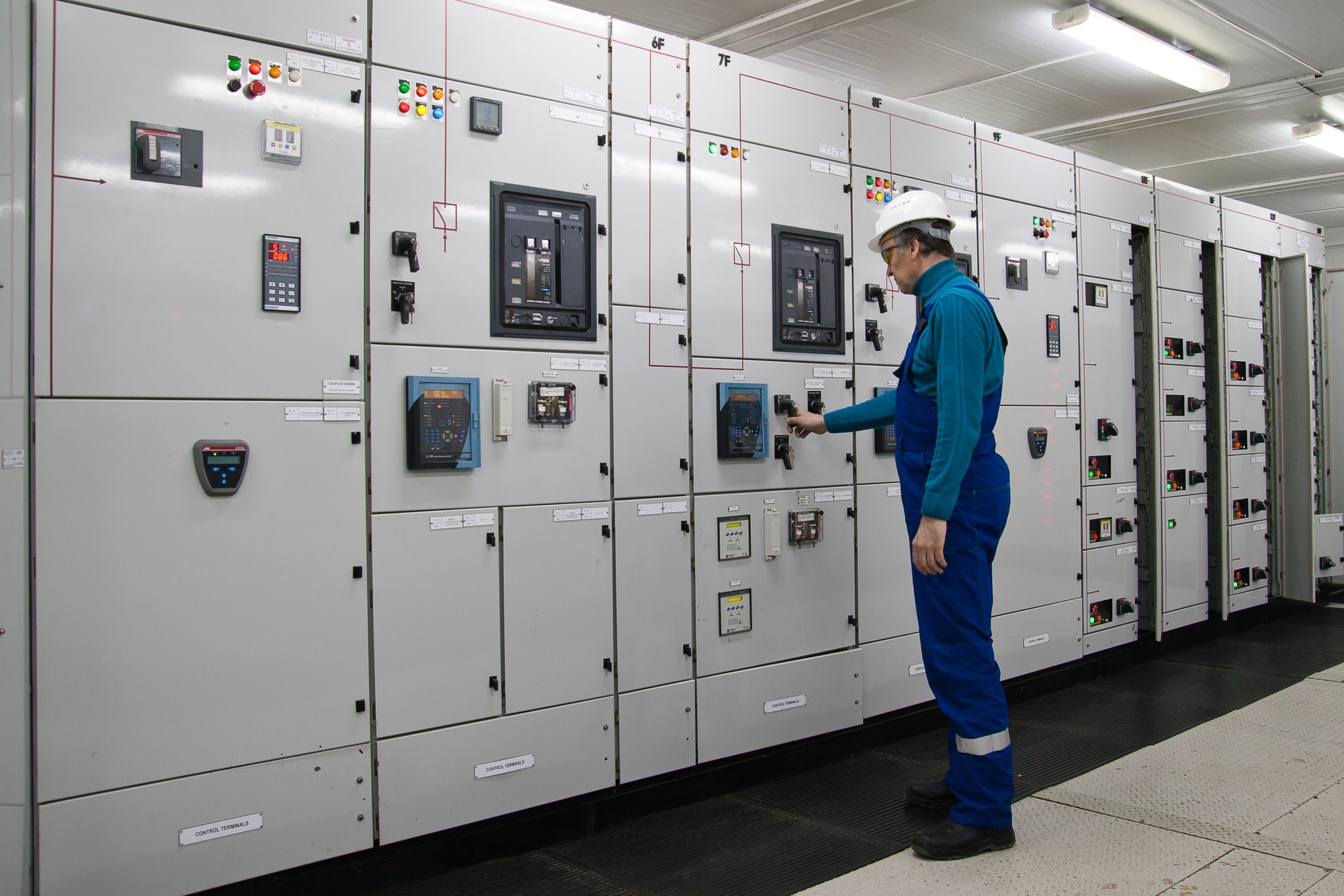
Switchgear is the backbone of power distribution in industrial, commercial, utility, and institutional electrical systems. In simple terms, switchgear is an assembly of electrical disconnect switches, circuit protection devices, control components, bus bars, metering, relays, and enclosures designed to safely distribute, control, and isolate electrical power. It is commonly found in manufacturing plants, hospitals, data centers, office towers, schools, water treatment facilities, refineries, and large retail or warehouse operations—anywhere dependable power distribution and fault protection are critical.
At its core, switchgear performs three essential functions: it distributes electrical power, protects equipment from faults, and allows sections of an electrical system to be safely isolated for maintenance or emergency shutdown. Depending on the application, switchgear may operate at low voltage, medium voltage, or high voltage. Low-voltage switchgear is typically rated up to 1,000 volts and is common in commercial and industrial facilities. Medium-voltage switchgear, often rated from 5 kV to 38 kV, is used where larger loads, utility service entrances, substations, and heavy industrial processes require higher-capacity equipment.
How Switchgear Works in an Electrical System
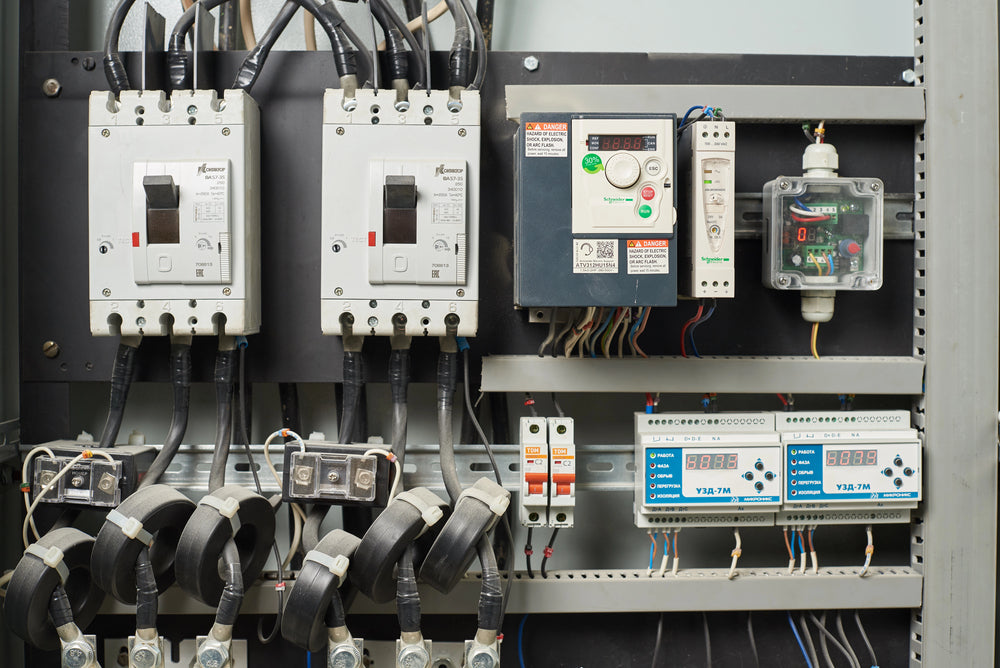
Switchgear is engineered to manage electrical energy from the point where power enters a facility through to downstream equipment. A typical system may include incoming main breakers, feeder breakers, protective relays, instrument transformers, metering devices, ground fault protection, control wiring, and copper or aluminum bus assemblies. The main incoming section receives power from the utility service or from upstream transformers, while feeder sections distribute power to motor control centers, distribution boards, electrical panels, production machinery, HVAC systems, lighting panels, and other loads.
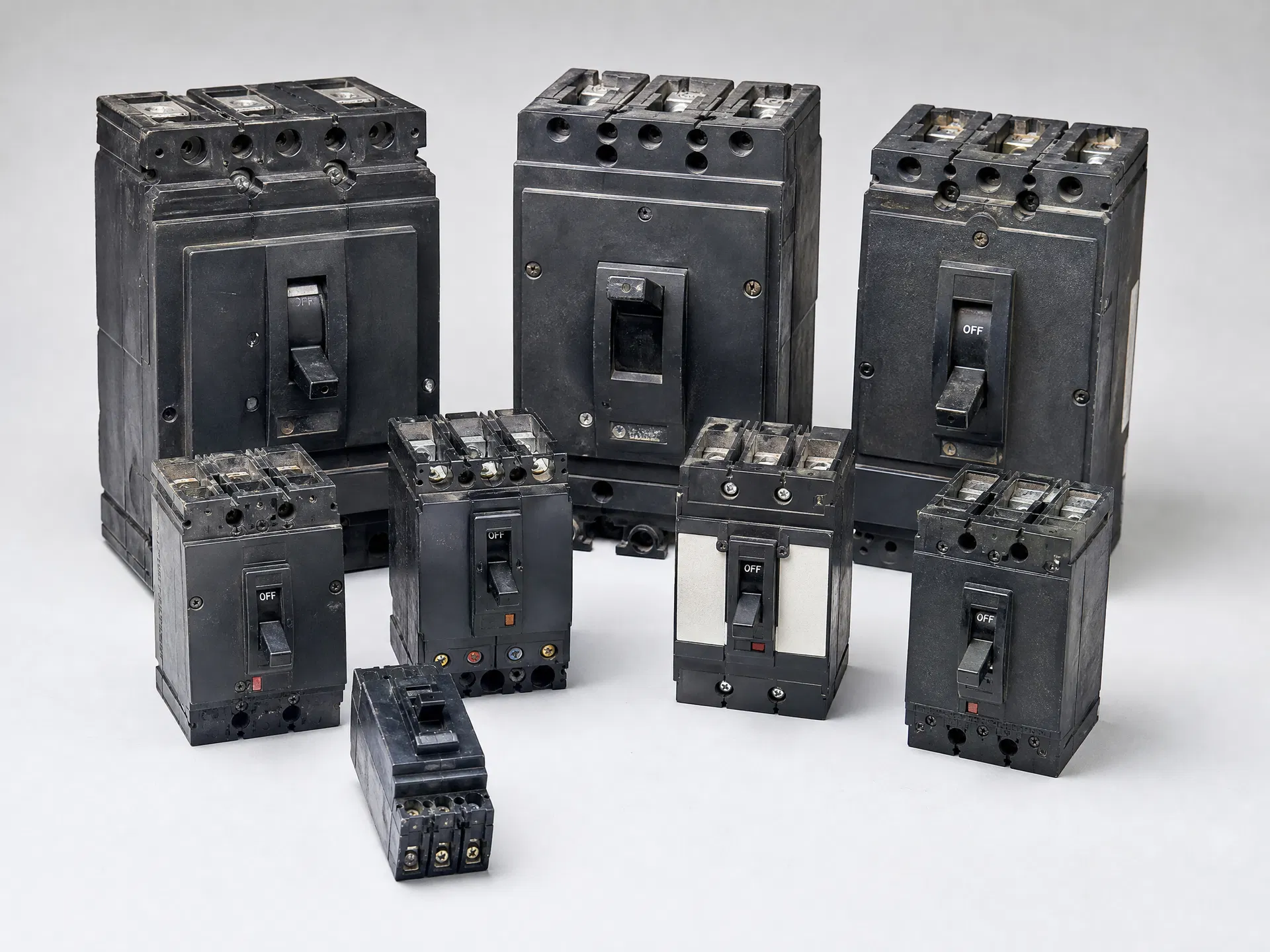
One of the most important components inside many switchgear lineups is the circuit breaker. Industrial-grade circuit breakers are designed to interrupt fault current, overloads, and short circuits before they damage equipment or create unsafe conditions. In low-voltage switchgear, drawout power breakers are especially valuable because they can be removed, tested, serviced, or replaced without dismantling the entire lineup. Medium-voltage switchgear may use vacuum circuit breakers, protective relays, current transformers, potential transformers, and arc-resistant enclosures to provide a higher level of system protection.
Switchgear also plays a major role in selective coordination. Properly designed systems allow the breaker nearest to a fault to trip first, minimizing downtime and preventing a fault in one part of the facility from shutting down the entire operation. In mission-critical environments like hospitals, semiconductor plants, and data centers, this level of control is essential. Many systems also integrate with generators, automatic transfer schemes, paralleling gear, and bus plugs/busway distribution to provide flexible and redundant power delivery.
Why Used Switchgear Has Strong Resale Value
Switchgear has a strong secondary market because it is expensive, durable, highly engineered, and often difficult to obtain quickly as new equipment. Many switchgear assemblies are built to last for decades. A well-maintained lineup from a respected manufacturer can remain in service for 30, 40, or even 50 years, especially when breakers are tested, cleaned, lubricated, and calibrated on a proper maintenance schedule. Because the equipment is built with heavy copper bus, steel enclosures, precision mechanical parts, and robust insulating systems, it often retains significant value even after removal from service.
One of the biggest drivers of resale value is long lead time for new electrical equipment. New switchgear is not typically an off-the-shelf purchase. It often requires engineering review, custom configuration, factory production, testing, and shipment. Depending on voltage class, amperage, manufacturer, and market demand, new switchgear lead times can stretch from several months to well over a year. For contractors, facility managers, and plant engineers facing an outage, expansion, equipment failure, or emergency replacement, waiting that long may not be an option. Used, surplus, and reconditioned switchgear can provide a much faster solution.
Cost savings are another major factor. New switchgear can be extremely expensive, particularly when it includes high interrupting ratings, drawout breakers, arc-resistant construction, ground fault systems, communication modules, metering, and custom control features. Buyers in the secondary market may be able to source compatible equipment at a fraction of the cost of new, especially for expansions, temporary installations, spare parts inventory, or replacement of damaged gear. This makes used switchgear attractive to electrical contractors, maintenance departments, manufacturing facilities, and property owners looking to reduce capital expenditures without compromising operational needs.
Discontinued Equipment and Replacement Parts Demand
Discontinued and obsolete equipment also creates strong demand for used switchgear. Many facilities still rely on legacy switchgear from major manufacturers such as Square D, Siemens, GE, Eaton, Cutler-Hammer, Westinghouse, Federal Pacific, ITE, ABB, and others. Even when manufacturers stop producing a particular breaker frame, switchgear section, trip unit, cell, bucket, or control component, the installed base may remain enormous. Facility owners often prefer to maintain and repair existing lineups rather than replace an entire electrical distribution system.
This is where the resale market becomes especially important. A single compatible breaker, racking mechanism, door, relay panel, CT assembly, bus section, shutter assembly, or cubicle component may keep a facility operational and prevent a costly shutdown. In many cases, used switchgear is purchased not only as complete gear but also for parts harvesting. Drawout breakers, switchgear cells, instrument compartments, control wiring assemblies, and bus components can all have meaningful value when they match equipment still installed in the field.
Condition, manufacturer, rating, configuration, and completeness all affect resale value. Important technical factors include voltage rating, ampacity, interrupting capacity, short-time withstand rating, breaker type, enclosure rating, bus material, phase and wire configuration, and whether the equipment includes usable breakers, relays, metering, or documentation. Switchgear with popular ratings, clean interiors, intact nameplates, matching breakers, and minimal corrosion generally commands higher resale value. Equipment removed from climate-controlled commercial or industrial environments is often more desirable than gear exposed to moisture, chemicals, or outdoor weathering.
In short, switchgear has resale value because it solves real problems in the electrical industry. It helps buyers avoid long factory lead times, reduce project costs, maintain older systems, source discontinued components, and restore power quickly after failures. For sellers, surplus or decommissioned switchgear is often far more valuable than scrap because many components can be reused, reconditioned, tested, and placed back into service. As electrical infrastructure ages and new equipment lead times remain challenging, the secondary market for quality switchgear continues to be strong.## Key Factors That Determine Switchgear Value
The value of used, surplus, or obsolete switchgear is determined by far more than its size or original purchase price. In the secondary electrical equipment market, buyers evaluate switchgear based on how quickly it can be resold, whether it can be safely reused, how difficult it is to test or refurbish, and whether the internal components still match real-world demand. Two pieces of equipment that look similar from the outside can have very different values once brand, voltage, amperage, age, condition, and configuration are considered.
At Circuit Breaker Buyer USA, our appraisal process focuses on practical resale value, replacement demand, and recoverable component value. If you want a broader overview of our valuation method, you can review how we price electrical equipment. Below are the most important factors that determine what switchgear is worth.
Brand and Market Demand
Brand is one of the strongest drivers of switchgear value because contractors, facility managers, and electrical distributors often prefer equipment from manufacturers they already trust and maintain. Well-known brands typically command higher resale prices because replacement breakers, parts, documentation, and technician familiarity are easier to find.
Major brands such as Square D / Schneider Electric, Eaton / Cutler-Hammer, Siemens, General Electric, ABB, and Westinghouse are usually more marketable than lesser-known or private-label equipment. For example, a used Square D QED switchboard or Schneider/Square D Model 6 lineup may attract more buyer interest than a comparable off-brand lineup because end users are actively searching for compatible sections, breakers, buckets, or replacement components.
Brand demand also depends on the type of equipment. In low-voltage switchgear, certain legacy brands may still perform well if they support widely installed systems. A Westinghouse DS switchgear lineup, for example, can still have value because DS breakers and parts remain in demand for maintenance and replacement. Likewise, General Electric AKD switchgear may have resale value when the breakers, cells, and accessories are clean and reusable.
However, brand alone does not guarantee high value. A premium brand lineup that is heavily damaged, missing breakers, or built around an unusual voltage may be worth less than a more common brand in excellent condition. Market demand is always tied to usability. If the equipment matches what buyers are actively replacing or expanding, the brand premium becomes much stronger.
Voltage Ratings
Voltage rating has a major impact on switchgear value because it determines the applications where the equipment can be used. Low-voltage switchgear, typically rated up to 600 volts, is common in commercial, industrial, healthcare, institutional, and data center environments. Because there is a large installed base of 480V and 600V equipment, many low-voltage switchgear assemblies have strong resale potential when they are in good condition.
For example, a 480V, 3-phase, 4-wire switchgear lineup with draw-out power breakers may be easier to resell than a highly specialized voltage system because many facilities in the United States use 480Y/277V service. If the gear includes popular breaker frames and standard metering, demand can be strong.
Medium-voltage switchgear, such as 5kV, 15kV, or 27kV equipment, can also be valuable, but the buyer pool is more specialized. Utilities, large industrial plants, campuses, and infrastructure facilities may need medium-voltage gear, but they often require very specific ratings, relay packages, enclosure types, and testing documentation. A clean 15kV metal-clad switchgear lineup from a major brand may have significant value, especially if the vacuum circuit breakers are included and testable. On the other hand, older air-magnetic medium-voltage gear may require more careful evaluation because some buyers prefer newer vacuum technology.
Voltage can also reduce value when it is uncommon or difficult to repurpose. A switchgear lineup designed for a niche industrial voltage may have fewer resale opportunities, even if it was expensive when new. In that situation, the value may shift toward individual components, copper, bus, breakers, or scrap recovery rather than full-lineup resale. This is where understanding scrap vs resale becomes important: the highest offer is not always based on the equipment’s weight, and the lowest-risk sales path depends on marketability.
Amperage Ratings
Amperage rating is another key pricing factor because it reflects the capacity of the switchgear and the size of the service it can support. Higher amp ratings often mean larger copper or aluminum bus, heavier enclosures, more robust breakers, and greater original cost. However, higher amperage does not automatically mean higher resale value unless the rating matches current market demand.
Common low-voltage ratings such as 800A, 1200A, 1600A, 2000A, 3000A, and 4000A are frequently evaluated for resale. A 2000A main-tie-main switchgear lineup with multiple feeder breakers may be valuable if it is from a desirable brand and configured for a common voltage. A 4000A lineup may have even greater component and bus value, but it may also be harder to place because fewer buyers need that exact capacity and because shipping, handling, and installation costs are higher.
Individual breakers inside the switchgear can heavily influence price. For instance, a lineup containing several modern 1600A or 2000A draw-out power circuit breakers may be worth significantly more than an empty structure with no breakers. A 3200A main breaker from a major manufacturer can represent a large portion of the total value if it is clean, complete, and testable.
Amperage also affects whether the equipment is more attractive as a complete system or as parts. A 1200A switchboard with standard molded case breakers may resell well as a complete unit for a smaller facility upgrade. In contrast, a very large custom 5000A or 6000A lineup may be more valuable when parted out if the complete configuration is too specialized for most buyers.
Age and Obsolescence
Age matters because it influences safety expectations, code compliance, parts availability, and buyer confidence. Newer switchgear is usually more valuable, especially if it includes modern circuit breakers, digital trip units, current metering, arc-flash reduction features, or documentation. Equipment manufactured within the last 10 to 20 years often has stronger resale potential than much older gear, assuming it has been properly maintained.
That said, older switchgear is not automatically worthless. Some obsolete or legacy equipment can be valuable precisely because facilities still need replacement parts. For example, a decades-old switchgear lineup with working Westinghouse DS, GE AK, or Square D Masterpact breakers may have resale value if the breakers are in demand. In many cases, individual breakers, trip units, racking mechanisms, doors, cubicles, and bus components may be marketable even if the full lineup is not.
Obsolescence becomes a pricing challenge when parts are difficult to source, the gear uses outdated interrupting technology, or the design no longer fits modern safety expectations. Older fused switchgear, air-break equipment, or gear with missing nameplates may require more inspection and may bring a lower offer because buyers face additional risk.
Documentation can help offset age-related concerns. If the equipment has maintenance records, test reports, drawings, serial numbers, and clear nameplate data, it is easier to evaluate and resell. A 25-year-old lineup with complete records and clean breakers may be worth more than a 10-year-old lineup that has been poorly stored, stripped of components, or exposed to moisture.
Condition and Completeness
Condition is one of the most important factors in determining switchgear value. Buyers want equipment that can be safely inspected, tested, refurbished, and reused. Clean, dry, complete switchgear with intact doors, compartments, bus, breakers, wiring, labels, and nameplates will almost always bring a stronger price than damaged or incomplete equipment.
The most valuable switchgear is typically removed carefully from service, stored indoors, and protected from moisture, dust, and physical damage. If the paint is clean, doors close properly, breakers rack in and out smoothly, and the bus shows no signs of overheating, the equipment is much more attractive. Visible signs of maintenance, such as inspection stickers or recent test labels, can also help.
Condition problems reduce value quickly. Water damage, rust, missing covers, broken handles, bent frames, stripped copper, missing breakers, cut control wiring, arc-flash damage, smoke residue, or evidence of overheating can shift the equipment from resale value to parts or scrap value. For example, a 3000A switchgear lineup that has been stored outdoors with open compartments and corroded bus may be worth far less than a smaller 1600A lineup kept clean in an electrical room.
Completeness is equally important. A switchgear lineup missing its main breaker, trip units, or metering package may still have value, but the offer will reflect the cost and difficulty of making it marketable. A complete lineup with all feeder breakers installed and properly labeled may be worth substantially more because it can be evaluated as a functioning system rather than a collection of uncertain parts.
Configuration and Application
Configuration determines how easily switchgear can be reused. Buyers look closely at the layout, number of sections, main device type, feeder breaker sizes, bus arrangement, enclosure type, metering, control wiring, and whether the gear is designed for indoor or outdoor service. The more standard and flexible the configuration, the broader the resale market.
A common configuration, such as a 480V, 2000A main switchgear lineup with several feeder breakers ranging from 225A to 800A, may appeal to many commercial and industrial buyers. By contrast, a highly customized lineup built for a specific manufacturing process, unusual control scheme, or nonstandard footprint may have fewer potential buyers even if the original cost was high.
Main-tie-main configurations can be valuable because they are used in facilities that require redundancy or dual-source power distribution. For example, a 4000A main-tie-main lineup with matching draw-out breakers and clean bus may command strong interest from large commercial buildings, hospitals, or data centers. However, if the lineup is missing the tie breaker or has a complicated relay scheme that is difficult to verify, the value may be reduced.
Breaker type also matters. Draw-out power circuit breakers are often more valuable than fixed-mounted devices because they are easier to service and replace. Switchgear with popular frame sizes, electronic trip units, ground-fault protection, and standard accessories may bring higher prices. On the other hand, gear with unusual feeder sizes, custom interlocks, or obsolete controls may require more work before resale.
Enclosure rating affects value as well. Outdoor walk-in switchgear, NEMA 3R switchgear, and weather-resistant lineups may be valuable for certain applications, but condition becomes especially important because outdoor equipment is more likely to suffer corrosion or gasket deterioration. Indoor gear is often easier to evaluate, but it must still be complete, clean, and compatible with current buyer needs.
Ultimately, switchgear value is based on the combination of all these factors. A desirable brand, common voltage, strong amperage rating, recent manufacture date, excellent condition, and flexible configuration can produce a strong resale offer. If several of those factors are weak, the value may be based more on components or recoverable material. The most accurate appraisal comes from reviewing photos, nameplate data, breaker details, condition, and removal history together.## Pricing Guide by Brand
The resale value of switchgear depends on more than just the nameplate. Brand reputation matters, but professional buyers also evaluate amperage, voltage class, interrupting rating, breaker frame size, trip unit type, enclosure condition, bus material, documentation, test reports, age, availability of replacement parts, and whether the equipment is complete, reconditionable, or only suitable for parts. In the secondary electrical market, major manufacturers such as Square D, Siemens, Eaton/Cutler-Hammer, General Electric, ABB, and Westinghouse consistently command stronger buyer interest than lesser-known or obsolete private-label gear.
The following pricing guide reflects typical resale-market behavior for used, surplus, and take-out switchgear. Actual offers can vary significantly based on condition, configuration, testing status, and current demand.
| Brand | Common Switchgear / Breaker Series | Typical Resale Demand | Estimated Value Retention* | Common Resale Price Range** |
|---|---|---|---|---|
| Square D | QED, QED-2, Power-Zone 4, Masterpact NW/NT, I-Line | Very High | 25%–60% | $2,500–$85,000+ |
| Siemens | RL, WL, SB, GM-SG, tiastar, Sentron | High | 20%–55% | $2,000–$75,000+ |
| Eaton/Cutler-Hammer | Magnum DS, Pow-R-Line, VacClad-W, Freedom, Series C | Very High | 25%–60% | $2,500–$90,000+ |
| General Electric | AKD, AKD-8, AKD-10, AKR, EntelliGuard, Spectra | High | 20%–50% | $1,500–$70,000+ |
| ABB | SafeGear, Advance, ReliaGear, Emax, Tmax, K-Line | Moderate to High | 18%–50% | $1,500–$80,000+ |
| Westinghouse | DS, DSL, DB, SPB, WLI, low-voltage switchgear | Moderate to High | 15%–45% | $1,000–$60,000+ |
*Value retention is a general estimate compared to new replacement cost or comparable modern equipment.
**Ranges are broad because a single breaker bucket may sell for hundreds of dollars, while a complete lineup with draw-out breakers can sell for tens of thousands.**
Square D
Square D is one of the strongest brands in the used switchgear market, particularly for commercial, industrial, healthcare, data center, and institutional applications. Buyers often look for Square D QED and QED-2 low-voltage switchgear, Power-Zone 4 lineups, Masterpact NW and NT draw-out breakers, I-Line panelboards, and larger molded case or insulated case breakers. Because Square D equipment has a large installed base across the United States, replacement demand remains steady.
Used Square D switchgear typically performs well when the lineup is complete, clean, and includes functional breakers, doors, covers, metering, and legible nameplates. A QED lineup with 1600A, 2000A, 3000A, or 4000A mains can bring strong offers, especially when equipped with Masterpact NW breakers using Micrologic trip units. Square D I-Line breakers, including popular frames such as LA, LH, MA, MH, PA, PH, and PJ, also retain value because maintenance teams frequently need replacements for existing distribution equipment.
For sellers researching demand, Who Buys Square D Breakers is a useful topic because Square D breakers are among the most actively purchased surplus electrical components. In general, Square D switchgear with copper bus, high AIC ratings, digital trip units, and complete documentation earns the best resale pricing. Older or damaged QED equipment may still have value if the breakers, trip units, cubicles, or bus components are salvageable.
Siemens
Siemens switchgear has a strong resale market, particularly for facilities that standardize on Siemens low-voltage and medium-voltage distribution systems. Commonly requested Siemens series include RL low-voltage replacement breakers, WL power circuit breakers, SB insulated case breakers, GM-SG medium-voltage switchgear, tiastar motor control centers, and Sentron panelboard or switchboard components. Siemens equipment tends to perform especially well when it is modern enough to be supported by available trip units, accessories, and replacement mechanisms.
Siemens RL breakers are often sought after because they are used as replacements for older low-voltage power circuit breaker applications. Siemens WL breakers, including 800A through 5000A frames, can have strong resale value when equipped with electronic trip units, racking hardware, shutters, and proper cell-mounted accessories. Complete Siemens switchgear lineups are most valuable when they are removed carefully and kept intact rather than stripped or mixed with unrelated components.
Demand is especially favorable for Siemens gear from data centers, manufacturing plants, hospitals, schools, and utility-support facilities. Medium-voltage Siemens GM-SG equipment may command significant value if the vacuum breakers are complete, tested, and accompanied by maintenance records. Sellers interested in the Siemens aftermarket can also review Who Buys Siemens Breakers, as Siemens/ITE replacement breakers remain common in active industrial systems.
Eaton/Cutler-Hammer
Eaton/Cutler-Hammer is another top-tier brand in the resale market due to its broad installed base and long history of acquisitions, including Cutler-Hammer and Westinghouse product lines. Buyers commonly seek Magnum DS low-voltage power circuit breakers, Pow-R-Line switchboards, VacClad-W medium-voltage switchgear, Series C molded case breakers, Freedom motor control centers, and older DS/DSL-compatible equipment.
Eaton Magnum DS breakers often bring strong resale value because they are used in critical power systems and are expensive to replace new. Frames such as MDS, MDSL, and Magnum draw-out breakers with Digitrip trip units are especially desirable. Pow-R-Line distribution equipment can also be valuable when the lineup includes high-amperage mains, feeder breakers, metering sections, and clean copper bus.
Cutler-Hammer Series C molded case breakers, including FD, JD, KD, LD, MDL, ND, RD, and related frames, are consistently bought for replacement inventory. Larger Eaton switchgear with 3000A or 4000A mains and multiple feeders can sell well if it has been properly decommissioned. Medium-voltage VacClad-W gear may have substantial value, but it requires closer appraisal because age, vacuum bottle condition, racking mechanisms, relays, and control wiring all affect marketability.
General Electric
General Electric, commonly referred to as GE, has a mature and active aftermarket. GE AKD switchgear, including AKD-5, AKD-6, AKD-8, and AKD-10, is still found in many industrial and commercial facilities. GE AKR low-voltage power circuit breakers are frequent resale items, while newer EntelliGuard G breakers and Spectra RMS molded case breakers can command stronger prices due to ongoing replacement demand.
GE AKD switchgear values vary widely by generation. Older AKD lineups may be valuable for parts, cubicles, and AKR breakers, while AKD-10 equipment with EntelliGuard breakers generally retains more value. AKR breakers, such as AKR-30, AKR-50, AKR-75, and AKR-100, are commonly evaluated based on frame size, trip device, stored energy mechanism condition, draw-out configuration, and whether the breaker has been tested.
GE Spectra Series breakers and panelboard components are also liquid in the secondary market. These are often purchased by contractors and maintenance teams trying to match existing GE distribution equipment. GE AV-Line or Limitamp medium-voltage motor control equipment may have value, but pricing depends heavily on completeness, voltage rating, starter type, contactor condition, and available control documentation.
ABB
ABB switchgear has a strong market in both low-voltage and medium-voltage applications, though resale value can be more configuration-specific than Square D, Eaton, or Siemens. ABB equipment such as SafeGear, Advance, ReliaGear, Emax air circuit breakers, Tmax molded case breakers, and legacy K-Line breakers is commonly reviewed by professional buyers. ABB’s medium-voltage products are particularly respected in utility, industrial, and infrastructure environments.
ABB SafeGear and Advance medium-voltage switchgear may bring significant value when the lineup includes vacuum circuit breakers, relays, instrument transformers, shutters, and controls in good condition. However, medium-voltage resale pricing is highly dependent on whether the gear can be reused economically. Arc-resistant ratings, 5kV or 15kV class, 1200A or 2000A breakers, and modern protective relays can increase buyer interest.
On the low-voltage side, ABB Emax breakers are desirable when complete with electronic trip units, rating plugs, racking mechanisms, and accessories. Tmax molded case breakers also move well when they are current enough to match existing installations. Legacy ABB K-Line breakers can retain value for maintenance replacements, but condition and testing are critical because many are older draw-out power breakers.
Westinghouse
Westinghouse equipment has a unique position in the resale market. Although the original Westinghouse electrical distribution business was absorbed into Eaton, a large amount of Westinghouse gear remains installed throughout the country. This creates ongoing demand for replacement breakers, cubicles, buckets, trip units, and switchgear parts. Commonly requested Westinghouse series include DS, DSL, DB, SPB, WLI, and older low-voltage switchgear sections.
Westinghouse DS and DSL low-voltage power circuit breakers are among the most recognized legacy breakers in the aftermarket. Models such as DS-206, DS-416, DS-632, DS-840, and DS-50 may have resale value depending on frame size, rating, condition, and trip system. SPB insulated case breakers are also frequently requested for replacement applications. Because new direct replacements can be expensive or limited, maintenance teams often rely on tested surplus, reconditioned, or remanufactured Westinghouse breakers.
Complete Westinghouse switchgear lineups can be valuable, but age is a major factor. Older equipment with missing doors, damaged mechanisms, obsolete trip devices, or poor storage history may be worth more as parts than as reusable gear. On the other hand, carefully removed Westinghouse switchgear with intact breakers, cubicles, shutters, copper bus, and nameplates can still attract competitive offers from buyers serving industrial plants, utilities, and large commercial facilities.
Overall, brand is only the starting point in switchgear valuation. The highest offers usually go to equipment from recognized manufacturers, in complete and serviceable condition, with desirable amperage ratings, modern trip units, and strong replacement demand. For sellers, providing clear photos of nameplates, breaker labels, front and rear sections, bus condition, trip units, and any test documentation can significantly improve appraisal accuracy and resale results.## How the Appraisal Process Works
A professional switchgear appraisal is designed to determine the real-world resale value of your equipment as accurately and efficiently as possible. Because switchgear can vary widely by manufacturer, age, configuration, condition, interrupting rating, voltage class, and market demand, a qualified equipment buyer looks at far more than just the label on the front of the lineup. The process typically begins with basic documentation, moves into photo and nameplate review, may include testing or inspection, and ends with logistics planning and a firm purchase offer.
The first step is for the seller to provide clear information about the equipment being offered. For the most accurate quote, include the manufacturer, model or catalog number, voltage, amperage, AIC or interrupting capacity, number of sections, breaker types, enclosure type, and whether the gear is indoor or outdoor rated. If the equipment includes power circuit breakers, molded case breakers, vacuum breakers, bolted pressure switches, protective relays, metering, or control components, each of those details can affect value. Sellers should also provide the approximate age, service history if available, and whether the switchgear is still energized, recently removed, or already in storage.
Photos are one of the most important parts of the appraisal process. A buyer will usually request wide-angle pictures of the complete switchgear lineup, close-up photos of each section, interior photos with doors open when safe, and detailed images of each breaker or major component. Nameplate photos are especially important because they confirm ratings that cannot be reliably identified from exterior photos alone. Clear nameplate images allow the buyer to verify manufacturer data, serial numbers, frame sizes, trip units, voltage ratings, and interrupting ratings. Poor or missing photos often result in a lower preliminary offer because the buyer has to account for unknowns.
After reviewing the photos and nameplate data, the buyer evaluates market demand. Some brands, frame sizes, and breaker types have strong resale demand because they are commonly needed for maintenance, replacement, or emergency repair. Others may have limited value if they are obsolete, damaged, incomplete, or configured for a very specific application. A reputable buyer may compare the equipment against inventory needs, previous transactions, and recent purchases to determine a competitive offer based on actual market activity rather than guesswork.
Testing and condition verification may also be part of the process. If the switchgear is high-value, newer, or includes draw-out breakers, the buyer may ask whether primary injection testing, insulation resistance testing, contact resistance testing, or functional testing has been performed. Test reports can increase buyer confidence and may improve the final offer. However, testing is not always required. Many buyers can still make an offer based on photos, nameplates, and condition details, especially if they specialize in purchasing surplus, used, or decommissioned electrical equipment.
Logistics are another major factor in the appraisal. Switchgear is heavy, bulky, and often requires careful rigging, loading, and freight coordination. The buyer will need to know the equipment’s location, whether it is on the ground floor, whether a forklift or loading dock is available, and if there are site access restrictions. If the gear is still installed, removal requirements should be explained clearly, including whether disconnects, conduit, bus duct, or cabling are still attached. These details help determine whether the buyer can handle pickup, arrange freight, or include removal costs in the offer.
To receive the strongest and most accurate quote, sellers should provide: clear photos, complete nameplate images, a list of breakers and components, equipment condition, testing records if available, removal status, site access details, and a desired timeline for sale or pickup. The more complete the information, the faster the appraisal can be completed and the more confident the buyer can be when making an offer. Companies looking to turn surplus electrical equipment into immediate value can often receive cash for circuit breakers and switchgear once the appraisal, documentation, and pickup details are confirmed.## Common Mistakes That Reduce Your Switchgear's Value
Used switchgear can retain significant resale value, especially when it is clean, complete, properly decommissioned, and from a desirable manufacturer or voltage class. However, many sellers unintentionally reduce the value of their equipment before it ever reaches the secondary market. The difference between “sellable surplus switchgear” and “scrap-value electrical gear” often comes down to how the equipment is removed, handled, documented, and stored.
One of the most common mistakes is improper removal. Switchgear should never be pulled out quickly with forklifts, chains, or cutting tools without a plan. Rough handling can bend enclosures, crack insulation, damage mechanisms, or break control wiring. Even minor damage may raise concerns for buyers because switchgear must be inspected, tested, and potentially reconditioned before reuse. If your project involves removing breakers from the lineup, follow a careful circuit breaker removal process and keep each breaker identified with its original cubicle whenever possible. Matching breakers, cells, doors, rails, and interlocks helps preserve both function and resale value.
Another major pitfall is damaging the busbar during decommissioning. Copper and aluminum bus components are valuable, but they are also critical to the integrity of the switchgear lineup. Cutting, bending, drilling, or prying bus sections can make the equipment much harder to resell as a complete unit. Before disconnecting bus connections, photograph the arrangement, label phases clearly, and remove hardware carefully. If bus joints are separated, keep all splice plates, boots, barriers, and insulating materials together. A buyer will pay more for gear that can be evaluated as a complete system rather than a pile of disconnected parts.
Storing equipment outside is another mistake that can sharply reduce value. Switchgear is not designed to sit exposed to rain, snow, humidity, dust, or extreme temperature changes unless it is specifically rated and protected for outdoor use. Moisture intrusion can cause corrosion, tracking, mold, damaged control components, and degraded insulation. Once rust appears on cubicles, breakers, or bus connections, buyers may discount the equipment heavily or decline it altogether. The best practice is to store switchgear indoors in a dry, secure location. If indoor storage is not available, use heavy-duty weather protection, elevate the gear off the ground, avoid trapping condensation under tarps, and inspect it regularly.
Losing components and hardware is also a value killer. Buyers want complete lineups with doors, covers, shutters, breaker lifting devices, racking handles, relays, metering, nameplates, CTs, PTs, fuses, control plugs, and mounting hardware intact. Missing small items can create costly delays for refurbishers and end users. During removal, bag and label bolts, brackets, barriers, and accessories by section. Tape hardware bags securely inside the corresponding cubicle or store them in clearly marked containers. Do not assume “small parts” are unimportant; they can make the difference between a premium offer and a reduced bid.
Poor documentation is another avoidable issue. Before removal, take clear photos of the entire lineup, each nameplate, breaker labels, wiring compartments, relay panels, and bus connections. Record manufacturer, model, amperage, voltage, interrupting rating, serial numbers, and condition notes. If you have maintenance records, test reports, drawings, or manuals, keep them with the equipment. Strong documentation gives buyers confidence and helps you justify a higher asking price. For additional guidance on preparing electrical equipment for resale, review How to Sell Used Circuit Breakers, since many of the same principles apply to switchgear.
To preserve your switchgear’s value, plan the decommissioning process before the first bolt is removed. Use qualified electrical professionals, label everything, avoid destructive disassembly, protect the bus, keep breakers and cubicles matched, and store the equipment in a clean, dry environment. The more complete, undamaged, and verifiable your switchgear is, the more attractive it becomes to reputable buyers—and the better your final return is likely to be.## Step-by-Step Guide to Getting an Accurate Quote
Selling surplus, used, obsolete, or decommissioned switchgear does not have to be complicated. Circuit Breaker Buyer USA makes the process simple for electrical contractors, facility managers, demolition companies, industrial plants, data centers, hospitals, and commercial property owners who need a fast, professional way to recover value from electrical equipment. Whether you have a single switchgear lineup or an entire electrical room being removed, following these steps will help you receive an accurate quote quickly—with free on-site pickup and same-day payment available.
-
Identify the Switchgear You Want to Sell
Start by gathering basic information about the equipment. Note the manufacturer, amperage, voltage, model or type, condition, and quantity of sections or breakers included. Common brands such as Square D, Siemens, GE, Eaton, Cutler-Hammer, Westinghouse, ITE, Federal Pacific, and ABB may have strong resale value, especially when the equipment is complete and in reusable condition. -
Take Clear Photos of the Equipment
Photos are one of the fastest ways to receive an accurate quote. Take pictures of the full switchgear lineup, nameplates, breaker handles, interior sections if accessible, labels, bus condition, and any included components. If you also have loose breakers, trip units, buckets, or replacement parts, include those as well. Sellers who want to sell circuit breakers along with switchgear can often increase the total offer. -
Make a Basic Inventory List
Your inventory does not need to be perfect. A simple list showing manufacturer, model numbers, frame sizes, amp ratings, voltage ratings, and quantities is usually enough to begin. If you are unsure what you have, Circuit Breaker Buyer USA can help identify the equipment from photos and nameplate data. -
Submit Your Information for Review
Send your photos and inventory details to Circuit Breaker Buyer USA for evaluation. The appraisal team reviews market demand, equipment condition, brand, age, completeness, and resale potential to prepare a fair and competitive offer. The goal is to make the quoting process fast, transparent, and easy. -
Schedule Free On-Site Pickup
Once you accept the quote, Circuit Breaker Buyer USA coordinates pickup at your facility, jobsite, warehouse, or storage location. Free on-site pickup is available, helping you avoid freight coordination, loading concerns, and unnecessary delays. Service is available across many locations, making it convenient for sellers nationwide. -
Receive Same-Day Payment
After pickup arrangements are confirmed and the equipment is verified, payment is issued quickly. In many cases, Circuit Breaker Buyer USA provides same-day payment, allowing you to turn surplus switchgear into immediate cash without waiting weeks for consignment or auction results. -
Clear Space and Recover Value
Selling your switchgear helps free up valuable storage space, reduce disposal costs, and keep reusable electrical equipment in circulation. With expert appraisal, free pickup, and fast payment, Circuit Breaker Buyer USA offers a streamlined solution for anyone looking to sell switchgear efficiently and profitably.## Frequently Asked Questions About Selling Switchgear
1. What types of switchgear can I sell?
You can sell a wide range of low-voltage, medium-voltage, and high-voltage switchgear, depending on the equipment’s manufacturer, condition, age, configuration, and current market demand. Common switchgear we purchase includes metal-enclosed switchgear, metal-clad switchgear, switchboards, motor control centers, load interrupter switches, fused and non-fused disconnects, vacuum circuit breaker gear, draw-out breaker cubicles, bus duct sections, and replacement breaker compartments.
Brands that often have strong resale value include Square D, Siemens, Eaton, Cutler-Hammer, General Electric, ABB, Westinghouse, ITE, Federal Pacific, and Schneider Electric. Even if your equipment is older, surplus, removed from service, or sitting in storage, it may still have value—especially if it contains reusable breakers, buckets, switches, meters, relays, or copper bus. The best way to determine value is to provide photos of the nameplates, interior components, breaker labels, and overall condition.
2. How is the value of used switchgear determined?
The value of used switchgear depends on several factors, including brand, voltage class, amperage, interrupting rating, breaker type, physical condition, completeness, and whether the equipment has been tested or properly removed. For example, a complete lineup of medium-voltage metal-clad switchgear with vacuum breakers will generally command a higher price than incomplete or heavily modified gear with missing compartments.
Market demand also plays a major role. Some obsolete or hard-to-find switchgear components are highly desirable because facilities need them for maintenance, emergency replacement, or system expansion. Copper content, bus configuration, available documentation, and the condition of relays and controls can also affect the offer. At Circuit Breaker Buyer USA, we evaluate both resale value and recoverable component value to make a competitive purchase offer.
3. Do you buy switchgear from contractors, facilities, and demolition companies?
Yes. We regularly buy switchgear from electrical contractors, industrial plants, commercial facilities, data centers, hospitals, universities, utilities, property managers, and demolition or decommissioning companies. If you are removing electrical distribution equipment during a retrofit, plant shutdown, service upgrade, tenant improvement, or demolition project, your switchgear may be worth significantly more than scrap.
Many sellers contact us before removal so we can help identify valuable components and recommend the best way to preserve resale value. Keeping breakers, doors, nameplates, control wiring, and internal components intact can make a major difference. We also work with sellers in major markets across the country, including Houston, Dallas, Phoenix, Atlanta, and Chicago.
4. What information should I provide to get a quote?
To receive the most accurate quote for your switchgear, provide clear photos and basic equipment details. Start with wide-angle photos of the entire lineup, then include close-up images of all nameplates, breaker labels, metering sections, relay panels, cubicles, and bus connections if accessible. Helpful details include the manufacturer, model or catalog number, voltage, amperage, AIC or interrupting rating, number of sections, breaker types, and whether the equipment is currently energized, removed, or in storage.
If you have one-line diagrams, drawings, test reports, maintenance records, or original documentation, those can also improve the evaluation. Let us know the equipment’s location, loading conditions, and removal timeline. If the gear is still installed, mention whether rigging, loading, or coordination with an electrical contractor will be required. The more complete the information, the faster we can provide a fair and informed offer.
5. Can I sell switchgear that has been removed from service or stored for years?
Yes, switchgear that has been removed from service or stored for a long time can still have value. However, storage conditions matter. Gear stored indoors in a dry, clean environment is typically more valuable than equipment exposed to moisture, corrosion, rodents, or weather. Even if the complete lineup is not suitable for resale, individual components such as draw-out breakers, trip units, current transformers, potential transformers, relays, switches, fuses, meters, and copper bus may still be marketable.
If the switchgear has been sitting in a warehouse, job site trailer, utility room, or storage yard, do not assume it is worthless. Send photos before scrapping it. We often find value in equipment that sellers planned to discard, especially when it includes obsolete components that are difficult to source through normal distribution channels.
6. Do you buy switchgear nationwide?
Yes. Circuit Breaker Buyer USA purchases switchgear and related electrical distribution equipment nationwide. We buy from sellers in large metro areas, industrial regions, and smaller markets where surplus electrical equipment is available. Whether your equipment is located in a warehouse, commercial building, manufacturing plant, data center, or demolition site, we can review the details and determine the best purchasing and logistics option.
We frequently work with sellers in cities such as Los Angeles, Denver, Nashville, Miami, and Seattle. For larger switchgear packages, we may help coordinate freight, pickup, or loading requirements. If your project has a tight removal schedule, early communication allows us to move quickly and minimize delays.
7. Is it better to sell switchgear whole or part it out?
In many cases, selling switchgear as a complete lineup can be the most efficient option, especially if the equipment is intact, clean, and includes matching breakers and documentation. Complete gear may appeal to buyers looking for replacement sections, expansion equipment, or spare components. However, some switchgear has more value when evaluated by its individual parts, particularly if the lineup is outdated, damaged, incomplete, or too costly to ship as one assembly.
High-value components such as circuit breakers, trip units, relays, buckets, cubicles, and bus plugs can sometimes be easier to resell than the entire lineup. Our appraisal process considers both approaches. We look at what the equipment is worth as a complete unit and what the major components are worth separately, then structure an offer that reflects the strongest recovery value for the seller.
8. How can I maximize the value when selling switchgear?
To maximize value, keep the switchgear as complete and undamaged as possible. Avoid cutting copper bus, removing breakers without labeling them, discarding doors or panels, or separating components before the equipment is evaluated. Nameplates are especially important because they confirm ratings and specifications. If a nameplate is missing, supporting documentation or clear component photos may still help establish value.
Before removal, take detailed photos while the gear is still assembled. Label breakers, cubicles, and sections if they must be separated for transport. Store the equipment indoors whenever possible and protect it from rain, dust, and impact damage. If you are working on a demolition or renovation project, contact a buyer before sending electrical gear to the scrap yard. Used switchgear, especially from recognized manufacturers, often has a secondary market value that far exceeds its scrap metal price.Selling surplus, used, or obsolete switchgear is a smart way to recover value from equipment that may otherwise sit idle in storage, occupy valuable floor space, or become harder to move as projects and facilities change. Whether you have low-voltage switchgear, medium-voltage lineups, draw-out breakers, bus duct, or related electrical components, the right buyer can help you turn those assets into immediate working capital. Accurate evaluation, fair pricing, and professional removal make the process faster and easier. If you are ready to sell, reach out to an experienced electrical equipment buyer that understands the true market value of your gear.
Ready to Sell? Get Your Free Quote Today
Circuit Breaker Buyer USA purchases electrical equipment from sellers in all 50 states. We pay top dollar, provide free on-site pickup, and issue same-day payment. Call (951) 903-9804 or submit your equipment online for a free, no-obligation quote within 24 hours. See real examples of what we pay on our recent purchases page.
Ready for a quote?
Call Circuit Breaker Buyer USA for a fast, no-obligation offer on your equipment.